• Skip to primary navigation
  • Skip to main content
  • Skip to primary sidebar
  • Return to Home Page

Yeshuatami News Blog

All Things Israel

  • Conflict
    • Terrorism
  • History
    • Aliyah
    • End-time Prophecy
  • Politics
    • US
  • Israel
    • Holidays
    • Our People
  • From the Newsletter
    • Newsletter Archive
  • Give

Bella Davidov

Reform in the Israeli Judicial System

January 28, 2023 By Bella Davidov Leave a Comment

Should Supreme Court Judges be elected instead of appointed?

Should Judicial Pronouncements be subject to Knesset approval?

The Supreme Court’s main purpose is to interpret the law and defend the Constitution. It must assure that laws follow the Constitution.

The Supreme Court in the U.S.

In the most democratic republic, the US, the court’s main purpose is to interpret laws passed by the legislature, to defend them, and adhere to the Constitution which is the foundational governing document of the country, adopted and amended by “We the People.” Supreme Court Justices may hold their position as long as they choose unless the Senate impeaches them. Anything else is a usurpation (the act of taking control of something without having the right to do so, especially of a position of power.)

The US Supreme Court functioned as an antidemocratic institution when it declined to enforce federal laws because the unelected judges disagreed with Congress about whether they are constitutionally appropriate.

While President Lincoln was in office, the court decided that Congress had no power to restrict the spread of slavery. President Lincoln gave reasons why Congress, and not the Supreme Court, should have the final word on what the Constitution requires. He stated:

“The candid citizen must confess that if government policy upon vital questions affecting the whole people is to be irrevocably fixed by the Supreme Court,” the people will have ceased to be their own rulers, having to that extent practically resigned their government into the hands of that eminent tribunal.”

Lincoln was in essence saying that a self-governing people (elected by the majority of the citizens) should have the power to determine what their fundamental law meant.

Lincoln’s argument wasn’t that the Constitution shouldn’t be enforced, but that democratically, Congress was the best institution to enforce it. If people or state governments disagree about a law’s constitutionality, they can campaign to repeal that law. Even the number of Supreme Court Justices is left to Congress. Currently, there are nine justices in the US Supreme Court.

However, if the Supreme Court decides not to enforce a federal law, the majority of justices actually declare that their view is superior to everyone else’s. Even if the president, more than 500 members of Congress, and the four other justices interpret the Constitution as permitting a law, if five justices disagree, then the law is not enforced.

The Supreme Court In Israel

In Israel in the last three decades, the left lost the elections except for the last government that was formed with a minority of voters since the right-wing parties, headed by the largest party, Likud, was shy of one Knesset Member in order to form a coalition.
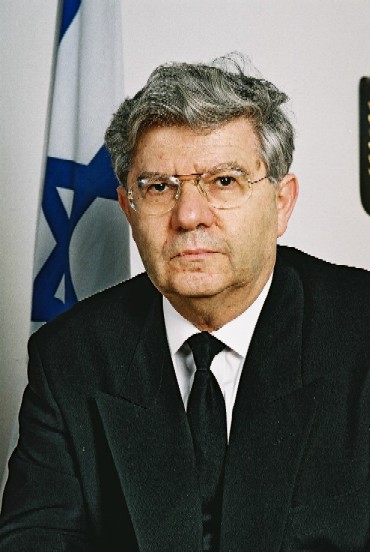
Judge Aaron Barak, Wikipedia

About 25 years ago, the Supreme Court headed by leftist judge Aaron Barak gradually took control over government policies and Knesset legislation by doing exactly what President Lincoln was against. Israel is the only country in the world where the Supreme Court makes laws without a conscious decision by the government legislative authority.

There is now an absurd situation where the government is restricted from expressing its position, which represents the majority of its citizens since it is bound by the non-elected few legal advisers. The notion that a group of judges protects democracy better than legislators has no basis, nor should there be a difference between the rule of law and the rule of judges, which is now the case in Israel.

Through the years, the attorney general, government legal advisors, and the Supreme Court have managed to block successive Likud governments from advancing their policies across a great number of issues. They gave themselves the authority, binding decisions to overturn any government decision and law, which is unreasonable in their opinion.

The new Justice Minister Yariv Levin has proposed a series of changes aimed at curbing the powers of the judiciary, including allowing lawmakers to pass laws that the High Court of Justice has struck down.

Justice Minister Yariv Levin, Wikipedia

The suggested reforms in the judicial system will first of all further politicize the process for electing judges, giving the government control of appointments, the government’s involvement in the election of the High Court’s Chief Justice; thus allowing the government to create a new position of State Prosecutor.

Now, with Justice Minister Yariv Levin’s judicial and legal reform plan representing the first real threat to their grip on power, the judicial system and its supporters in the media and the far left are threatening to overthrow the government.

Levin has proposed a law that would empower the country’s 120-seat Knesset to override Supreme Court decisions with a simple majority of 61 votes. Levin also proposes giving the government control of appointments, and the government’s involvement in the election of the High Court’s Chief Justice, making it more difficult for the Supreme Court to abolish bills and allowing the Knesset to overturn such rulings; bar the Supreme Court from intervening on Basic Laws and with a majority of 61 Knesset members, allow the Knesset to re-legislate laws the court does manage to annul. Legal advisors to public ministries will be appointed by the ministers, and absolve ministers of the requirement to abide by their legal advisors’ guidance, weakening the position of the legal advisor to the government.

Levin plans to restore power that was grabbed by overly intervening judges back to elected officials.

Another critical limitation on the court that is necessary by the reformation is removing the court’s ability to use the clause of “reasonableness” which is not actually a law but decisions that are “reasonable” in the judge’s opinion, which they have used for years to abolish important government and local authorities decisions. Because “reasonableness” is based on opinions and not actual laws, the new government opposes it and proposes to change it.

“We go to the polls, vote, elect, and time after time, people we didn’t elect choose for us… that is not democracy,” Levin said last week when outlining the major components of his reforms during a press conference in the Knesset. These reforms will strengthen the legal system, and restore the public’s trust in it. They will restore order: It will allow the legislatures to legislate, the government to govern, legal advisers to advise, and judges to judge.”

The leftists fear that the government will have ultimate power that it will use not only against LGBTQ rights and illegal immigrants but also in elections and free speech and anything it wants. These fears are unfounded since the government is bound by the existing Basic Laws.

Filed Under: MainStoryWidget, Politics Tagged With: Aaron Barak, democracy, government, Yariv Levin

Unrest in Israel

January 27, 2023 By Bella Davidov Leave a Comment

The battle rages in Israel between the left that lost the elections and the new right-wing government. Thousands of Israelis took to the streets last Saturday evening to protest plans by Prime Minister Benjamin Netanyahu’s new government whose opponents say threaten democracy and freedoms.

The protesters gathered in the central city of Tel Aviv days after the right-wing and religiously conservative government was sworn in.

“The settler government is against me,” read one placard. Another banner read, “Housing, Livelihood, Hope.” Some protesters carried rainbow flags.

The protest was led by left-wing and Arab members of the Israeli parliament, the Knesset. They contend that proposed plans by the new Cabinet will hinder the judicial system and widen societal gaps.

The left-wing protesters slammed Justice Minister Yariv Levin, who recently unveiled the government’s long-promised overhaul of the judicial system that aims to weaken the country’s Supreme Court.

Critics accused the government of declaring war on the legal system, saying the plan will up-end Israel’s system of checks and balances and undermine its democratic institutions by giving absolute power to the new governing coalition.

Picture: Israeli and Palestinian flags are seen at an anti-government demonstration in Tel Aviv, January 7, 2023. (Ahmad Al-Bazz) from +972 Magazine

Yair Lapid, the former prime minister and head of the opposition, said he would fight the changes “in every possible way” and vowed to cancel them if he returns to power. “Those who carry out a unilateral coup in Israel need to know that we are not obligated to it in any way whatsoever,” he said.

What has triggered this battle is the left’s objections to what they claim is a combination of the government’s proposed laws against LGBTQ rights, its plan to overhaul the law enforcement and education systems, and, most prominently, its proposals for “reform” of the judiciary.

However, democracy is not threatened if an elected body sets the rules to void a law that a majority of judges believe offends a Basic Law. Should a mere 8 or 11 Supreme Court judges invalidate a Knesset law? This is what the government wants to refute since these laws are legislative judgments and not judicial prerogatives.

Newly-appointed Justice Minister Levin’s proposed law would make several other reasonable changes affecting the membership and power of Israel’s judiciary, but not removing their power completely.

Levin and the Knesset’s Chair Rothman have stated they intend to make reforms in the Israeli judicial system, mainly in the authority of the Supreme Court. Read more about the suggested reforms here – Click. The left and Arab parties are protesting against the new government every Saturday in Tel Aviv.

These protests are organized and financed by left-wing organizations such as Standing Together, the New Fund for Israel, and Breaking the Silence all of which oppose Israel being God’s Land and a Jewish State. They claim that Israel should be the state of ALL its citizens, not just Jews and that this government is promoting “racist” and “dictatorial policies.” The left is declaring a “struggle for democracy.”

The Saturday protests also include a smaller, more radical group of Israeli anti-Zionists and pro-Palestinians who hold banners and signs against Israeli ‘apartheid’ and ‘colonialism,’ as well as Palestinian flags.

Last week National Security Minister Ben Gvir instructed the police commissioner to ban the Palestinian flag in public and called for more drastic measures against future demonstrations. Gvir’s measures have incited more people, even leaders from nearly every political party in the opposition, to commit to a similar demonstration expected shortly.

We are thankful to the Lord that there was not one incident of violence in these protests. Please pray that peaceful protests will continue to be peaceful.

Filed Under: Newsletter Archive, Our People Tagged With: Demonstrations, Protests, Supreme Court, Unrest

BREAKING NEWS – PLEASE PRAY!

January 21, 2023 By Bella Davidov 1 Comment

The massacres against Israeli citizens by Palestinian terrorists continue. Since the September 1993 Oslo agreements that Israel hoped would lead to lasting peace until September 2000, nearly 300 Israelis were murdered in terrorist attacks. Since September 2000, Palestinian terrorists murdered another 1,403 Israelis.

Last Friday night, at least seven innocent Jewish citizens were shot dead at close rage with a handgun outside an East Jerusalem synagogue by a 21-year-old Arab Palestinian from E. Jerusalem.

The attack took place on international Holocaust Memorial Day, which is dedicated to the memory of the six million Jews murdered by the Nazis in the Holocaust. The Israeli police called the attack a slaughter of innocent Jewish civilians. The Jews were observing the holy day of Shabbat.
After his shooting spree at innocent Israelis, the terrorist fled the scene. When Israeli security personnel intercepted him, he tried shooting at them, but they neutralized him.

The very next day – Saturday morning, a 13-year-old Arab boy from E. Jerusalem opened fire on people visiting the City of David. A father and son were seriously injured. Others were injured as well. The shooter was neutralized.

Please “Pray for the Peace of Jerusalem”.

Filed Under: Conflict, MainStoryWidget-left, Terrorism Tagged With: Palestinians, Terrorism

Democracies

December 7, 2022 By Bella Davidov Leave a Comment

US Democracy/Republic

Unlike the ancient Greek democracy, the US system is at its core, not a pure democracy, but a constitutional republic with democratic elections, as clearly stated in the U.S. Constitution: “The United States shall guarantee to every State in this Union a Republican form of Government.” This differs from the original ancient Greek democracy, which the American founders believed to be a corrupt form of government. There are fundamental differences between pure democracy and constitutional republic forms of government.

The Difference between a Democracy and a Republic

The key difference between a democracy and a republic lies in the limits placed on government by the law, which has implications for minority rights. Both forms of government use a representational system, where citizens vote to elect politicians to represent their interests and form the government.

In a republic, a constitution, or charter of rights, protects certain inalienable rights that cannot be taken away by the government, even if it has been elected by a majority of voters.

In a so-called pure democracy, the majority is not restrained in this way. It can impose its will on the minority. It also differs from a representative democracy in which constituents choose leaders to govern according to their interests.

The US is a democratic republic that guarantees fundamental rights and liberties and features an electoral system combining direct elections for legislators and indirect voting (through an electoral college) for the President. 

Other Nations

Given that the US is a republic with democratic elections, Americans may not understand how it compares with other forms of government.

For example, unlike the United States, the United Kingdom has a constitutional monarchy that has democratic elections. Although the UK has a legislative system, its Parliament’s historical foundations are not entirely democratic. Whereas the House of Commons is an elected body, the House of Lords is hereditary, though its authority to originate legislation has been curtailed over the years. Yet, unlike Israel, its government is rarely delegitimized.

Some Muslim countries, like Malaysia, enshrine Islam as the national faith; citizens must be Muslim to be considered ethnic Malaysians. Even though they have constitutions and legislative bodies, certain rights and freedoms are subservient to Islamic law as applied by Sharia courts, and there is no separation between religion and state (which is seen as a purely western invention). 

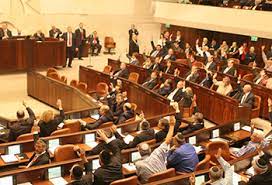
The Knesset from the .gov site

Israel

Israel is a parliamentary democracy, consisting of legislative, executive, and judicial branches. Its institutions are the Presidency, the Knesset (parliament), the Government (cabinet), and the Judiciary.

The system is based on the principle of separation of powers, with checks and balances, in which the executive branch (the government) is subject to the confidence of the legislative branch (the Knesset) and the law guarantees the independence of the judiciary.

The President in this system has just a few symbolic duties, with no political power. Defined by law, his duties are mostly ceremonial and formal, such as ceremonially opening the first session of a new Knesset; accepting the credentials of foreign envoys; signing treaties and laws adopted by the Knesset; appointing judges, the governor of the Bank of Israel and heads of Israel’s diplomatic missions abroad. He can pardon prisoners and commute sentences, on the advice of the minister of justice.

The President is elected once in seven years by a simple majority of the Knesset from among candidates, nominated based on their personal stature and contribution to the state.

The Israeli parliament, The Knesset is the legislative authority elected in a general election.

The Knesset, through its committees, conducts general debates on government policy and activity, as well as on legislation. Debates are conducted in Hebrew, but members may speak Arabic, as both are official languages; simultaneous translation is available.

Every citizen is eligible to vote for the Knesset from age 18 and to be elected to the Knesset from age 21. Knesset elections, for a tenure of four years, are general, national, direct, equal, secret, and proportional, with the entire country constituting a single electoral constituency. The Knesset may dissolve itself or be dissolved by the Prime Minister before the end of its term. Until a new Knesset is formally constituted following elections, full authority remains with the outgoing one.

Knesset elections are based on a vote for a party rather than for individuals, and the many political parties, which compete for election to the Knesset, reflect a wide range of outlooks and beliefs. Knesset seats are assigned in proportion to each party’s percentage of the total national vote.

The Government (cabinet of ministers) is the executive authority of the state, charged with administering internal and foreign affairs, including security matters. Its policy-making powers are very wide and it is authorized to take action on any issue, which is not delegated by law to another authority. Like the Knesset, the government usually serves for four years, but its tenure may be shortened if the Prime Minister is unable to continue in office due to death, resignation, or impeachment when the government appoints one of its members (who is a Knesset member) as acting Prime Minister.

In the case of a vote of no confidence, the government and the Prime Minister remain in their positions until a new government is formed. All the ministers must be Israeli citizens and residents of Israel; they need not be Knesset members, but a majority usually are. Ministers, with the approval of the Prime Minister and the government, may appoint a deputy minister in their ministry; all deputy ministers must be Knesset members.

To date, all governments have been based on coalitions of several parties, since no party has received enough Knesset seats to be able to form a government by itself.

The Judiciary – Israeli law guarantees the absolute independence of the judiciary. Judges are appointed by the President, upon recommendation of a special nominations committee, comprised of Supreme Court judges, members of the bar, and public figures. Judges’ appointments are for life, with a mandatory retirement age of 70.

Filed Under: From the Newsletter, MainStoryWidget-right, Politics Tagged With: American Democracy, Democracies, government

The Override Law

November 18, 2022 By Bella Davidov Leave a Comment

God’s kingdom is not a democracy. He is the Supreme Judge and we must abide by His rules and law. We affirm, “the world is filled with His glory.” We appropriate the concept of His divine sovereignty. Until Lord Yeshua returns and establishes His Kingdom on earth, ungodly dictatorships rule many nations. Although there are democracies elected by the people, these are also ungodly, but at least they are not dictatorships.

In a democracy, there must be a separation of powers, in which the essential tasks of governance are divided among the three branches of government in accordance with the perceived strengths of each.

  1. The coalition: the Legislative branch, which in almost every democracy is the main, most important power. It is first because it is elected by the people, and represents most of the people.
  2. The second is the Executive branch, ensuring the state is doing what it legislated. This is equally important.
  3. The third ruling power is the Judicial branch, which is appointed (not elected) to oversee that the government acts according to the law it legislated.

In every democracy, the Judicial branch is independent of the other branches. They cannot force the judges in their rulings.

According to Israel’s state law, only the law is above any judge. The Judicial branch is the lesser of the three branches since it is not elected by the people. Its authority is not from the people, who are sovereign in a democracy. This was the condition of the ruling powers in Israel until the end of the 1970s and the beginning of the 1980s.

Early in the 80s, a gradual change in the balance of powers occurred when the Judicial branch slowly became the most important branch imposing its power on the other two branches.

How did it happen?

In all democracies, the Judicial branch is the third in power. Even when it supervises the actions of the government according to its authority, it is limited in the scope of supervision it allows itself over the Executive branch, and especially the Legislative branch, which in Israel is the Knesset. The Judicial branch must restrain itself as the law permits since it is not an elected body. Judicial doctrines were developed to give substance to that restraint.

Judicial Restraints Removed

The first doctrine is the separation between the elected government, the ruling power, from the appointed Judicial branch.

This separation discourages courts from intervening in political questions best left to more representative branches of government. The Supreme Court’s role is to safeguard the rule of law and protect individual rights, ensuring that government action violates no explicit law while reviewing the activities of the Executive and Legislative branches. The Judicial branch has no right to abolish government laws or make up new laws that were not voted on and approved by the government. However, such is the case now in Israel wherein exists a sort of Supreme Court dictatorship.

In recent years, the State of Israel has undergone a constitutional revolution, especially with the 1992 passage of the Basic Law: ‘Human Dignity and Liberty.’ This law has only 6 conditions, not including freedom of speech or the right for the Supreme Court to abolish or add laws.

Nevertheless, the Supreme Court gave itself rights and the power to abolish Knesset legislation that in the Supreme Court’s opinion violates normative human rights guarantees.

The result is that today virtually every controversy in Israeli public life ends up, sooner or later, in a courtroom.

Justice Aharon Barak

The Supreme Court’s unprecedented power to shape the ideological debate in Israel started and is now dependent on Aharon Barak’s judicial worldview, which is mainly left-wing progressive liberal, with the excuse that the views serve the values of Israel as a “Jewish and democratic” state.

Aharon Barak – photo from Wiki

A brilliant and accomplished lawyer and judge, Aharon Barak was Attorney-General in 1975, and in 1995 became the Supreme Court president, a post he held until he retired in 2006.

Barak’s legal philosophy is that the law always has its say, on everything, and that every human behavior is subject to a legal norm, including politics, by keeping the actions of the government under his view of the law.

However, in a democracy, the court’s capacity to protect the rule of law is limited by the judge’s inherently passive role in politics. No matter how much a government action may offend his sensibilities, a judge can only review a case that comes before him in court, and even then only if the plaintiff has a sufficiently direct interest in the case, and if the issue at hand is of the kind that courts are allowed to adjudicate.

There are principles that limit the power of the judges:

The principle of “standing” dictates that only a party or someone who has suffered an injury to a right or personal interest can be heard (stand before a judge.) This restriction is important for courts to protect themselves from being overwhelmed by what the legal literature calls “unnecessary” litigation cases that do not require a judicial remedy, whose adjudication only distracts the court from properly being used. In other countries, there are laws concerning the principle of standing and the desired scope of limitation. The higher the level of limitations, the less involvement of judges in the ruling of government cases. So, the first thing that Aharon Barak did was to eliminate this requirement for the right of standing from the Israeli Judicial system. Now everyone can petition the Supreme Court in any case and matter, and the government has to be subject to the Judicial branch, meaning his view of the law.

The second principle Aharon Barak canceled was the principle of non-judgment or “justifiability;” determining which issue the court will hear. Because it is the third branch, subject to the other two elected branches, the court should exclude itself from being involved in political matters such as the conduct of foreign affairs best left in the hands of the Executive or Legislative Branches. 

However, now, the Supreme Court can rule in any case and matter presented, without exception, especially in political matters.

Aharon Barak cannot stand the prospect of restricting the Supreme Court, therefore it must intervene even in government, which is an elected legislative power that in a democracy must stay separated from the appointed judiciary power.

Thirdly, Aharon Barak added to the Supreme Court the principle of reasonableness. The Supreme Court decides what is reasonable and what isn’t. Now the Supreme Court can cancel any decision made by the government without exception just because it isn’t reasonable in the judges’ opinion.

Therefore, from now on the name should be: “The Supreme Court of Reasonableness” – the “authority” without authority the Supreme Court gave itself to cancel and add laws.

These are some of the foundations Aharon Barak formed that made the Supreme Court the supreme and only ruler in the State of Israel, not in order to enforce the law, but to make the Supreme Court the ruler of law enforcement, which is contrary to real law enforcement.

The Supreme Court is now the body that decides in any matter, big or small.

Just two examples: 

1. Lately, opposing the office of finances’ opinion, the Supreme Court ordered that loose tobacco be taxed.

2. When Netanyahu was PM last time and legally held several portfolios, the Supreme Court ordered Netanyahu to give up some of them.

To get rid of, not the original Supreme Court, but this Supreme Court dictatorship, there needs to be a Basic Law that will be called, “the law of separation of the ruling powers”, separating the authority of the courts in public law enforcement. This Basic Law will destroy the foundations of the Supreme Court dictatorship formed by Aharon Barak by re-establishing the laws that the Supreme Court abolished without authority. The Supreme Court would be once again the way it is supposed to be.

In recent years, former Supreme Court President Barak and his fellow justices have overruled a number of governmental decisions and actions.

Today any government official in Israel can be brought before the Supreme Court. Indeed, a sizeable number of government moves have already been stopped by the Supreme Court with the excuse of enforcement of the “rule of law.” It has become an ever-expanding empire ruled by judges. As a result, there are serious difficulties for Israel’s democratic political system, and society as a whole. The new government intends to do something about it.

Filed Under: From the Newsletter, Israel, Politics, SideBarStoryWidget-second

  • « Go to Previous Page
  • Page 1
  • Interim pages omitted …
  • Page 6
  • Page 7
  • Page 8
  • Page 9
  • Page 10
  • Interim pages omitted …
  • Page 26
  • Go to Next Page »

Primary Sidebar

  • Return to Home Page
  • Email

War

They Shall Come Back

And they shall come back from the land of the enemy. There is hope in your future, says the Lord, your sons shall come back to their own border.  Jeremiah 21:16b-17 This happened today, Monday October 13. Exactly two years ago, on the Holiday of Succot (booths), Hamas brutally attacked southern Israel from Gaza, murdering 1,200 Israelis and abducting 251 into […]

U.S. President Trump’s Epic Fury -Where Is It Going?

March 26, 2026

"אַרְיֵה שָׁאָג מִי לֹא יִירָא " "The lion has roared, who will not fear?..." Amos 3:8a The world is trying to understand President … [Read More...] about U.S. President Trump’s Epic Fury -Where Is It Going?

Recent Posts

  • Best Allies
  • U.S. President Trump’s Epic Fury -Where Is It Going?
  • Israel at War with Iran – Operation Roaring Lion
  • The Jewishness of Christmas
  • Hamas in America

Categories

© MMXXVI Yeshuatami, Ashdod ISRAEL