• Skip to primary navigation
  • Skip to main content
  • Skip to primary sidebar
  • Return to Home Page

Yeshuatami News Blog

All Things Israel

  • Conflict
    • Terrorism
  • History
    • Aliyah
    • End-time Prophecy
  • Politics
    • US
  • Israel
    • Holidays
    • Our People
  • From the Newsletter
    • Newsletter Archive
  • Give

MainStoryWidget-left

Hezbollah: Not Just Fanatical Terrorists

September 23, 2024 By Bella Davidov Leave a Comment

The Hezbollah creed: “We are the children of the faction of God and we see ourselves as an integral part of the Muslim world, challenged by a most arrogant imperialist assault from the West and the East, with the aim of nullifying the gracious Muslim prophetic charge received by Allah. Allah has given it grace so that it can become the best community that has ever appeared on the earth: it prescribes good and dissuades from evil, and believes in Allah.”

“We see in Israel the vanguard of the United States in our Islamic world. It is the hated enemy that must be fought until the hated ones get what they deserve. This enemy is the greatest danger to our future generations and the destiny of our lands, particularly as it glorifies the ideas of settlement and expansion, initiated in Palestine, and yearning outward to the extension of the Great Israel, from the Euphrates to the Nile.”

“Our primary assumption in our fight against Israel states that the Zionist entity is aggressive from its inception, and built on lands wrested from their owners, at the expense of the rights of the Muslim people. Therefore, our struggle will end only when this entity is OBLITERATED. We recognize no treaty with it, no cease-fire, and no peace agreements, whether separate or consolidated.” Israel is “the ‘imperialist power’ which planted a ‘foreign entity in the region…a cancer that is propagated in the body of the Arab and Islamic umma (typically a single group of common religious beliefs) in order to reduce it to pieces, divide it and control its resources.”

Historical Summary of Hezbollah in Lebanon

The Shia Muslim Iran-proxy Hezbollah (“Party of God”) emerged amid the chaos of the Lebanese civil war as a guerilla terrorist group. It has now grown to become a national political entity, a social welfare unit, and a state-like military organization.

Image from NBC News: Hezbollah

Slowly but surely, and inconspicuously, Hezbollah has increased its political power and status within Lebanon. It has gained growing influence over Lebanon, careful to maintain the rules of the Lebanese political order. The group has, in fact, become so entrenched in the political system that it now demands increased decision-making power within Lebanon. In June 2017, after great efforts on the part of Hezbollah officials, the Lebanese parliament passed a new electoral law that significantly increased Hezbollah’s power in parliament and further secured its representation. However, Hezbollah’s plan is to remain a separate and autonomous armed group with its weapons in the name of “resistance.”

Following the 1982 war between the PLO and Israel in south Lebanon, Hezbollah grew and established its strength and prominence by conducting a series of terror attacks against Israel.

Following the Israeli withdrawal from Lebanon on May 24, 2000, Hezbollah became almost a state within a state in south Lebanon.

By 2005, Syria completely withdrew its forces from Lebanon, leaving a power vacuum. Then, in 2006, Hezbollah provoked Israel into a full-scale war in south Lebanon after abducting two Israeli soldiers. After 34 days of fighting, the UN brokered a ceasefire by its Security Council Resolution 1701 which established a no-man zone in south Lebanon that disallowed both Israeli and Hezbollah forces from entering. This was in addition to the UN Security Council Resolution 1559, passed in 2004, which called for the disarmament of all armed militias, as well as their cooperation in allowing the Lebanese State to assert its sovereignty in a free and functioning political system.

However, not only did Hezbollah refuse to give up its weapons but it has systematically increased arms and ammunition throughout south Lebanon since 2006. It has continuously used its weapons to eliminate political rivals as much as possible and impose its will on the Lebanese people and the government. In addition to receiving arms transfers from Iran, Hezbollah is also building infrastructure for independent arms production within Lebanon.

At the end of the 2006 war against Israel, the UN Security Council Resolution 1701 cease-fire agreement called for Hezbollah to immediately stop all attacks and for Israel to cease all offensive military operations. In addition, it set guidelines for both parties, under certain conditions, to refrain from hostilities and maintain stability. Whereas Israel kept the conditions of the agreement, Hezbollah overtly and consistently violated and continues violating the terms agreed upon in the resolution.

In December 2018, IDF forces uncovered an extensive network of underground terror tunnels crossing the Blue Line (a demarcation line dividing Lebanon from Israel and the Golan Heights, published by the United Nations on 7 June 2000 for the purposes of determining whether Israel had fully withdrawn from Lebanon.) This was in clear violation of UN Security Council Resolution 1701. Hezbollah dug these tunnels with the intent of carrying out surprise attacks and kidnappings of Israeli civilians and soldiers. During Operation Northern Shield, the IDF successfully exposed and neutralized these tunnels.

Hezbollah Sabotages the Work of UNIFIL

UNIFIL (UN peacekeeping forces) is supposed to enforce the resolution. However, Hezbollah works in various ways to disrupt the activity of UNIFIL which renders it helpless against Hezbollah militant operations and intelligence gathering or transferring arms. Hezbollah’s influence over the Lebanese government and army is growing steadily.

The means by which Hezbollah increased its control in Lebanon:

  • In the financial system: in order to evade monitoring of money transfers, Hezbollah consistently works to weaken the Lebanese banking system by means of deterrence and influence over top bankers, usually of Shiite origins.
  • Border crossings: In order to evade monitoring of arms transfers, Hezbollah maintains a network of influence over various border crossings, including Hariri Airport, Beirut Seaport, and the customs authority.
  • In local municipalities: Through Hezbollah-affiliated mayors and Mukhtars (heads of villages), Hezbollah consolidates its influence over public services, civilian infrastructure, and its own public outreach.

Increasing Influence Over the Lebanese Armed Forces

Hezbollah holds great power within the decision-making bodies that are responsible for overseeing the security apparatus and state-sanctioned use of force, as well as deciding on matters of war and peace.

It was revealed that Hezbollah had planted an officer in the LAF (Lebanese Armed Forces) in order to ensure its continued influence over the army.

The organization’s further infiltration into army ranks was revealed in 2017 when Hezbollah tanks were photographed fighting side by side with LAF tanks.

Hezbollah is Not Just a Terrorist Organization in South Lebanon.

A leading American DEA (Drug Enforcement Administration) official revealed after years of investigating the Lebanese Hezbollah organization that Hezbollah uses money laundering, the drug trade, and a large corporation of used cars in Africa to raise huge amounts of money for their wicked operations.

Of 68 groups designated as foreign terrorist organizations by the United States, the DEA has linked 25 of those to drug trafficking or some role in the drug trade.

Out of criminal terrorist organizations such as Lebanese Hezbollah, the Taliban, ISIS, and Colombia’s FARC and ELN, Hezbollah stands out uniquely for its hierarchal leadership, sophisticated intelligence operations, and having political and military wings.

Hezbollah, a major proxy for Iran, receives the majority of its support from Iran. However, to increase its revenue, Hezbollah has increasingly turned to criminal enterprises. They operate in the Shia Crescent (areas under Iranian influence or control that include Iran itself, Lebanon, Syria, Bahrain, Iraq, Azerbaijan, western Afghanistan, and the Houthis in Yemen,) and Russia. Hezbollah taps into global money launderers, arms traffickers, and drug traffickers on six continents.

The type of criminal activity conducted by Hezbollah’s networks varies from continent to continent, but in North America, the main operations are money laundering, the used car trade, and drug trafficking — “trafficking coke here whether as transshipment broker or supplier.” 

When the U.S. Treasury Department blocked American financial institutions from conducting business with the Lebanese Canadian Bank in 2011, for example, officials alleged that revenue from European and Latin American drug sales was wired by the bank to used car dealers in the United States who shipped huge amounts of cars to West Africa where they were sold; the proceeds went back to Hezbollah.

In South America, Hezbollah has benefited from Islamic extremism and its connections to Colombian cartels and a corrupt Venezuelan government whose regimes of Hugo Chavez and Nicolas Madura have facilitated air shipments of cocaine to Syria and helped members of Hezbollah and Iran’s Islamic Revolutionary Guard Corps get fraudulent passports. In Mexico, money laundering links were discovered between Hezbollah and Los Zetas.

Although Hezbollah leader, Hassan Nasrallah, and other high-ranking Hezbollah figures deny any criminal allegations and say that drug trafficking would violate Islamic law, investigations show that they operate just as a traditional organized crime organization, like the Mafia or any other drug cartel.

“Nasrallah is a murdering terrorist” — just like Escobar who built orphanages and murdered people and has no problem lying, said one of the DEA agents, “The DEA has discovered cases where Hezbollah criminal activity benefits Iran, as well as the U.S.”

In its determination to secure a nuclear deal with Iran, the Obama administration derailed an ambitious law enforcement campaign targeting Hezbollah’s drug trafficking while it was funneling cocaine into the United States.

The DEA

The DEA was established by President Richard Nixon in 1973 to combine various anti-drug programs under the US Department of Justice. During the Bush administration, thanks to supportive Republicans in Congress, it had become the beneficiary of a new federal law that empowered its agents around the globe to operate virtually anywhere without permission required from other U.S. agencies. All they had to do was connect drug suspects to terrorism, and then arrest them and bring them to the United States in an effort to penetrate the highest levels of the world’s most significant and notorious criminal organizations.

In the investigations, there was enough proof that the terrorist Muslim organization of Hezbollah was no longer just a small Palestinian military and political organization in south Lebanon, focused on fighting Israel, but had grown and spread into an international crime syndicate that, according to some investigators, was collecting $1 billion a year from drug and weapon trafficking, money laundering and other criminal activities for the purchase of weapons. As a result, in 2008, The DEA launched a campaign, dubbed Project Cassandra, against the organization network.

Over the next eight years, top-secret DEA agents, with the help of 30 U.S. and foreign security agencies, used wiretaps, undercover operations, and informants to map Hezbollah’s illicit networks.

They followed cocaine shipments – some from Latin America to West Africa and on to Europe and the Middle East, and others through Venezuela and Mexico to the United States. They tracked the flow of cash as it was laundered by, among other tactics, buying American used cars and shipping them to Africa where Hezbollah uses the funds to purchase weapons. And with the help of some key cooperating witnesses, the agents traced the conspiracy, they believed, to the innermost circle of Hezbollah and its state sponsors in Iran. While the pursuit may be shadowed in secrecy, from Latin American luxury hotels to car parks in Africa to the banks and battlefields of the Middle East, its impact is not a secret: the discovery of multi-ton loads of cocaine entering the United States, and hundreds of millions of dollars going to a U.S. designated terrorist organization.

But as Project Cassandra reached higher into the hierarchy of the Hezbollah conspiracy, the Obama administration officials threw an increasingly insurmountable series of roadblocks in its way, according to interviews with dozens of participant agents, who in many cases, spoke for the first time about events shrouded in secrecy and a review of government documents and court records. When Project Cassandra leaders sought approval for certain significant investigations, prosecutions, arrests, and financial sanctions, officials at the Justice and Treasury departments delayed, hindered, or rejected their requests.

The Justice Department declined requests by Project Cassandra and other authorities to file criminal charges against major players such as Hezbollah’s high-profile envoy to Iran; a Lebanese bank that allegedly laundered billions in alleged drug profits and a central player in a U.S-based cell of the Iranian paramilitary Quds force.

The State Department rejected requests to lure high-value targets to countries where they could be arrested. This was the extent to which competing agendas among government agencies and shifting priorities at the highest levels have set back years of progress.

Normalizing Hezbollah in Lebanon Government

Obama had entered office in 2009 promising to improve relations with Iran as part of a broader conciliation with the Muslim world. On his campaign trail, Obama had repeatedly criticized Bush’s failing policy of pressuring Iran to stop its illicit nuclear program and said that he would reach out to Tehran in diplomacy. Obama saw an opportunity to set a new course for relations between the two countries through direct dialogue. To appease Iran, the plan was not to go against Hezbollah but the assimilation of Hezbollah into Lebanon’s political system and to find ways to build up “moderate elements” within Hezbollah.

According to reports from DEA agents, during the Obama administration, the DEA project took a back seat to a deal with Iran. To make the nuclear deal with Iran, Project Cassandra was halted just as it was approaching the arrest of criminals in the upper echelon of Hezbollah and while Hezbollah was continuing its illicit activities around the world, including funneling cocaine into the United States. This was confirmed by a testimony of a former Obama administration Treasury official. According to Project Cassandra members and others, “investigations were tampered down for fear of rocking the boat with Iran and jeopardizing the nuclear deal.” In addition, they said Obama was reluctant to give the green light to aggressively act against top Hezbollah operatives due to his envisioning a new role for Hezbollah in the Middle East, along with his desire for a negotiated settlement for Iran’s nuclear program.

The administration also rejected repeated efforts by Project Cassandra members to charge Hezbollah’s military wing as an ongoing criminal enterprise under a federal Mafia-style racketeering statute. Administration officials declined to designate Hezbollah as a “significant transnational criminal organization” and blocked other strategic initiatives that would have given the task force additional legal tools, money, and manpower to fight it.

Nevertheless, Obama’s vision to build up “moderate elements” within Hezbollah has failed. It remains a dangerous militant terror organization. Hezbollah continues to evolve from just another terrorist organization in south Lebanon into a strong militia and a political party with representatives in the Lebanese Parliament and Cabinet. Hezbollah is now an international multi-million-dollar mafia-like organization.

Image: Photo by René Ranisch on Unsplash
Filed Under: Conflict, MainStoryWidget-left, Terrorism, War Tagged With: Lebanon

Netanyahu’s Impossible Choice

February 13, 2024 By Bella Davidov Leave a Comment

“And Moses said to the people, “Do not be afraid. Stand still, and see the salvation of the Lord, which He will accomplish for you today. For the Egyptians whom you see today, you shall see again no more forever…” Exodus 14:13


“The LORD is a man of war…“Your right hand, O LORD, has become glorious in power; Your right hand, O LORD, has dashed the enemy in pieces.” Exodus 15:1, 6 (NKJ)

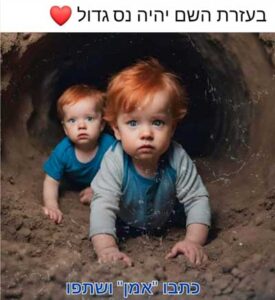
Picture from facebook: The title on this photo translated is: “With God’s help, there is going to be a great miracle”. The most repeated photographs of those who were kidnapped are of the red-headed boys of the Bibas family. Yarden and Shiri Bibas and their 9-month-old and 4-year-old sons Kfir and Ariel were kidnapped from their home on October 7th. They are still held hostage.

Choices and Decisions in Wartime

     Educated at a top private school in England, the Britisher Alan Turing was considered a mathematics genius from an early age. He entered the University of Cambridge to study mathematics in 1931. He was already working part-time for the British Government’s Code and Cypher School before World War II with Germany broke out in September 1939. Turing then accepted a full-time, top-secret post at the British Army War-time Headquarters in Buckinghamshire, along with a team of other mathematical geniuses to head the development of a code-breaking machine that would decipher the military codes of the Enigma, the German devise used to encode strategic messages during the war.

     After many unsuccessful tries, and very close to the deadline given by his employer, Turing’s machine was finally able to crack the German Enigma code just as the Germans planned to blow up a British war vessel with 500 hundred men on board. The team members were excited at the possibility of saving the men’s lives and hurried to make a phone call to inform headquarters of the good news. However, Turing grabbed the phone and said: “No, we are not going to disclose this breakthrough that would let the Germans know that we have decoded the Enigma. They will then destroy it and build another one. We must guard this secret even from our military.” All agreed except one whose brother was on board the vessel. He begged Turing to save his brother’s life. It was a difficult decision for Turing but with much determination, he declared that winning the war and saving millions of lives took precedence over saving a few hundred lives.

     Subsequently, for the rest of the war, Turing’s machine supplied the Allies with large quantities of military intelligence. By early 1942, it had decoded monthly about 39,000 intercepted messages, a figure that rose to over 84,000 per month—two messages every minute, day and night. In 1942, Turing also devised the first systematic method for decoding messages encrypted by the sophisticated German cipher machine that the British called “Tunny.”

     In the end, thanks to Turing, the war was shortened by two years, and about 14 million lives were saved.

A Similar Dilemma

     In today’s war between Israel and Hamas, Israeli PM Netanyahu and the war cabinet now face a similar dilemma.

     On October 7, 2023, on the last day of the holiday of Succoth, Hamas terrorists invaded southern Israel via land, air, and sea, committing atrocities upon residents in the entire region. During the massacre, the terrorists murdered in cold blood more than 1,200 innocent civilians, including infants, young and old, and youth who were partying at a peace music festival. Additionally, Hamas abducted 240 Israelis into the Gaza Strip.

     It was a declaration of war that Israel has since been fighting. Israel has three main goals:

  1. destroying Hamas as a military and ruling force in Gaza;
  2. the return of the hostages; and
  3. ensuring Hamas will no longer threaten Israel’s security.

     Israeli Prime Minister, Benjamin Netanyahu, vowed again a few days ago to continue the offensive war in the Gaza Strip until achieving a “crushing victory” against Hamas.

     At the end of November 2023, a week’s ceasefire was declared. Hamas released 105 hostages and Israel freed 240 Palestinian prisoners and detainees. However, after Hamas violated the pause, the Israeli army resumed fighting. To date, there remain some 136 hostages, some alive and some murdered (the IDF has so far confirmed 31 hostages who have been killed, including the bodies of 2 soldiers kept by Hamas since 2014.)

     Presently, Netanyahu refuses to accept another so-called “deal” with Hamas for the release of the remaining abducted Israelis, claiming that Hamas’ new conditions are unacceptable.

     In protest, the families of Israeli hostages held in the Gaza Strip are protesting and have recently shut down a vital road in Tel Aviv to demand an immediate deal with Hamas for the release of their loved ones. On the other hand, thousands of Israeli right-wing demonstrators protested in Jerusalem and demanded the government not stop the fighting in Gaza, even for the negotiations with Hamas, which would result in Israel losing the war.

     PM Benjamin Netanyahu is facing mounting public pressure, including from some politicians affiliated with his War Cabinet. However, Netanyahu is standing firm. He said at a news conference a few days ago: “Giving in to the outrageous demands of Hamas will not only fail to bring about the release of the hostages but will invite an additional massacre and disaster for Israel. The day after the war is the day after Hamas; not part of Hamas, not half of Hamas,” meaning ALL of Hamas. According to Netanyahu, the Israeli army is on the way to a complete victory that will take not years but months. “We will continue until the end,” he said, “There is no other solution besides complete victory.”

     As Turing’s decision was in WWII to win the war and save millions at the cost of several hundred lives, so is Netanyahu’s decision to win the war and save the entire Jewish nation, unfortunately, at the cost, if necessary, of less than a hundred precious lives.

Our Prayer Focus

     In this vein, we at the prayer tent are now meeting four times a week in prayer, supplication with thanksgiving, believing for a miracle, the release of the hostages, and complete victory over Israel’s vicious enemy. As with God’s miracle when He saved the people of Israel out of slavery in Egypt, when He parted the Red Sea and the Israelites crossed over on dry land and He then drowned the Egyptian army that pursued them. As the Lord said then to Israel: “the Egyptians you see today, you will see no more.” The enemy of Israel was completely destroyed, while Israel was saved.

     We pray for a similar miracle today, for God to bring the Israeli hostages home safely, while Hamas is completely destroyed by the collapse of their own tunnels. Hamas in Gaza we will see no more. Amen!


News Flash

Monday we got the news that 2 hostages were rescued by the IDF in a daring mission in the southern Gaza Strip. Today is the 129th day of the war – and of their captivity. This is much-welcomed news and so encouraging. Please pray for more of the same.


Please Join Us in Prayer

  • Please pray for Prime Minister Netanyahu – strength, health, divine guidance.
  • Pray that the objectives of this war are accomplished.
  • Pray that the objectives of the Lord concerning the salvation of souls will be accomplished.
  • Pray for our soldiers, our hostages, and the many wounded, widowed, and orphaned by the war.
  • Pray for the evacuees who are unable to return to their homes.
  • Pray for those of us called to pray, that we will not grow weary but continue in strength to intercede as we see things unfolding.

Filed Under: Conflict, From the Newsletter, MainStoryWidget-left, Terrorism Tagged With: Anti-Semitism, Hamas, Terrorism, War

BREAKING NEWS – PLEASE PRAY!

January 21, 2023 By Bella Davidov 1 Comment

The massacres against Israeli citizens by Palestinian terrorists continue. Since the September 1993 Oslo agreements that Israel hoped would lead to lasting peace until September 2000, nearly 300 Israelis were murdered in terrorist attacks. Since September 2000, Palestinian terrorists murdered another 1,403 Israelis.

Last Friday night, at least seven innocent Jewish citizens were shot dead at close rage with a handgun outside an East Jerusalem synagogue by a 21-year-old Arab Palestinian from E. Jerusalem.

The attack took place on international Holocaust Memorial Day, which is dedicated to the memory of the six million Jews murdered by the Nazis in the Holocaust. The Israeli police called the attack a slaughter of innocent Jewish civilians. The Jews were observing the holy day of Shabbat.
After his shooting spree at innocent Israelis, the terrorist fled the scene. When Israeli security personnel intercepted him, he tried shooting at them, but they neutralized him.

The very next day – Saturday morning, a 13-year-old Arab boy from E. Jerusalem opened fire on people visiting the City of David. A father and son were seriously injured. Others were injured as well. The shooter was neutralized.

Please “Pray for the Peace of Jerusalem”.

Filed Under: Conflict, MainStoryWidget-left, Terrorism Tagged With: Palestinians, Terrorism

The System of Voting in Israel

October 29, 2022 By Bella Davidov Leave a Comment

Only a party or a group of parties that runs together in the elections can present a list of candidates and participate in the elections.

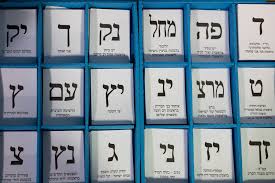
Voting papers in the box. Times of Israel

There is a Basic Israeli Law that blocks any party from registration if any of its purposes or deeds, explicitly or implicitly, contain:

  • negation of the existence of the State of Israel as a Jewish and democratic state;
  • incitement to racism or support for an armed struggle of an enemy state or a terrorist organization against the State of Israel.

The law also prohibits the registration of a party if there is reasonable ground to deduce that it will serve as a cover for illegal activities.

According to the Basic Law:

Knesset elections should take place once every four years, but the Knesset or the Prime Minister may attempt to move up the elections through the Knesset Dissolution Law, for instance. Early elections may also be held if the budget is not approved.

Certain parties hold primary elections. These parties directly elect their candidates for the Knesset. Some parties elect their candidates through their institutions (usually a party’s central committee). In other parties, the candidates are elected by their leaders.

The electoral system is based primarily on two laws – the Basic Law: the Knesset (1958) and the Knesset Elections Law (combined version) – 1969.

Article 4 of the Basic Law:

  • the Knesset is to be elected in general, country-wide, direct, equal, secret, and proportional elections.

General election: the right to elect and be elected

Every Israeli citizen who is at least 18 years old has the right to vote; every Israeli citizen who is at least 21 years old has the right to run for office.

Voting takes place in private, behind a screen, and putting a small note with the letters of the party in a sealed envelope which they insert into a big box called Kalpi.

The principle of secrecy ensures fairness in the elections and prevents the exertion of undue pressure.

Filed Under: Israel, MainStoryWidget-left Tagged With: Elections, Voting

RETURN TO ZION – the Miracle of Modern Israel

September 25, 2020 By Bella Davidov Leave a Comment

The destruction of Jerusalem and the second temple by the Romans in 70 CE and the banishment of the Jewish people to the far corners of the Roman Empire ended the Jewish nation and the sovereignty of the Jewish people of Judah for almost 2,000 years. During the following centuries, until the 19th century, whenever a Jewish population attempted to settle and gather in the suburbs of Jerusalem, they were warned off by the reigning empire—frequently by force. After the decree of Rome banishing the Jewish people from the city of Jerusalem and the region, the Roman government renamed the land “Palestine.”

Thereafter, the Jewish people suffered prejudice and persecution as a people. There ceased to be a Jewish nation – neither Israel nor Judah. As the Lord warned through the biblical prophets, the people of Israel were scattered around the earth. However, the Jewish people stayed together as a people wherever they lived throughout the world, observing the Sabbath and celebrating the Jewish (biblical) holidays. During the Passover Seder (meal), they recited the story of deliverance from slavery in Egypt, and at the end, they proclaimed: “Next year in Jerusalem!”

The land of Israel and the city of Jerusalem were never forgotten. In the latter19th century, events began to transpire that would eventually give birth, after almost two millennia, to the modern Jewish state of Israel.

The “Aliyah Movement”

The literal meaning of the Hebrew word, “Aliyah” is “to go up.” In other words, no matter where a Jewish immigrant is coming from to Jerusalem or the Land of Israel, he is going up. It is also the term for calling a member of a Jewish synagogue to “come up” to read the weekly portion from the Holy Torah scroll.

The Aliyah movement was a response to the historic and repeated persecution of European Jews. It swept young Jewish adults of Eastern Europe in an almost spontaneous burst of passion for the Land.

The First Aliyah in 1881 to 1882 – a reaction to pogroms (an organized massacre) in Czarist Russia would eventually include almost 35,000 Jewish pioneers, a generation of Jewish young adults determined to leave their countries of origin and “go up” to the land of their forefathers, now called Palestine. Their passion was to rebuild their families and the land. These pioneers frequently overcame monumental obstacles to reach the historic lands of Judah and Israel, at that time known as “Palestine,” in an attempt to build a new life for themselves and the Jewish people.

The First Zionist Congress – The second significant event in the latter 19th century was the emergence of Zionism under the initial inspiration and leadership of Theodor Herzl, a successful secular Jewish journalist from Vienna, who was shocked by the deadly anti-Semitism, prejudice, and persecution of the European Jews at the hand of the gentiles, and was convinced that they were a continual threat. The solution, according to Herzl, was a Jewish homeland in Zion, the ancient land of the Jewish people. To this end, he organized the First Zionist Congress, held in Basel, Switzerland, in 1897 with about 200 Jewish delegates in attendance from different nations.

During the 19th century, as the First Aliyah began to unfold, and the First Zionist Conference was held, Christian leaders were of mixed opinions as to the significance of these matters. Some read the prophecies in the scriptures and were certain the nation of Israel had to be reborn. Others, believing in the replacement theology, were just as certain Israel and the Jews were rejected by God and replaced by the “Church.” Depending on the denomination, churches were for or against, (moral) support to the Zionist cause.

This debate continued right up until the UN voted in 1948 to make a way for a Jewish homeland, and continues to rage to the present day. Is it Prophetic or Political? Whether it is a Russian diplomat acting on behalf of the Czar; or a U.S. President, or the U.S. State, religious and/or political beliefs lie beneath the surface of action or inaction. Even today, beliefs, as well as self-interest and necessities, right or wrong, specifically affect individuals’ and nations’ positions on the events taking place in the Middle East.

Following the death of Herzl in July 1904, the banner for a Jewish state was carried by a new generation of secular, humanist, European Jews. Chaim Weizmann and David Ben-Gurion were the most notable. The motivating force behind the struggle for the creation of a Jewish homeland was driven by these men who were liberal, even socialist in their beliefs and politics.

Religious Judaism was not significantly represented among the early leaders of what became the first Israeli politicians. They were not motivated at all by a historical/biblical longing for the return to the land of their fathers. Their motivation was nationalistic; to the extent that they were convinced, there could never be peace for Jews in any non-Jewish country.

Internationally, and under all circumstances, whenever events turned negative—be they political, economic, or even climate change—the Jews were always the convenient scapegoats for blame. Even in the USA, it was widely held among the general population that “the Jews were behind the banking crisis and the Great Depression.”

The early Zionist founders were Jews but had no real connection to the Jewish religion or traditions. Some barely believed in God, or not at all. In fact, religious Judaism was skeptical of any effort to create a new Jewish state. Many Orthodox rabbis spoke openly against it, even maintaining it was up to the Messiah, when He comes, to reestablish the nation. Many went so far as to say working for a (secular) Jewish state was blasphemous.

The Balfour Declaration – Britain’s Lord Balfour’s declaration was a public statement issued on November 2, 1917, by the British government and published on November 9, 1917. It declared support for the establishment of a “national home for the Jewish people” in Palestine, (which was at that time a Muslim Ottoman Empire region with a small minority Jewish population.) 

It seemed to satisfy the vision Herzl had for a Jewish home in their homeland. However, its implementation met with opposition within the British government because England was dependent upon the expanding crude oil development of the Middle East, which necessitated good relations and support of the Arab populations and states that apparently controlled the crude reserves.

At the conclusion of WWI, the victorious Allies, at the encouragement of Great Britain, made several modifications to the map of the Middle East that was previously the undivided Turkish Ottoman Empire. They divided up much of that territory to create a new map. Included in this innovative map-making was the creation of several new countries that had never existed before, such as Iraq, Kuwait, Jordan, Lebanon, Syria, Saudi Arabia, Oman, and others. The “Great Nations” behind this new map of the Middle East were Great Britain, France, and, to some extent, Russia.

A New Map

With all of this “new country creation,” the Zionists had realistic expectations, in light of the Balfour Declaration, that Great Britain would only allow for a sliver of land in Palestine for the first Jewish homeland in two millennia.

Unfortunately, even this did not happen at that time, as the national security voices within the British Foreign Office prevailed with the argument that the vast Arab majority of the Middle East, where the largest concentration of future crude oil was certain to be located, would not permit the creation of a Jewish state in Palestine, no matter how small.

The League of Nations (later to become the United Nations) gave Great Britain the mandate over the Palestine area, which included the area that is now Jordan. The British were supposed to be there until the Jews would be able to rule their new state. They were also supposed to keep the peace in this troubled spot. This enabled the British to maintain British dominance in this strategic region.

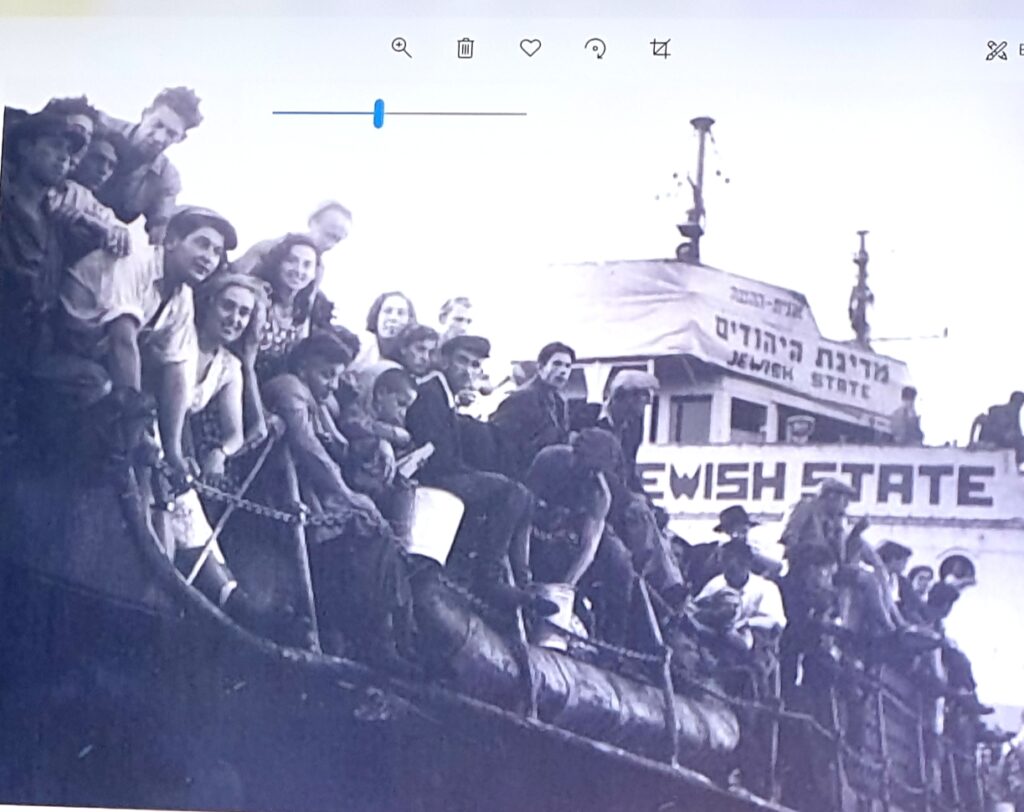
But, due to England’s growing prejudice and hostility toward world Jewry and their religion, as the 20th Century progressed, it became clear to the Zionists that a Jewish homeland in Palestine might never be achieved. With hostility increasing all over Europe toward the Jews and British policy limiting the immigration of Jews to Palestine, Jews began to resort to “illegal” means to enter and settle in Palestine.

Nowhere to go

Even as Hitler’s final solution to exterminate the Jewish population of Europe progressed, Great Britain continued to forbid entry of additional European Jews refugees to Palestine. Once Hitler was finally defeated, Europe found itself with millions of DPs, (Displaced Persons,) of which the majorities were Jewish survivors of the Hitler extermination machine. These Jewish Holocaust survivors soon discovered they were not even welcome to return to their former European homes or cities. When a few brave ones attempted, they were greeted not as survivors of Hitler, but as “the cause of the war.”

A significant number of those who survived Hitler were killed by angry anti-Semite mobs when they attempted to return to their homes which had been confiscated (among them were Bella’s father’s family.) In Poland, returning survivors were attacked with shouts of, “Hitler should have finished the job! Why aren’t you dead?” The Allies decided it was too risky to allow these Jewish survivors to “just run loose.” So, the Allied Occupation Command decided to convert many of Hitler’s “death” camps to “DP camps,” camps for displaced persons (Bella was born in a DP camp in 1947). Once again, the Jews were locked up!

Although pressure was mounting on Britain to let some of these Holocaust survivors enter Palestine, the British government feared it would provoke an Arab violent reaction, as it saw itself as the only peacekeeping force in Palestine between the Arab population and the growing Jewish one.

By the fall of 1947, the pressure upon the British had grown almost intolerable, with U.S. President Harry Truman leading the way, finally, Great Britain agreed to an option of ending the mandate (trusteeship) submitted to a vote by the newly created United Nations general assembly. Britain lobbied on behalf of a proposal, calling for the simultaneous creation of an Arab state and a Jewish state, dividing the previously undivided Palestine.

However, with the growing aspirations of the Soviet Union in the Middle East and the desire to reduce the influence of Great Britain in the region, the Soviet Union, with all of their vassal states, voted for the end of the mandate and the creation of an independent Jewish state.

The U.N. vote on November 29, 1947, ended the British mandate in the region, as well as the blockade of the European-Jews, immigrated to Palestine.

Declaration of the State of Israel

Immediately upon the withdrawal of the last British troops from Palestine, Ben-Gurion, the leader of the Jewish population in the land declared the independence and statehood of the Jewish nation, calling the new Jewish state and the land – “Israel.” In fulfillment of the prophecy in Isaiah 66:8, on May 14, 1948, a nation, the Nation of Israel was truly born in a day.

Once the U.N. voted to end the mandate, and cleared the way for a Jewish state, it began to establish the permissible, likely borders. Also, it was envisioned that an additional Arab/Palestinian state would simultaneously be created in the former British Mandate Palestine.

The neighboring and existing (Islamic) Arab nations in the region opposed the idea of a Jewish state ever emerging in the Middle East, no matter how small. At the core of the Arab opposition was a fundamental Islamic inviolable precept that “Once a land or territory has been conquered by Islam, from that time that land is Islamic! All true followers of Islam are committed to going to war, and even dying, to enforce this Islamic dictum!” (Israel was conquered by Islam in the 7th century and reconquered in the 11th century)

The Miracle

This is the mantra of organizations like Hamas and Hezbollah as well as nations like Iran. To the secular nations, including the emerging secular leadership of the (then) proposed Jewish state, it seemed impossible to reason with such religious dogma. It appeared war would be the only solution. Jihad (Islam Holy War) was the only honorable response prescribed by Islam.

The outnumbered, outgunned Jews of the new state were seen as having no chance to survive such an attack from the surrounding enormous enemy armies. It was widely believed the Jewish state that was born in one day would not survive even one day. Miraculously, Israel defeated these enemies and God’s word of a reborn Jewish state prevailed.

Filed Under: Aliyah, From the Newsletter, History, MainStoryWidget-left, Our People Tagged With: aliyah, History, immigration

  • « Go to Previous Page
  • Page 1
  • Page 2
  • Page 3
  • Page 4
  • Go to Next Page »

Primary Sidebar

  • Return to Home Page
  • Email

War

They Shall Come Back

And they shall come back from the land of the enemy. There is hope in your future, says the Lord, your sons shall come back to their own border.  Jeremiah 21:16b-17 This happened today, Monday October 13. Exactly two years ago, on the Holiday of Succot (booths), Hamas brutally attacked southern Israel from Gaza, murdering 1,200 Israelis and abducting 251 into […]

U.S. President Trump’s Epic Fury -Where Is It Going?

March 26, 2026

"אַרְיֵה שָׁאָג מִי לֹא יִירָא " "The lion has roared, who will not fear?..." Amos 3:8a The world is trying to understand President … [Read More...] about U.S. President Trump’s Epic Fury -Where Is It Going?

Recent Posts

  • Best Allies
  • U.S. President Trump’s Epic Fury -Where Is It Going?
  • Israel at War with Iran – Operation Roaring Lion
  • The Jewishness of Christmas
  • Hamas in America

Categories

© MMXXVI Yeshuatami, Ashdod ISRAEL