• Skip to primary navigation
  • Skip to main content
  • Skip to primary sidebar
  • Return to Home Page

Yeshuatami News Blog

All Things Israel

  • Conflict
    • Terrorism
  • History
    • Aliyah
    • End-time Prophecy
  • Politics
    • US
  • Israel
    • Holidays
    • Our People
  • From the Newsletter
    • Newsletter Archive
  • Give

Politics

Democracies

December 7, 2022 By Bella Davidov Leave a Comment

US Democracy/Republic

Unlike the ancient Greek democracy, the US system is at its core, not a pure democracy, but a constitutional republic with democratic elections, as clearly stated in the U.S. Constitution: “The United States shall guarantee to every State in this Union a Republican form of Government.” This differs from the original ancient Greek democracy, which the American founders believed to be a corrupt form of government. There are fundamental differences between pure democracy and constitutional republic forms of government.

The Difference between a Democracy and a Republic

The key difference between a democracy and a republic lies in the limits placed on government by the law, which has implications for minority rights. Both forms of government use a representational system, where citizens vote to elect politicians to represent their interests and form the government.

In a republic, a constitution, or charter of rights, protects certain inalienable rights that cannot be taken away by the government, even if it has been elected by a majority of voters.

In a so-called pure democracy, the majority is not restrained in this way. It can impose its will on the minority. It also differs from a representative democracy in which constituents choose leaders to govern according to their interests.

The US is a democratic republic that guarantees fundamental rights and liberties and features an electoral system combining direct elections for legislators and indirect voting (through an electoral college) for the President. 

Other Nations

Given that the US is a republic with democratic elections, Americans may not understand how it compares with other forms of government.

For example, unlike the United States, the United Kingdom has a constitutional monarchy that has democratic elections. Although the UK has a legislative system, its Parliament’s historical foundations are not entirely democratic. Whereas the House of Commons is an elected body, the House of Lords is hereditary, though its authority to originate legislation has been curtailed over the years. Yet, unlike Israel, its government is rarely delegitimized.

Some Muslim countries, like Malaysia, enshrine Islam as the national faith; citizens must be Muslim to be considered ethnic Malaysians. Even though they have constitutions and legislative bodies, certain rights and freedoms are subservient to Islamic law as applied by Sharia courts, and there is no separation between religion and state (which is seen as a purely western invention). 
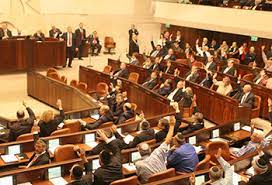
The Knesset from the .gov site

Israel

Israel is a parliamentary democracy, consisting of legislative, executive, and judicial branches. Its institutions are the Presidency, the Knesset (parliament), the Government (cabinet), and the Judiciary.

The system is based on the principle of separation of powers, with checks and balances, in which the executive branch (the government) is subject to the confidence of the legislative branch (the Knesset) and the law guarantees the independence of the judiciary.

The President in this system has just a few symbolic duties, with no political power. Defined by law, his duties are mostly ceremonial and formal, such as ceremonially opening the first session of a new Knesset; accepting the credentials of foreign envoys; signing treaties and laws adopted by the Knesset; appointing judges, the governor of the Bank of Israel and heads of Israel’s diplomatic missions abroad. He can pardon prisoners and commute sentences, on the advice of the minister of justice.

The President is elected once in seven years by a simple majority of the Knesset from among candidates, nominated based on their personal stature and contribution to the state.

The Israeli parliament, The Knesset is the legislative authority elected in a general election.

The Knesset, through its committees, conducts general debates on government policy and activity, as well as on legislation. Debates are conducted in Hebrew, but members may speak Arabic, as both are official languages; simultaneous translation is available.

Every citizen is eligible to vote for the Knesset from age 18 and to be elected to the Knesset from age 21. Knesset elections, for a tenure of four years, are general, national, direct, equal, secret, and proportional, with the entire country constituting a single electoral constituency. The Knesset may dissolve itself or be dissolved by the Prime Minister before the end of its term. Until a new Knesset is formally constituted following elections, full authority remains with the outgoing one.

Knesset elections are based on a vote for a party rather than for individuals, and the many political parties, which compete for election to the Knesset, reflect a wide range of outlooks and beliefs. Knesset seats are assigned in proportion to each party’s percentage of the total national vote.

The Government (cabinet of ministers) is the executive authority of the state, charged with administering internal and foreign affairs, including security matters. Its policy-making powers are very wide and it is authorized to take action on any issue, which is not delegated by law to another authority. Like the Knesset, the government usually serves for four years, but its tenure may be shortened if the Prime Minister is unable to continue in office due to death, resignation, or impeachment when the government appoints one of its members (who is a Knesset member) as acting Prime Minister.

In the case of a vote of no confidence, the government and the Prime Minister remain in their positions until a new government is formed. All the ministers must be Israeli citizens and residents of Israel; they need not be Knesset members, but a majority usually are. Ministers, with the approval of the Prime Minister and the government, may appoint a deputy minister in their ministry; all deputy ministers must be Knesset members.

To date, all governments have been based on coalitions of several parties, since no party has received enough Knesset seats to be able to form a government by itself.

The Judiciary – Israeli law guarantees the absolute independence of the judiciary. Judges are appointed by the President, upon recommendation of a special nominations committee, comprised of Supreme Court judges, members of the bar, and public figures. Judges’ appointments are for life, with a mandatory retirement age of 70.
Filed Under: From the Newsletter, MainStoryWidget-right, Politics Tagged With: American Democracy, Democracies, government

The Override Law

November 18, 2022 By Bella Davidov Leave a Comment

God’s kingdom is not a democracy. He is the Supreme Judge and we must abide by His rules and law. We affirm, “the world is filled with His glory.” We appropriate the concept of His divine sovereignty. Until Lord Yeshua returns and establishes His Kingdom on earth, ungodly dictatorships rule many nations. Although there are democracies elected by the people, these are also ungodly, but at least they are not dictatorships.

In a democracy, there must be a separation of powers, in which the essential tasks of governance are divided among the three branches of government in accordance with the perceived strengths of each.

  1. The coalition: the Legislative branch, which in almost every democracy is the main, most important power. It is first because it is elected by the people, and represents most of the people.
  2. The second is the Executive branch, ensuring the state is doing what it legislated. This is equally important.
  3. The third ruling power is the Judicial branch, which is appointed (not elected) to oversee that the government acts according to the law it legislated.

In every democracy, the Judicial branch is independent of the other branches. They cannot force the judges in their rulings.

According to Israel’s state law, only the law is above any judge. The Judicial branch is the lesser of the three branches since it is not elected by the people. Its authority is not from the people, who are sovereign in a democracy. This was the condition of the ruling powers in Israel until the end of the 1970s and the beginning of the 1980s.

Early in the 80s, a gradual change in the balance of powers occurred when the Judicial branch slowly became the most important branch imposing its power on the other two branches.

How did it happen?

In all democracies, the Judicial branch is the third in power. Even when it supervises the actions of the government according to its authority, it is limited in the scope of supervision it allows itself over the Executive branch, and especially the Legislative branch, which in Israel is the Knesset. The Judicial branch must restrain itself as the law permits since it is not an elected body. Judicial doctrines were developed to give substance to that restraint.

Judicial Restraints Removed

The first doctrine is the separation between the elected government, the ruling power, from the appointed Judicial branch.

This separation discourages courts from intervening in political questions best left to more representative branches of government. The Supreme Court’s role is to safeguard the rule of law and protect individual rights, ensuring that government action violates no explicit law while reviewing the activities of the Executive and Legislative branches. The Judicial branch has no right to abolish government laws or make up new laws that were not voted on and approved by the government. However, such is the case now in Israel wherein exists a sort of Supreme Court dictatorship.

In recent years, the State of Israel has undergone a constitutional revolution, especially with the 1992 passage of the Basic Law: ‘Human Dignity and Liberty.’ This law has only 6 conditions, not including freedom of speech or the right for the Supreme Court to abolish or add laws.

Nevertheless, the Supreme Court gave itself rights and the power to abolish Knesset legislation that in the Supreme Court’s opinion violates normative human rights guarantees.

The result is that today virtually every controversy in Israeli public life ends up, sooner or later, in a courtroom.

Justice Aharon Barak

The Supreme Court’s unprecedented power to shape the ideological debate in Israel started and is now dependent on Aharon Barak’s judicial worldview, which is mainly left-wing progressive liberal, with the excuse that the views serve the values of Israel as a “Jewish and democratic” state.

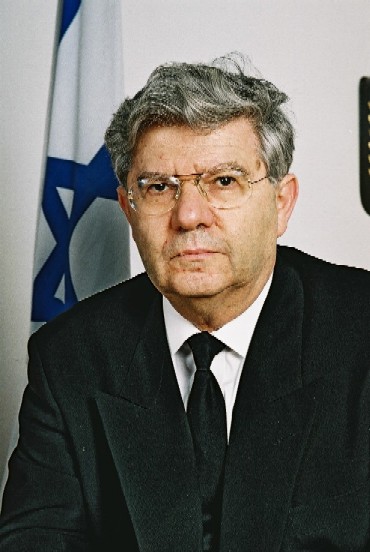
Aharon Barak – photo from Wiki

A brilliant and accomplished lawyer and judge, Aharon Barak was Attorney-General in 1975, and in 1995 became the Supreme Court president, a post he held until he retired in 2006.

Barak’s legal philosophy is that the law always has its say, on everything, and that every human behavior is subject to a legal norm, including politics, by keeping the actions of the government under his view of the law.

However, in a democracy, the court’s capacity to protect the rule of law is limited by the judge’s inherently passive role in politics. No matter how much a government action may offend his sensibilities, a judge can only review a case that comes before him in court, and even then only if the plaintiff has a sufficiently direct interest in the case, and if the issue at hand is of the kind that courts are allowed to adjudicate.

There are principles that limit the power of the judges:

The principle of “standing” dictates that only a party or someone who has suffered an injury to a right or personal interest can be heard (stand before a judge.) This restriction is important for courts to protect themselves from being overwhelmed by what the legal literature calls “unnecessary” litigation cases that do not require a judicial remedy, whose adjudication only distracts the court from properly being used. In other countries, there are laws concerning the principle of standing and the desired scope of limitation. The higher the level of limitations, the less involvement of judges in the ruling of government cases. So, the first thing that Aharon Barak did was to eliminate this requirement for the right of standing from the Israeli Judicial system. Now everyone can petition the Supreme Court in any case and matter, and the government has to be subject to the Judicial branch, meaning his view of the law.

The second principle Aharon Barak canceled was the principle of non-judgment or “justifiability;” determining which issue the court will hear. Because it is the third branch, subject to the other two elected branches, the court should exclude itself from being involved in political matters such as the conduct of foreign affairs best left in the hands of the Executive or Legislative Branches. 

However, now, the Supreme Court can rule in any case and matter presented, without exception, especially in political matters.

Aharon Barak cannot stand the prospect of restricting the Supreme Court, therefore it must intervene even in government, which is an elected legislative power that in a democracy must stay separated from the appointed judiciary power.

Thirdly, Aharon Barak added to the Supreme Court the principle of reasonableness. The Supreme Court decides what is reasonable and what isn’t. Now the Supreme Court can cancel any decision made by the government without exception just because it isn’t reasonable in the judges’ opinion.

Therefore, from now on the name should be: “The Supreme Court of Reasonableness” – the “authority” without authority the Supreme Court gave itself to cancel and add laws.

These are some of the foundations Aharon Barak formed that made the Supreme Court the supreme and only ruler in the State of Israel, not in order to enforce the law, but to make the Supreme Court the ruler of law enforcement, which is contrary to real law enforcement.

The Supreme Court is now the body that decides in any matter, big or small.

Just two examples: 

1. Lately, opposing the office of finances’ opinion, the Supreme Court ordered that loose tobacco be taxed.

2. When Netanyahu was PM last time and legally held several portfolios, the Supreme Court ordered Netanyahu to give up some of them.

To get rid of, not the original Supreme Court, but this Supreme Court dictatorship, there needs to be a Basic Law that will be called, “the law of separation of the ruling powers”, separating the authority of the courts in public law enforcement. This Basic Law will destroy the foundations of the Supreme Court dictatorship formed by Aharon Barak by re-establishing the laws that the Supreme Court abolished without authority. The Supreme Court would be once again the way it is supposed to be.

In recent years, former Supreme Court President Barak and his fellow justices have overruled a number of governmental decisions and actions.

Today any government official in Israel can be brought before the Supreme Court. Indeed, a sizeable number of government moves have already been stopped by the Supreme Court with the excuse of enforcement of the “rule of law.” It has become an ever-expanding empire ruled by judges. As a result, there are serious difficulties for Israel’s democratic political system, and society as a whole. The new government intends to do something about it.

Filed Under: From the Newsletter, Israel, Politics, SideBarStoryWidget-second

Understanding the NEW Israeli Government

June 4, 2021 By Bella Davidov 1 Comment

Then many false prophets will rise up and deceive many.
And because lawlessness will abound,
the love of many will grow cold.
But he who endures to the end shall be saved.

Matthew 24:11-13 NKJV

In the last election on March 23, Israeli Prime Minister Netanyahu’s Likud party won the most seats (30) but together with his right-wing allies, THIS was not enough to form a coalition. Consequently, the mandate to try to form a government went to Lapid.

Yesterday, Lapid announced he had the Knesset’s confidence to swear in a government, thus potentially unseating Prime Minister Benjamin Netanyahu.

Yamina leader Naftali Bennett agreed to join Lapid and would be the first to serve as Prime Minister in a rotation deal. Ra’am, the kingmaker Arab party, signed on the bloc at the last moment.

Hence, the so-called “change coalition”, which is based on left-wing parties as well as some right-wing factions and lawmakers that parted ways with Netanyahu, have – at least on paper – enough votes in the Knesset to win a plenum vote that would end the premiership of Netanyahu, Israel’s longest-serving Prime Minister of more than 12 consecutive years on top of another three years in the 1990s.

But Netanyahu still has about a week to convince enough MKs (Parliament Members) in the “change coalition” to vote against it, thus preventing a swearing-in. As the saying goes: “it’s not over until it’s over.”

Understanding the New Want-to-be Israeli Government

When the children of Israel left slavery in Egypt to become a nation and enter and possess the Promised Land, they had two types of leaders. There was “prophetically-inspired Moses” who was loving but stern, following God’s lead in what the people of Israel needed and not what they wanted. And there was “Aaron,” A people-pleaser who listened to the desires of the people of Israel and fulfilled them by making the Golden Calf.

Today, Naftali Bennett, the head of Yamina is neither of the above.
Bennett has little public support and no legitimacy to serve as prime minister (he wasn’t voted in by the majority of the people.) In the last election, he got only 7 seats compared to Netanyahu who got 30 seats.
Nonetheless, he has convinced himself that he is a figure of historic Biblical proportions.

Bennett claims that everything he does is for the sake of “My People”. This is the recurring theme of his social media posts and interviews:
“When I see “my people” suffering because of leadership failures, I cannot stand idly by; I love my people; My people are hurt, and I will dedicate my whole life to healing the wound.” These statements are a justification for his lies and betrayal.

According to Bennett, not only is the Likud, under the leadership of PM Netanyahu, the only reason behind all that ails the people of Israel, but everything will be “fixed” only once he becomes PM.

The Yamina leader may soon become a Prime Minister with little public support (as we said, 7 seats he received from mostly right-wing voters). His voters are now remorseful and feel betrayed as they believed his platform of not sitting in government with the anti-Zionist Arab representatives. “His people” – the people of Israel – have become irrelevant and are ignored (the majority of Israelis are right-wing and voted for Netanyahu.)

To form a government, a party leader usually needs the support of a 61-seat majority in the Knesset (Israeli parliament) and a vote of confidence. When no one party has a majority, a coalition is built with smaller parties, sometimes from opposite sides of the spectrum.

Currently, the anti-Netanyahu bloc, composed of small mostly left-wing parties, appears to have the edge. Some small parties were originally right in ideology but are acting like the left, although some right-wing MKs in the bloc may eventually defect back to the right block.
As of now, there is

  1. Center-left: Yesh Atid with17 seats (its leader Lapid will be next PM in rotation after Bennett,);
  2. Center-left: Blue-white with 8 seats; Yamina (originally Right) with 7 seats;
  3. Israel Beiteinu: – lost their Right identity, mainly anti-Bibi – with 7 seats;
  4. Labor: Left with 7 seats;
  5. New Hope: – Right in ideology but mainly anti-bibi with 6 seats; and
  6. Meretz: – Extreme left – with 6 seats.

These parties total 58 seats and they are claiming to be able to form the 61 seat government.

Yet, to pass any legislature, Bennett’s government would need the support of Ra’am, the anti-Zionist, left Arab Muslim party.Read more about Ra’am in this article.

How did these parties ever come together?

The new prospective (“Mish-Mash”) coalition’s diverse members share little in common apart from the desire to end the 12-year run of Netanyahu, Israel’s longest-serving leader of right-wing administrations.

Prime Minister Benjamin Netanyahu warned on Sunday that Yamina leader Naftali Bennett’s decision to partner with the Left to form a so-called “change government” would spell disaster for Israel and was a form of betrayal of the Right.

He addressed Bennett directly: “Naftali, your values are not even light-weight; not a single person would have voted for you had they known what you were planning to do (join the Left and the anti-Zionist Arabs).”

Naphtali Bennett shrewdly hid his true intentions while preparing for this moment when he revealed, by his actions that his party “Yamina” is Yamina In name only (Yamina means “to the right” in Hebrew.) Bennett has abandoned his right-wing ideology and is going to the left instead.

Apart from a handful of Yamina supporters, the vast majority of those who are backing Bennett and his latest moves are supporters of Labor, Meretz, and Yesh Atid. The left-wing parties will be happy to see him as Prime Minister, allowing them to have major offices in the new government, especially Labor and Meretz who hardly passed in the last elections.

On Sunday, for the first time, Bennett ripped off his mask and told everyone the truth, including the journalists and media people who followed him. As of now, it seems that most members of his small party will follow him, unless at the last minute some may have a bit of value or ideology left in them to leave. Here is an account of one of them:
“I did everything I could in recent months so that the Yamina Knesset list would garner a significant number of votes in the elections and Naftali Bennett would be Israel’s Prime Minister. I believed in him, his integrity, and his love for Israel and Zionism, and I supported him with all my might… Yet this is not the path. He said loudly and clearly: “I won’t be Prime Minister with 10 mandates. That [is] not moral, and it’s not democratic” (Amichai Chikli, an MK as part of the Yamina faction.

He is right. The premiership should express massive -+ public support we didn’t earn.

Every decision he makes as Prime Minister will require the de facto approval of the Yesh Atid party (that is on rotation bases co-partner in premiership), a party that is three times as large as Yamina but shares none of its founding principles [platform]- neither questions of the relationship between the legislative and judicial authorities or questions of policy or public security.

There is no real agreement on issues concerning the State of Israel’s DNA either (Zionism). Yesh Atid identifies with President Reuven Rivlin’s talk of a “collection of tribes” and opposes the nation-state law (the State of Israel’s definition of Israel as the nation-state of the Jewish people). Yamina, on the other hand, supports it, accusing PM Netanyahu of spreading fake news about him, Bennett said:

“Bibi’s spin is an absolute lie. These are my principles for the next government:

  1. Lapid will not be prime minister. I am a man of the Right, as are a majority of the voters (even though they gave Netanyahu 30 and Lapid 17).
  2. The next government that will be established will be a right-wing government that cares [about its voters].”

In retrospect, it turns out the spin was Yamina’s (Bennett): allowing, on a rotation basis, Yesh Atid leader Yair Lapid will be prime minister (after Bennett’s 2 years), and although a majority of Yamina’s voters are members of the Right, the government that will be a Left, Center-left government, with the addition of a few “fig leaves” from the Right. (Bennett’s Party) Yamina broke a majority of its promises to voters, through the gross violation of the most basic of democratic codes: Tell the truth to voters and make an honest effort to meet your commitments to them.

Now for the significance of the decision to establish a left-wing government – from a societal standpoint, this is in no way a “unity” government, but rather a government that excludes over a million right-wing voters.

Now that Naftali Bennett and Ayelet Shaked (his second in command ) two self-proclaimed “leaders”) who started as ideological Right-wing (hence the name Yamina, “to the right”) defected from their home base to form a leftist government supported by anti-Zionist, pro-Palestinian Arab parties, what could be the national consequences of their move?

The Danger from Outside

The ministers in this new government who support the Biden administration’s Middle East policies will hold an absolute majority.

Iran. The Biden administration’s commitment to returning the US to the 2015 nuclear deal with Iran leads only in one direction. Biden’s Iran policy guarantees that Iran will achieve its goals of developing A nuclear arsenal by 2030, after receiving billions of dollars in cash payments in the form of sanctions relief and new lines of credit. This will aid the Khomeinist regime’s ambition to deepen its control over Yemen, Iraq, Syria, and Lebanon, to expand its war against Saudi Arabia while compelling the Gulf States and maybe even Jordan to surrender. After that, it will target Egypt and the Sisi government in order to replace it with Muslim Brotherhood leadership. Unfortunately, unlike the former Trump and Netanyahu governments, the Left-wing west, including the US and the new Israeli government is too naïve to see or understand the above scenario and even support it.

The leftist government that Bennett and Shaked are about to form will not be able to oppose Biden’s policies because most of its cabinet ministers support those policies.

The Abraham Accords. And this spells the demise of the Abraham Accords. The rationale behind those peace deals was faith in Israel’s willingness to confront Iran even in defiance of the US. Once that is gone, the Abraham Accords will not be able to survive.

The Biblical Heartland – Judea and Samaria. As far as the territories in Judea and Samaria, also known as the West Bank, the leftist government that Bennett and Shaked are now forming will allow for the Palestinian Authority’s complete seizure of Area C (area controlled by Israel,) which the Palestinians have undertaken with funding by left-wing international organizations, endangering Israel’s strategic interests and imperiling its communities. Most of the members of a mostly left government will object to any steps to secure Israel’s rights and strategic interests in the territories. Not only are they themselves ideologically committed to undermining Israel’s rights in Judea and Samaria, but they also will never dare to defy the Biden administration, which supports Palestinian control over the area. Israeli PM Netanyahu could have stood against Biden as he stood firm against Obama.

Hamas and Gaza. Under the leftist government, Hamas will rebuild its military capabilities in a matter of months. With the economic and political support from the Biden administration, the EU, and the UN, Hamas will be able to import all the building materials and other products it requires without limitations. Here too, a majority of the cabinet members support the US plan to “rebuild Gaza” for “humanitarian” reasons, unaware of Hamas’ strategy to use these materials to rebuild its underground “Metro” of tunnels to infiltrate Israel to kill Israeli citizens and/or kidnap Israeli soldiers.

The Danger From Within

In the international arena, the establishment of a left-wing government that includes those who side with the International Criminal Court will be yet another blow to the nationalist-conservative parties. We can expect to see victorious rejoicing in [Biden’s] Washington, Ramallah, the Gaza Strip, and above all else, Iran. (They will be happy to see strong right-wing Netanyahu go.)

The new government can be formed only with the support of the anti-Zionist Muslim Arab party Ra’am, which has expressed the desire for Israel to be a nation of all its citizens and not only a state of the Jews. [Please check our blog about the Nation State law in Israel.]

When it comes to the balance of power between the legislative and judicial branches, the State Attorney’s Office and the judicial branch will be handed a victory. The justices of the Supreme Court (mostly left-wing) and attorneys in the Attorney General’s office and state prosecution, WHOSE aim is to have complete power over the Knesset and Government offices, supported by a large majority of ministers in the leftist government now being formed, will be able to exercise unchallenged authority over all aspects of public life. The chance of restoring the powers of Israel’s elected leaders and returning sovereignty to the people will be gone the minute this government is sworn into office.

This is going to be (if it happens AT all) the most radical and weakest government Israel has ever known.

A Little History

In 1990, in rotation with Yitzhak Shamir (right-wing) Shimon Peres (left-wing) secured the signatures of 61 MKs to set up a government with himself as PM. At a celebratory Knesset session, convened to swear in the new government, two members who had promised to back Peres failed to show up. Mr. Peres announced his intention to make peace negotiations with Palestinians his new government’s top priority. The defectors opposed a government that depended on Arab members of parliament for support, and also rejected the return of occupied land in exchange for peace. Peres failed to get the needed 61 MKs to form a coalition, so the Right remained in power for another two years.

We hope and pray that it will happen again, with one difference. Back then, it was Peres and the Left who were subverting the Right. Today, it’s Naftali Bennett, from the Right who is willing to hand over power to the Left.

Filed Under: From the Newsletter, Politics Tagged With: Bennett, Chikli, Lapid, Mansour, Rivlin, Shaked

Who is the Ra’am Party – and How Did They Join The New Government?

June 4, 2021 By Bella Davidov Leave a Comment

Ra’am is the Islamist party in Israel. The charter that guides Ra’am, the Islamist party representing the Arab citizens of Israel, demands the Right of Return for Palestinian refugees, saying “there can be no allegiance” to Israel, and deems Zionism a “racist, occupying project.”

Ra’am is the political wing of the Southern Islamic Movement, an organization inspired by the Muslim Brotherhood. It was updated in 2018 and reviewed at a 2019 conference in Nazareth, which was reportedly chaired by Ra’am leader Mansour Abbas. The Southern Islamic Movement’s charter takes positions considered offensive to most Jewish Israelis.

The Charter states furthermore:
“The State of Israel was born of the racist, occupying Zionist project; iniquitous Western and British imperialism; and the debasement and feebleness of the Arab and Islamic [nations].”

It calls for the so-called right of return for Palestinian refugees who left or were expelled in 1948 (in very small numbers.)

Such a move is widely seen as a red line by most Zionist Israelis, who view an influx of potentially millions of Palestinians to Israel as spelling the demographic end of the Jewish state. (Palestinian refugees are the only refugees in the world, who were not absorbed by the other countries through the years, and who consider their children, grandchildren, and great-grandchildren also refugees.)

Ra’am embraces a two-state solution as a possible framework, declaring that a Palestinian state ought to be established “alongside Israel” in the West Bank, Gaza, and Jerusalem. But it notes that a right of return for Palestinians must be included in that agreement.

The charter also states: “We all (Arabs) are [united as] one hand until the occupation ends and a Palestinian state is established in the West Bank and the Gaza Strip and in noble Jerusalem; when the expelled and displaced return to their homes and their homeland.”

As Kingmaker in forming the new coalition, the Arabs used the principle in Islam called “Tkiya” that allows the minority to outwardly pretend to be part of the majority when in a hostile environment but inwardly remain in opposition all the while awaiting the opportunity time to take advantage of the majority for their purpose.

Hence, Mansour Abbas has used this “Tkiya” principle to join the Israeli Jewish coalition Government by taking advantage of Lapid and Bennett’s  great desire to replace Netanyahu as Prime Minister at any price. The New would-be Israeli “government-of- change” government’s commitment to this Islamist party could be Zionist’s bankruptcy:

Ra’am has unveiled its coalition agreement with Yesh Atid, making it the first time in decades that an Arab party has joined the Israeli government coalition.

Show Me The Money

As part of the agreement, this Muslim Arab party in Israel demanded and received 30 billion shekels (about 9.25 billion dollars,) for a plan aiming to integrate the Arab sector and another 2.5 billion shekels (about 770 million dollars) for a plan to reduce crime in the Arab sector. In addition, 20 billion shekels (about 6 billion dollars) for a ten-year plan to improve infrastructure in the Arab sector, and 500 million shekels (about 150 million dollars) spending money for “supporting the local authorities.” The total amount is a little over 16 billion dollars. These are staggering amounts to grant a small party of 4 seats. Also, within a month and a half, three unrecognized (illegal) Bedouin “villages” will be recognized and become legal, and the rest (unknown number) within the next 9 months.

Filed Under: Politics Tagged With: Arab Israelis, government, Ra'am

Missionary Law in Israel

April 28, 2021 By Bella Davidov Leave a Comment

Israel is a Jewish and Democratic state, and as such its laws reflect both the Jewish Rabbinic traditions, as well as the obligation to international norms regarding human rights and freedoms. The courts and law enforcement authorities uphold the right of freedom of expression and freedom of religion for minority groups in Israel. A precedent was established when judges ruled that: “The spread of opinions by way of distribution of flyers to passersby in public places deserves special recognition and protection of the court…”

Questions regarding missionary activity in Israel usually concern Christian organizations, or Messianic Jewish groups, such as Jews for Jesus. The reason is that these believers often see evangelizing Israel as a fundamental expression of their faith.

In Israel, it is legal to express one’s worldview, including religious beliefs, even if they are not accepted by the majority of the public. The exception to this rule is what is known in Israel as the “Missionary Law.” The “law” is actually composed of two separate sections of the Israeli criminal code:

  1. Section 174 of the Penal Code – 1977 forbids a person to entice another to change his or her religion in exchange for material benefits (such as financial support and/or donations, helping feed and clothe the poor, or in any way give charity while evangelizing.)
  2. Section 368 of the Penal Code forbids persuading or encouraging a minor (under the age of 18) to change his or her religion. This law prohibits conducting any ceremony for a minor to change religion without the consent of both parents.

The Israeli Declaration of Independence, signed by David Ben-Gurion, Israel’s first Prime Minister and the nation’s founding fathers, states the following:

“Israel will ensure complete equality of social and political rights to all its inhabitants irrespective of religion, race or sex; it will guarantee freedom of religion, conscience, language, education and culture; it will safeguard the Holy Places of all religions; and it will be faithful to the principles of the Charter of the United Nations.”

In 1992, the Knesset (the Israeli parliament) passed the Basic Law: Human Dignity and Liberty, which declares Israel as a “Jewish and Democratic” State. The Israeli Supreme Court ruled that basic human rights–such as the right of freedom of religion and conscience, as well as freedom of speech and expression–are protected in Israel since they are an inherent part of a person’s dignity as a human being.

Demographic statistics of the population in Israel

Israel’s population is estimated at 9,300,000 residents. Out of these, close to 7,000,000 (about 74% of the total population) are confirmed Jews. 1,966,000 (about 21.1%) are Arabs and 467,000 (5.0%) are considered Others.

Those identified as “Others” include; non-Arab Christians, Seventh-Day Adventists Bahai’s, Samaritans. Other “Others” are Karaite Jews, Messianic Jews, Jehovah’s Witnesses, and immigrants from the former Soviet Union. They identify themselves as Jews but do not satisfy the Orthodox Rabbinical Authorities’ definition of “Jewish” which the Israeli government uses for civil procedures.

The Jewish (recognized as such by the government) population of Israel can be divided into three groups: Orthodox, Traditional, and Secular. Secular Jews make up 41.4% of the Jewish population, Traditional Jews 38.5% of the population, 20% are Orthodox and ultra-Orthodox. In Israel, the Reform and Conservative movements are estimated to make up 7.6% of the Jewish population, a significantly lower number compared to the Jewish diaspora.

Secular Jews

Secular Jews make up a little over 40% of the Jewish population. They identify themselves as Jewish, but not in a religious way and many don’t even believe in God. Many secular Jews practice certain aspects of the religion, such as celebrating the traditional Passover evening meal with family and friends, and/or observing the day of Yom Kippur by fasting and even attending synagogue services. They may even have Friday evening/ Saturday meals with the lighting of candles and blessing the wine and bread, but would drive afterward and light a cigarette. Secular Jews are largely supporters of the Israeli Labor Party and a Secular Zionist state.

Traditional Jews make up about 30% of the Jewish population in Israel.Many of these “traditional Jews” differ from the Orthodox only by less severe observance of the Rabbinic laws. As far as political involvement, many traditional Jews join the Likud political party (the largest party headed by PM Benyamin Netanyahu) or the Sephardic (Jews from Middle East countries) religious party, Shas. they are often seen wearing knitted Kippahs (a small brimless cap.)

30% of the Jewish population identifies as Orthodox (“dati”) or “ultra-Orthodox” (“Haredi”).Politically, they join one of the major religious parties, such as Torah Judaism (Yahadut HaTorah, mainly Ashkenazi, Jews from eastern and western Europe.) Orthodox Jews also wear Kippas, not necessarily knitted.

The ultra-Orthodox (Charedi) is the smallest part of the population, representing only 12% of Jews living in Israel. The Charedim tend to live in their own communities, observing stricter Jewish law by following moral and dress codes passed down from many generations. This part of the population is seen wearing black hats and black Kippahs, and include some Hasidic (sect of ultra-orthodox Jews).

The Arab Population in Israel

Among the 17% of the Arab population in Israel (citizens,) 83% are Muslims, 9% are Arab Christians (mostly Nominal) 8% are Druze. About 10% of the ones who consider themselves Muslims are secular, about 30% are traditional – not so religious. About 50% are religious and 9% are very religious.

Enforcing the Messianic Law

There have been cases where the police detained people accused of illegal missionary activity in Israel, but no one has been charged or sentenced according to these laws. Thus, the authorities’ anti-missionary activity is largely in the form of border controls by the immigration authorities and through the Ministry of Interior’s limitations on aliyah (Jewish immigration to Israel) for missionary activists or those suspected of being involved in missionary activity in Israel.

The Israeli border control immigration officers are authorized to approve or refuse entry to Israel for foreign visitors who wish to enter the country as tourists. The border control officials have a wide range of discretion when making the crucial decision to deny entry to a potential visitor. In July 2017, the Ministry of Interior published an updated list of reasons that may cause denial of entry to Israel. Suspicion of missionary activity was also placed on this list for the first time in 2017.

It has happened that tourists have been expelled due to allegations of missionary activity. These cases usually involve participation in a public missionary campaign with a high-profile organization. This activity may attract resistance from the local public and complaints to the police. Although the allegations may be false, it is extremely difficult to stop the expulsion process once it starts.

The Ministry of Interior is particularly suspicious of Christians and Messianic Jews in relation to aliyah to Israel. It is therefore recommended to receive legal counsel prior to starting such a process. Regardless of the legally grey zone surrounding these issues, a person actively engaging in missionary activity in Israel will almost certainly be denied the right to immigrate. This is because Christian proselytizing is considered contrary to the purpose of the Law of Return.

In accordance with the Law of Return, any Jewish person (or descendant of a Jewish person up until the third generation) is entitled to obtain citizenship as a new Oleh (new immigrant) of Israel, so long as they did not convert to another religion. In general, the State of Israel considers Messianic Jews to be Christians, and so, any Jew in the Messianic stream of Judaism is deemed a convert to Christianity. Thus, aliyah becomes very difficult for a Jew who embraces faith in Yeshua (Jesus). That said, there is no legal prohibition against someone who is not Jewish according to Jewish Rabbinic Law (does not have a Jewish mother) making Aliyah if the father has a Jewish mother. This applies even if they are part of another religion, as long as they did not convert. This applies also to Messianic Jews whose mother converted to Christianity before they were born.

Filed Under: Aliyah, Bottom-3 stories, Israel, Messianics, Politics Tagged With: basic law, law, missionaries

  • « Go to Previous Page
  • Page 1
  • Page 2
  • Page 3
  • Page 4
  • Interim pages omitted …
  • Page 10
  • Go to Next Page »

Primary Sidebar

  • Return to Home Page
  • Email

War

They Shall Come Back

And they shall come back from the land of the enemy. There is hope in your future, says the Lord, your sons shall come back to their own border.  Jeremiah 21:16b-17 This happened today, Monday October 13. Exactly two years ago, on the Holiday of Succot (booths), Hamas brutally attacked southern Israel from Gaza, murdering 1,200 Israelis and abducting 251 into […]

The U.S. Administration – Friend or Foe of Israel?

May 12, 2024

"It will come about on that day that I will make Jerusalem a heavy stone for all the peoples; all who lift it will injure themselves severely. And all … [Read More...] about The U.S. Administration – Friend or Foe of Israel?

Recent Posts

  • U.S. President Trump’s Epic Fury -Where Is It Going?
  • Israel at War with Iran – Operation Roaring Lion
  • The Jewishness of Christmas
  • Hamas in America
  • They Shall Come Back

Categories

© MMXXVI Yeshuatami, Ashdod ISRAEL