• Skip to primary navigation
  • Skip to main content
  • Skip to primary sidebar
  • Return to Home Page

Yeshuatami News Blog

All Things Israel

  • Conflict
    • Terrorism
  • History
    • Aliyah
    • End-time Prophecy
  • Politics
    • US
  • Israel
    • Holidays
    • Our People
  • From the Newsletter
    • Newsletter Archive
  • Give

Hebrew

The Name of Jesus

September 21, 2025 By Bella Davidov Leave a Comment

What’s in a Name?

Jesus’s original name was not Jesus. Jesus is derived from a German transliteration of the Latin name that itself was transliterated from a Greek transliteration of His original Hebrew name, Yeshua, that became Jesus in English.

Jesus and his first followers were all Jews whose Hebrew names (with meanings only in Hebrew) were all transliterated into other languages.  Yohanan became John in English, Matityahu became Matthew and Yehuda Ish-Krayot became Judas Iscariot etc . Even the angels are called by Hebrew names like Gavriel (Gebriel) and Michael, all having meaning only in Hebrew. Gavriel means God is mighty, and Michael means Who is like God (a rhetorical question.) The letter “J” in Jesus doesn’t exist in Hebrew, the language which Yeshua and His disciples spoke. Neither does “J” exist in Aramaic, another language that Jesus and His disciples sometimes spoke.

Greek and Latin

The New Testament was originally written in Greek, which uses an entirely different alphabet than Hebrew and English. There is no “sh” sound in Greek as in the Hebrew name Ye-sh-ua, so in Greek the letter “s” replaced the “sh.” Furthermore, Greek names ending in the sound “a” as Yeshu-a ends are usually feminine. Hence, the “a” at the end of the name Yeshua became “s” to make it masculine. So, Yeshua became Yaysoos. When the bible was translated into Latin from the original Greek His name became “Yesus” since there is no J in Latin either.

As the Latin-speaking Catholic church grew, the Latin Name, Yesus, spread throughout Europe. Even the original English King James translation of the bible used the name “Yesus,” until it evolved into the name “Jesus. “

Swiss German

There are speculations as to the origin of the name Jesus, which is being used today by Anglophone believers. Some say it originated in Swiss German where “J” resembles the English Y.

When Catholic Mary the 1st became Queen of England in 1553, many English Protestant scholars fled the country and settled in Geneva, Switzerland. In 1560, they composed the English edition of the Geneva bible and used the name, Jesus. which became very popular among Anglophones even with Shakespeare. 

America

Eventually the Geneva bible came to the New World with the Mayflower. By 1769, most English translations of the Bible used the name “Jesus.”

Many Jews know Him by the name Jesus which sounds nothing like His Hebrew original name, Yeshua. The name Yeshua was known and used in Jewish history in the bible – (1 Chronicles 24:11, 2 Chronicles 31:15, Ezra 2:2,6,36). It’s a version of Yehoshua (Joshua,) which means “God is salvation”.

The Jewish People

To Jews, the person and name Jesus mean nothing. To them Jesus is the former Jew who created “Christianity,” a new religion where gentiles worship Him as their God and savior and Christ.

Most Jews never read the Gospels nor the New Testament writings that contain many quotes from the Old Testament. However, Yeshua never created a new religion. As a matter of fact, He was against man-made religion and the traditions of man. 

During the time He walked on earth, Yeshua wasn’t Jesus. Neither was His mother the Catholic “Holy Mary,” nor Yohanan John the Baptist, nor  Simon-Kaipha St. Peter. 

They were all Jewish followers of Yeshua, the Jewish Messiah and all had Hebrew names. In Hebrew they were called Notzrim, which means from Natzereth (the Jewish city of Nazareth in the Galilee, where Yeshua grew up.)

Today, Jews use the name “Yeshu” instead of His real name “Yeshua.” 

Israeli Misunderstanding

The Rabbis, however, out of contempt, omitted (and still do)  the last letter, A, to form the name “Yeshu” which is also a derogatory acronym for “Y’mach Sh’mo V’Zichrono” (“May his name and memory be blotted out”.) Sadly, today most Hebrew-speaking Jewish Israelis call Him “YESHU”, totally unaware of the negative connotation, thinking it is His real name, which means nothing, while Yeshu-a means Salvation. 

Each letter in the Hebrew alphabet has a name. The letter A,  pronounced “ah,” (ע in Hebrew,) is named Ayin, which also means “eye”. 

When  the last letter “Ayin”  was removed and with it the true meaning of His name, Salvation,  the “eye ” as it were, was removed as well, thereby spiritually blinding Jewish people from seeing His true nature, the Savior.

When Israel rejected Yeshua as the Jewish Messiah, Salvation went out to the rest of the world and the transliteration of His Name became known to every nation in their own language.

Many non-believers who know Him as Jesus Christ think that “Christ” is His last name, like the family name, “Smith,” John Smith.

Even here in Israel, most don’t know that “Christ” is the Greek word for Messiah, and that “Jesus Christ” really means “Yeshua the Messiah.”

The Truth of His Name

When The Angel of the Lord appeared to Yoseph (Joseph) and told him not to fear taking pregnant Miriam (Mary) as his wife because the baby was of the Holy Spirit, He actually spoke Hebrew and told Joseph to call His name “YESHUA”- “Ki hu YOSHIA et amo mehatotehem.” (“and you shall call his name Jesus, for he will save his people from their sins” (Matthew 1:21, as written in Psalm 130:8: “and He shall redeem Israel from all his iniquities.”)

Only in Hebrew does the Name and the reason for it have meaning; “YESHUA is the noun for Salvation and YOSHIA is the verb, will save, both stemming from the root letters YESHA ( ישע ).  In English, SAVE is not a verb derived from the word JESUS.

We don’t expect our English-speaking friends to stop calling Him Jesus but rather to understand the origin of His name. 

However, here in Israel, His original Name is important as we witness to Israelis about “Yeshua/Salvation,” declaring He is our Jewish Messiah Who saves them from their sins and leads them to Our Father in heaven.

We want to bring back the “eye,” the letter Ayin ע to the One called  Yeshu, that He is not “ישו”” but “ישו–ע” Salvation. 

He is not a foreign personality of a non-Jewish religion but our Jewish Savior, Who was prophesied in our own Hebrew Bible. He is One of us, an Israeli, born and reared in Israel. He never left the land of Israel, except when He rose to heaven after His resurrection from the dead.

One day all Israel will be saved (Romans 11:26.) and will look upon Him Whom they pierced (Zechariah 12:10.) They will know Him by His real name, YESHU-A, when the “A” or “eye” is restored. Then they will recognize Him as their Jewish Messiah.

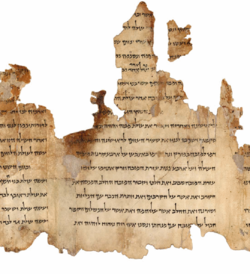
For now, He is still Yeshu to them, a foreign gentile figure, as depicted in many museums worldwide.

However, one day He will reveal Himself to Jews and Israelis as their brother, from the  tribe of Yehuda (Judah) and say to them, “It is I, Yeshua your brother.”

Much like when Joseph’s brothers came to Egypt  for food, they met an Egyptian monarch, dressed and speaking like an Egyptian (he spoke to them through an interpreter.)

Never in a million years would they have known him as their Hebrew brother, Joseph, who appeared so foreign.

They were shocked when he revealed himself to them and said in Hebrew: 

“I am your brother, Joseph, whom you sold into Egypt. And now do not be distressed or angry with yourselves because you sold me here, for God sent me before you to preserve life.

(Genesis 45:4-5)

Please pray that the eyes of understanding of Israel will be opened to recognize and receive Messiah Yeshua as their Jewish savior. In Yeshua’s Name we pray! AMEN! AMEN AND AMEN!

Image from christianforums website
Filed Under: From the Newsletter, History, Israel, MainStoryWidget-right Tagged With: Hebrew, Name of Jesus, Yeshua

Yeshua’s Words and Their Influence

September 27, 2021 By Bella Davidov Leave a Comment

“Go into all the world and preach the gospel to all creation”
(Mark 16:15)

Hebrew, the Language of God’s Word

Yeshua spoke in His mother tongue: Hebrew. The original Old Testament was written in Hebrew, and Yeshua often quoted scriptures in Hebrew. He spoke to His Jewish disciples in Hebrew. He also spoke Aramaic and Greek or Latin when necessary. The writing on the cross, “King of the Jews”, was first in Hebrew – the main language in use in Israel at the time of Jesus’ death and resurrection, and then also in Latin and Greek [John 19:19-20.]

The angel Gabriel spoke Hebrew to Miriam when he came to announce to her that she would have a Son by the Ruach Hakodesh (Holy Spirit.) The angel said to her, “Mary, do not be afraid. You have found favor with God. See! You are to become a mother and have a Son. You are to give Him the name Jesus”.

However, the above scripture is the English translation of Hebrew. The angel’s name is Gavriel, which means in Hebrew “God is my strength”. Mary’s original name is a Hebrew name – Miriam, and Joseph is the Hebrew name Yoseph. The angel told Miriam in Hebrew that the name of the baby would be Yeshua. The English letters of Jesus come from the Hebrew letters of Yeshua, His original Hebrew name. The word Jesus, which is the wonderful English Name of our Savior, has no meaning in the English language, but in Hebrew Yeshua means Salvation.

When Miriam asked Gabriel, how that could be, the angel quoted the scripture in Hebrew from Gen. 15:28: “ki lo yipale’ me’Elohim kol davar”, translated, “for nothing is impossible for God”.

The angel Gavriel (Gabriel) appeared to Joseph in a dream telling him “Joseph, son of David, do not fear to take Mary as your wife, for that which is conceived in her is from the Holy Spirit.” He then said…After her baby is born, name him Jesus, “because he will save his people from their sins.”

He actually spoke in Hebrew because he said: name him Yeshua (Salvation) because he will Yoshia (save) his people (Israel) from their sins. Only in Hebrew does His name have meaning – salvation, and the verb Yoshia (save) is a derivative of the noun Yeshua, salvation.

Yeshua’s Words and Their Influence Today in Israel

God’s Word is alive, powerful (Heb. 4:12) and influences every area of life. Yeshua lived here in the land of Israel and His supreme teachings touched all peoples and cultures. In Israel, modern Hebrew, which is based mainly on the ancient biblical language, is the most popular language and has also incorporated many words and sayings from other sources and cultures.

Some of Yeshua’s sayings are used today in Israel and other places, and people don’t realize that He is the source. For example, Israelis often say of a person who is down-to-earth and has roots in the Israeli culture that “He is the salt-of-the-earth”, today. (In Matt. 5:13 Yeshua said to His followers that they were the salt of the earth.)

Another saying is, “…. no prophet is accepted in his hometown” (Luke 4:24) There is no other mention of that saying by anyone else before Yeshua. Yet it is a saying often used by Israelis, and most of them do not know that Yeshua was the One who said it first.

Another saying that Yeshua used, is found in Matthew 7:3, “And why do you look at the speck in your brother’s eye, but do not consider the plank in your own eye?” This saying has become part of the writings of the Rabbis in the oral law that many Israelis use, not knowing that it was Yeshua who originated this saying.

At the end of John’s wonderful gospel, John 20:30-31, and 21:25, He said that there were also many other things that Yeshua did, which if they were written one by one, I suppose that even the world itself could not contain the books that would be written. Amen.

Glory – Kavod

The word glory has many interpretations. The manifest presence of God is a level of glory. It is the Hebrew word, Kavod, which comes from the word Koved, meaning weight, heavy. There are two types of weight.

  1. There is the physically heavy weight. This word in Hebrew is Mishkal. Weight in the physical realm.
  2. Then there is the weight that carries with it authority, like the word of an important person. The words of an important person carry great weight; when he speaks, they cause people to submit to what he says.

When Yeshua walked in the earth, He showed the manifest Presence of God, the miraculous works of God, the attributes of God, the nature of God; all of this is glory. People marveled at how He spoke with such authority, teaching unlike any of the teachers of that day. His words carried weight – Kavod.

There is another term in Hebrew Israelis use often to tell someone who has done something great, or succeeded in something: “Kol Ha Kavod,” which literally means, all the Kavod – power and honor. As believers, we say that only Yeshua deserves to receive ALL the Kavod – the glory and the honor.

Please Pray: As our hearts yearn and we pray for our people, ask that God will touch them with a terrific hunger and thirst for His Word, and that His awesome love will melt away the many prejudices against Yeshua, enabling them to look upon Him and consider His wonderful life-giving teachings.

We love and appreciate you very much. Thank you for your faithfulness in standing with us for the salvation of Israel, in prayer and financial support. We pray for you too from Zion, for God to supply all your needs and bless you greatly.

We would love to hear from you – any comments, questions, and/or prayer requests.

Filed Under: Bottom-3 stories, Newsletter Archive, Our People Tagged With: Expressions, Hebrew, Yeshua's Words

The Revival of the Hebrew Language

January 15, 2017 By Bella Davidov Leave a Comment

“Then Eliyakim son of Hikiah and Shebna and Joan said to Rabshakeh,…speak to your servants in the Aramaic language, for we understand it; and do not speak to us in Yehudit (the Jews’ language) in the hearing of the people on the wall.” (II Kings 18:26)

Last week was “Hebrew Day” in honor of the revival of the Hebrew language.

The Shebna Inscription (ancient Hebrew,) from the tomb of a royal steward found in Siloam, dates to the 7th century BCE

Some interesting facts about the Hebrew language:

Hebrew belongs to the West Semitic family of languages. The Hebrew language is the only Canaanite language in use today.

In Hebrew the language is called Ivrit, from the word Avar which means crossed over. Abraham was called a Hebrew because he crossed over (Avar) from his native land of the Chaldean to the land of Canaan. However it was called Yehudit (Jewish) in the Bible after the tribe of Judah (Yehuda) and the kingdom of Judah. The language started to be known as Hebrew from the time of the Second Temple. At the time of the Roman occupation, Jews in Judah also spoke the international languages of Aramaic and Greek.

After the expulsion of the Jews from the land of Israel by the Roman Empire, Hebrew slowly ceased to be the everyday spoken language of the Jews. It survived in the Middle ages mainly as part of the Jewish liturgy, rabbinic literature, writings and poetry.

Pictured: 1st kindergarten Hebrew teacher in Palestina (Israel in the 19th century)

Hebrew as a common language was revived in the 19th century and is still being developed with the help of the Hebrew Academy of the Hebrew language in Israel. Hebrew is spoken by more than 6 million people worldwide, the largest number in Israel followed by the United States.

Present day Hebrew consists of a mixture from several eras. Biblical Hebrew, the Hebrew of Rabbinical writings, languages from the Middle Ages, and modern languages (mainly English). The highest percentage comes from Biblical Hebrew, more than 60%, but some modern words are derivatives of biblical words. The most common words in Hebrew are lo (no) and kol (all)

The days of the week are named according to their number in the days of creations: Sunday is Rishon meaning first, Monday is Sheni – second, Tuesday is Shlishi – third, Wednesday is Revii – fourth, Thursday is Hamishi – fifth, Friday is Shishi – sixth, and only Saturday the seventh day has a special word – Shabbat which means cease from work, because God finished His work of creation and rested or ceased from all His work.

The original Tanakh, (Old Testament) was written in Hebrew, with the exception of some chapters in Daniel and Ezra who lived in Babylon. God spoke in Hebrew to men and women in the Bible, many times using “plays on words” that cannot be translated, and can only be understood in Hebrew. The angel Gabriel spoke in Hebrew to Mary (Miriam) and told her the baby will be called Yeshua which means Salvation in Hebrew. The letters JESUS are transliterated from the letters YESHUA, but in English the word Jesus has no meaning.

Some English words that have their origin in Hebrew:

  • Amen – certainly, verily, comes from the Hebrew word emuna – faith
  • Bath or bathtub – 10 gallons liquid measure, from bath in Hebrew
  • Cinnamon – Kinamon in Biblical and Modern Hebrew
  • Cider – Shekhar in Hebrew – strong drink
  • Hallelujah, Halleluya in Hebrew – praise the Lord
  • Macabre – In French macabre, probably from the Hebrew word makevet – hammer or naqab – perforate
  • Satanic – from the Hebrew satan – adversary, devil
  • Camel – in Hebrew gamal

Filed Under: History, Newsletter Archive Tagged With: Hebrew, History

Primary Sidebar

  • Return to Home Page
  • Email

The Enemy Within

How Persia Became Iran

How Persia Became Iran Iran was known for centuries as Persia – a name originating from “Parsa”. However, this term was given by foreigners, not the people of the land itself. The indigenous people used the name “Iran,” a word that derives from “Airyam” which is a term found in the country’s ancient texts dating […]

The U.S. Administration – Friend or Foe of Israel?

May 12, 2024

"It will come about on that day that I will make Jerusalem a heavy stone for all the peoples; all who lift it will injure themselves severely. And all … [Read More...] about The U.S. Administration – Friend or Foe of Israel?

Recent Posts

  • The Jewishness of Christmas
  • Hamas in America
  • They Shall Come Back
  • The 20 Points of President Trump’s Peace Plan
  • Yom Kippur, The Day of Atonement

Categories

© MMXXV Yeshuatami, Ashdod ISRAEL