• Skip to primary navigation
  • Skip to main content
  • Skip to primary sidebar
  • Return to Home Page

Yeshuatami News Blog

All Things Israel

  • Conflict
    • Terrorism
  • History
    • Aliyah
    • End-time Prophecy
  • Politics
    • US
  • Israel
    • Holidays
    • Our People
  • From the Newsletter
    • Newsletter Archive
  • Give

holidays

Yom Kippur, The Day of Atonement

October 1, 2025 By Bella Davidov Leave a Comment

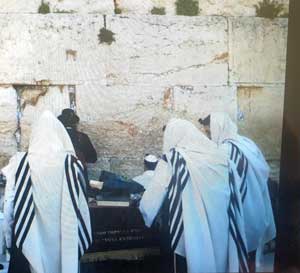
Simcha blowing the Shofar. [Click pic for video.]

At sundown, on Wednesday, October 1, begins the Day of Atonement (Yom Kippur).

Leviticus 23 indicates that Yom Kippur is also to be considered a special Sabbath when no work is allowed.

The Hebrew word translated as atonement is כִּפֻּר [kip·pür] which means, to cover, purge, make atonement, and make reconciliation. Atonement restores the relationship between man and God that was broken because of sin.

Therefore, Yom Kippur is the most important holy day on Israel’s calendar.

Leviticus 23:26-32
“And the Lord spoke to Moses, saying: “Also the tenth day of this seventh month shall be the Day of Atonement. It shall be a holy convocation for you; you shall afflict your souls, and offer an offering made by fire to the Lord. And you shall do no work on that same day, for it is the Day of Atonement, to make atonement for you before the Lord your God. For any person who is not afflicted in soul on that same day shall be cut off from his people. And any person who does any work on that same day, that person I will destroy from among his people. You shall do no manner of work; it shall be a statute forever throughout your generations in all your dwellings. It shall be to you a sabbath of solemn rest, and you shall afflict your souls; on the ninth day of the month at evening, from evening to evening, you shall celebrate your sabbath.”

From sundown to sundown the next day, the entire country of Israel shuts down. Even the roads are closed to all but emergency vehicles. Bicycles are allowed; therefore, many children ride their bikes on the empty streets. Religious, and even non-religious Jews spend most of the day in the synagogue, taking breaks to go for a walk. There is a sense of peace and serenity in the quiet of the day throughout the country.

In biblical times, in the Holy Temple, Yom Kippur was the only day of the year that the High Priest could enter the Holy of Holies. There he made atonement for the entire nation of Israel by putting the blood of the sacrificial goat on the mercy seat.
 

God gave very specific instructions.

The High Priest

Leviticus 16:2
”…and the Lord said to Moses: “Tell Aaron your brother not to come at just any time into the Holy Place inside the veil, before the mercy seat which is on the ark, lest he die; for I will appear in the cloud above the mercy seat.”

The High Priest bathed several times, wore special garments, and offered multiple sacrifices. However, the blood of animals could never take away the sin of the people and God provided a better sacrifice.

Two Identical Goats

The second unique feature of this holy day is the sacrifice; two identical goats were required. The High Priest would symbolically transfer the sins onto the heads of the goats.

Leviticus 16:7-10
“He shall take the two goats and present them before the Lord at the door of the tabernacle of meeting. Then Aaron shall cast lots for the two goats: one lot for the Lord and the other lot for the scapegoat. And Aaron shall bring the goat on which the Lord’s lot fell, and offer it as a sin offering. But, the goat on which the lot fell to be the scapegoat shall be presented alive before the Lord, to make atonement upon it, and to let it go as the scapegoat into the wilderness.”

One goat was sacrificed and its blood taken into the Holy of Holies. The other was sent into the wilderness and left to die. The first goat bore the sins of the people while the second goat carried them away and into the wilderness. 

Leviticus 16:20-22
“And when he has made an end of atoning for the Holy Place, the tabernacle of meeting, and the altar, he shall bring the live goat. Aaron shall lay both his hands on the head of the live goat, confess over it all the iniquities of the children of Israel, and all their transgressions, concerning all their sins, putting them on the head of the goat, and shall send it away into the wilderness by the hand of a suitable man. The goat shall bear on itself all their iniquities to an uninhabited land; and he shall release the goat in the wilderness.”

Real Atonement

The word translated as “bear” comes from the Hebrew root נָשָׂא nasa which means to lift or to carry off. It is also used in Isaiah 53:4 which is part of the most clear description of the atoning sacrifice of Messiah Yeshua.

Isaiah 53:4
“Surely He has born our sicknesses, and suffered our pains.”

The word translated as “BORN” comes from the Hebrew root נָשָׂא   “Nasah” and the word translated as “carried” comes from the Hebrew root סָבַל Saval which means to bear a heavy load or to drag oneself along.

Yeshua lifted our sins from us and dragged the heavy load Himself to the cross.
When the Day of Atonement ends at sundown, many Jews are uncertain if God has forgiven their sins. One rabbi said, “We can’t be sure – we hope so; we just act as though He has. God is merciful. However, God said that there was only one way there could be atonement:

Leviticus 17:11
“For the life of the flesh is in the blood, and I have given it to you upon the altar to make atonement for your souls; for it is the blood that makes atonement for the soul.’ 

But the blood of animals could only provide temporary covering of sin.

Yom Teruah

The first day of Tishrei is Yom Teruah (Day of Trumpets, Leviticus 23:24.) There are ten days from Yom Teruah to Yom Kippur. They mark the final 10 days of Teshuvah, repentance, or coming back to God. These 10 days are traditionally referred to as the “10 Days of Awe.” However, in Hebrew they are called, “the Ten Terrible Days.” These are the most intense days of praying, and repenting, leading up to the climax of return, which is Yom Kippur.

Isaiah 55:6 “Seek the LORD while He may be found; call upon Him while He is near;”

When We Had the Temple and Jewish Tradition

In biblical times, the High Priest (HaCohen HaGadol) would enter into the Holy of Holies in the Holy Temple only once a year on Yom Kippur. He would sprinkle blood on the Mercy Seat of the Ark of the Covenant, as an atonement for the entire nation of Israel.

According to Jewish tradition, on Yom Teruah (known in Judaism as Rosh HaShana or the head of the year,) God’s Books are opened. They are the Book of Life and the Book of Death. The names of those who have lived righteous lives during the past year are inscribed in the Book of Life. However, the names of those who lived sinful lives are inscribed in the Book of Death.

During these ten terrible days, all are prepared to stand before God for judgment, as the books are opened. According to Jewish tradition, God makes His judgment at this time.

Once Yom Kippur ends at sunset, the books are closed for another year. It was during Yom Kippur that men would traditionally tear their outer coats as an outward sign of repentance and mourning and place ashes on their heads, begging God for forgiveness.

Some would beat their chests in a show of repentance and pain, hoping that God would hear their cries of repentance, forgive their sins and inscribe their names in the Book of Life. A common greeting in Israel in those ten days of awe, and especially on Yom Kippur: “May your name be inscribed in the Book of Life.”

What Does the Bible Say?

Although this tradition is not Biblical, the truth is that God does have a Book of Life – for eternal life or eternal punishment.

Revelation 20: 11-15:
“Then I saw a great white throne and Him who sat on it, from whose face the earth and the heaven fled away. And there was found no place for them. And I saw the dead, small and great, standing before God, and books were opened. And another book was opened, which is the Book of Life. And the dead were judged according to their works, by the things which were written in the books. The sea gave up the dead who were in it, and Death and Hades delivered up the dead who were in them. And they were judged, each one according to his works. Then Death and Hades were cast into the lake of fire. This is the second death. And anyone not found written in the Book of Life was cast into the lake of fire.”

God sees the heart of men and desires true repentance, as He says through the prophet Joel:

“Yet even now,” declares the Lord, “return to me with all your heart, with fasting, with weeping, and with mourning; and rend your hearts and not your garments. Return to the Lord your God, for He is gracious and merciful, slow to anger, and abounding in steadfast love; and He relents over disaster.” (Joel 2:12-13)

God called His people to come before Him with weeping and fasting.

“Submit yourselves therefore to God…Cleanse your hands, you sinners, and purify your hearts, you double-minded. (James 4:7-8)

As believers, we know that the throne of God is always accessible to us through Yeshua. He is our High Priest, we can approach anytime to obtain mercy. Yet, we too can use this time to search our hearts, evaluate our achievements and consider where we may have gone astray. It is a time we can ask God to cleanse us of resentments, bitterness and bad attitudes.

We can take this time to sincerely seek OUT where there is need of repentance of sins against others and against God, asking for His mercy as we extend mercy to those who have sinned against us. We thank God that we have His Son Yeshua’s blood to atone for our sins. 

Sin and Believers

However, we still sin against Him when we allow our flesh to take control of our spirit man. So, even as believers, according to I John 1:8-9, 

“If we claim to be without sin, we deceive ourselves and the truth is not in us. If we confess our sins, He is faithful and just to forgive us our sins and purify us from all unrighteousness” (I John 1:8–9) and according to Yeshua’s teaching we can pray, “and forgive us our debts, as we also forgive our debtors.” (Matthew 6:12)

By debts, Yeshua means sins.
The ultimate goal of repentance is salvation which Yeshua provided for us through His sacrificial death.

What Shall We Do?

On this Holy Day, it is a good time to draw closer to God and prepare for a new beginning through greater dedication to Him and His word, as well as through contemplation of His manifold mercies.

“Let us then approach God’s throne of grace with confidence, so that we may receive mercy and find grace to help us in our time of need.” (Hebrews 4:16)

“Return to the Lord your God, you and your children, and obey His voice in all that I command you today, with all your heart and with all your soul.”(Deuteronomy 30:2)

Now, while Jews and Israelis are more than ever opening their hearts to God, seeking His mercy and forgiveness, we pray fervently to the God of Israel to touch hearts and open eyes to see there is forgiveness only through the Blood of the Lamb of God, Yeshua the Messiah, Who takes away the sins of the world.

How Shall We Pray?

  • Pray for the Peace (Shalom) of Jerusalem, and for Israel to fulfill her destiny.
  • Pray that Israel and the Jewish people recognize Messiah Yeshua, as they seek God’s mercy and forgiveness.
  • Pray for the fear of the Lord to fall on Israel at this time, and for the nation of Israel to humble herself before the God of Israel.
  • Pray that Israelis and Jews acknowledge and confess personal and national sins, and repent of their sins.

Although the nations do not practice a formal Day of Repentance, pray these things for your nation as well.
Filed Under: End-time Prophecy, From the Newsletter, Holidays, MainStoryWidget Tagged With: holidays, Yom Kippur

The Some Facts of Tisha B’Av
(“the Ninth of Av”)

August 4, 2022 By Bella Davidov Leave a Comment

According to the Bible, the First Temple’s destruction began on the 7th of Av (2 Kings 25:8) and continued until the 10th (Jeremiah 52:12). According to the Talmud (Rabbinical Oral Law,) the actual destruction of the Temple began on the Ninth of Av, and the temple continued to burn all night and day throughout the Tenth of Av. Official Rabbinical Judaism combines the dates of the first and second temples destruction so as to observe both on the 9th of Av – Tisha B’Av.

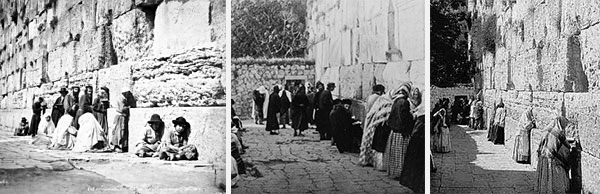
Antique images of Jews at the Western Wall (AKA the Wailing Wall).
Images by Felix Bonfils.

Tisha B’Av marks the end of the three weeks called “between dire straits” and is regarded as the saddest day in the Jewish calendar.

This year Tisha B’Av falls on August 7th in the Gregorian calendar. Jews fast for about 25 hours, beginning just before sunset on the eve of Tisha B’Av and ending at nightfall the following day. Although the fast ends at nightfall, according to tradition the First Temple continued burning throughout the night and for most of the following day of the tenth of Av.

Depending on the piety of the different religious sects, in addition to fasting, other pleasurable activities are also forbidden, such as no washing or bathing, no application of creams or oils, and no marital relations.

This year Tisha B’Av falls on a Saturday, and since Jews are not supposed to fast or mourn on a Saturday, Tisha B’Av is being observed on Sunday and restrictions end Monday morning. Religious Jews refrain from involvement in activities that would be considered joyous until Monday morning, such as eating meat, drinking wine, and listening to music.

In Israel, all restaurants and places of entertainment are legally closed from sundown of Tisha B’Av until sundown the next day. Establishments that break the law are subject to fines. In the diaspora, however, secular Jews do not observe Tisha B’Av as in Israel, or as they do observe Yom Kippur.

On the 9th of Av, the following  passage of Isaiah 1:1-18 is being red in the synagogues:

The vision of Isaiah the son of Amoz, which he saw concerning Judah and Jerusalem in the days of Uzziah, Jotham, Ahaz, and Hezekiah, kings of Judah. Hear, O heavens, and give ear, O earth! For the Lord has spoken: “I have nourished and brought up children, and they have rebelled against Me…They have forsaken the Lord, They have provoked to anger The Holy One of Israel, They have turned away backward. Why should you be stricken again?…Your country is desolate, Your cities are burned with fire; Strangers devour your land in your presence; And it is desolate, as overthrown by strangers. So the daughter of Zion is left as a booth in a vineyard, As a hut in a garden of cucumbers, As a besieged city.”

Nevertheless, the Lord, the God of Israel has also promised to bring back His beloved people, the Jewish people from the diaspora, back to the land of Israel, the Land of Promise. And we are now witnessing the fulfillment of His promises. Israel is back physically. Now God wants to bring Israel back to Him spiritually, through faith in Messiah Yeshua.

Filed Under: From the Newsletter, Holidays, SideBarStoryWidget-top Tagged With: holidays, tisha b'Av

The 9th of Av and the Weeks “Between the Straits”

July 29, 2022 By Bella Davidov Leave a Comment

“From the straits I called to the Lord.” Psalm 118:5

The Month of Av in the Hebrew calendar starts this coming Saturday. The three-week period between the 17th of Tammuz and the 9th of Av is known as the Dire Straits (or “distress” see Lamentations 1:3—“All who have overtaken her have done so in the midst of her distress”.)

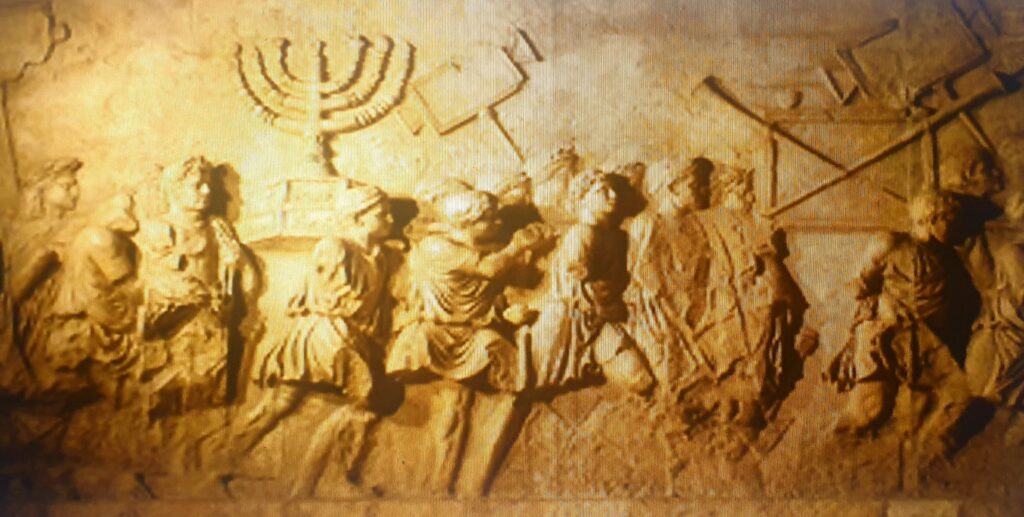
Roman Triumphal arch panel copy from Beth Hatefutsoth, showing spoils of Jerusalem temple. Image by Wikimedia Commons.

The period of the Dire Straits starts on the 17th of Tammuz – the month before Av. Jerusalem’s walls were breached and Jerusalem fell; Jerusalem’s two Temples on the Temple Mount were destroyed on that same day, the 9th of Av, and the two Jewish exiles – first to Babylon for 70 years, and second throughout the world for about 2000 years – occurred on the 9th of Av.

The Jews have experienced many calamities over the centuries, and it is amazing to learn that most of those calamities occurred on the same day of the year, the 9th of Av.

The destruction of the Jerusalem Temples, especially that of the Second Temple, changed the path of Jewish history and the Jewish nation as the Jews were dispersed in the Diaspora among the nations (few Jews remained in the land) and survived against all odds. They went through persecution, expulsions and relocation, suffering, and calamities. Nonetheless, the Jews as a people were preserved by Jewish tradition and a longing to return to Jerusalem.

The 9th of Av, Tisha b’Av, commemorates a list of catastrophes so severe that Jews believe God appointed this date for Jewish suffering.

Some of the catastrophes and calamities that happened to the Jews on the 9th of Av were:

586 BCE: The First Temple was destroyed on the 9th of Av in the year 586 BCE when most of the Jews from Judah and Benjamin were exiled to Babylon and Persia (Jeremiah 52).

69 CE: Five centuries later in 69 CE, the Romans attacked, torched, and destroyed the Second Temple on the 9th of Av, the same day as the first temple’s destruction. Most of the Jews were exiled to the Roman Empire. Many were sold into slavery and many were tortured and killed.

133 CE: When the Jews rebelled against Roman rule, they believed that their leader, Simon bar Kochba, would bring them victory and fulfill their messianic longings. However, in 133 CE, the Jewish rebels were brutally butchered in a final battle at Betar. The date of the massacre was the 9th of Av!
     A year after their conquest of Betar, the Romans plowed over the Temple Mount and built on the ruins of Jerusalem a pagan city that they renamed Aelia Capitolina.

1290 CE: on the 9th of Av, the Jews were expelled from England.

1492 CE: the Golden Age of Spain came to an end for the Jews. The Spanish and Portuguese Inquisition forced mass conversion to Catholicism upon the Jews. Furthermore, Queen Isabella and her husband Ferdinand banished the Jews from Spain and Jewish property was confiscated. The edict of expulsion was signed on March 31, 1492, and the Jews were given exactly four months to leave the country. The Hebrew date when no Jew could no longer remain in Spain was the 9th of Av.

WWII and the Holocaust were actually the outcomes of WWI that were set into motion also on the 9th of Av. As we know, 6 million Jews were tortured and murdered in the Holocaust as part of the Nazi’s “Final Solution” to get rid of all the Jews. After the war, Gentiles in Russia, Poland, Ukraine, and Hungary continued to persecute and murder Jews.

1949 CE: Israel won the war of independence. Yet, the Old City of Jerusalem remained in Jordanian hands, and Jews were forbidden to go up to the Temple Mount and the Western Wall except for one day, the 9th of Av.

2000 CE: Arab terrorist attacks and violence erupted in Jerusalem while Jews observed the 9th of Av.

2005 CE: The forced evacuation of Jewish settlers from Gaza in 2005 occurred on the 9th of Av.

According to God’s plans, the 9th of Av was meant to be a day of joy and celebration. When God led Israel out of Egypt into the Promised Land in the year 1313 BCE, the 9th of Av was the day they were to enter the Holy land at Kadesh Barnea (the shortest distance from Egypt to the land of Israel.) Twelve men were sent to spy out the land. However, 10 spies (besides Joshua and Caleb) through lack of faith and full of fear brought back a negative report and said it was better to return to Egypt rather than be killed by the giants in the land. Because of their unbelief, the day of joy turned into a day of mourning.

God was highly displeased by Israel’s rebellion and lack of faith and made the people wander in the Sinai desert for 40 years until that whole generation died; only their children would have the privilege of entering and possessing the Promised Land. (Num. 13-14)

God has faithfully brought back His beloved Israel to the Land He promised their forefathers, and today the nation of Israel is again in the land of Israel. One day, the people of Israel will look upon the one they have pierced, Yeshua, (Zech. 12:10,) and they will proclaim, “Baruch haba beshem Adonai” (blessed is He who comes in the Name of the Lord) Matt. 23:39.) Yeshua said that on that day they would see Him again, but this time they will see Him as their Messiah and Savior. They will mourn for Him as for a firstborn Son (Zech. 12:10). And then, All Israel will be saved (Rom. 11:26.) On that day, God will turn the mourning into great joy again.

Please Pray With Us

This is a dangerous time for Israel and the Jewish people world-wide. We are seeing evidence of rising antisemitism in many countries, including the United States. Please pray for our people, wherever they may be, for safety and especially for salvation.

Filed Under: From the Newsletter, History, Holidays, MainStoryWidget Tagged With: between the straits, holidays, Terrorism, tisha b'Av

The 10 Days of Awe

August 29, 2021 By Bella Davidov 1 Comment

God’s Calendar
The Fall Appointed Days: Part 1

Then the Lord spoke to Moses, saying, “Speak to the children of Israel, saying: ‘In the seventh month…”  Leviticus 23:23-24a


According to God’s calendar (Hebrew), the fall holidays are in the seventh month, and usually according to the Gregorian calendar in either September or October. The fall holidays in 2021 are:

  1. The Memorial Blowing [Day of Trumpets, today’s Rosh Hashanah, Jewish New Year] (September 7-8)
  2.  The Day of Atonement [Yom Kippur] (September 16)
  3. The Feast of Tabernacles [Sukkot] (September 22-28)

The fall holidays point to the present and future ministry of Yeshua.

We are nearing the end of the month of Elul, the last month on the Jewish calendar that ends on the eve of Rosh Hashanah, Jewish New Year’s Eve (Leviticus 23:23-24).
 

Teshuvah

Every year, in the month of Elul, usually in August, Jews enter the season of Teshuva. Teshuva or repentance is returning to Father God (Elohim.) This is a word that indicates a turning back (shuv) to God. This word appears in Genesis 3:19 when the Lord tells Adam, “and to dust you will return (tashuv).”

The season of Teshuvah begins on the first day of Elul and ends 40 days later on the 10th of Tishri at sundown –  the end of Yom Kippur – the Day of Atonement.

Teshuva indicates both a turning away from evil and a turning toward what is good, God’s ways. In turning toward God, one dedicates his entire soul to serving Him. Traditionally it is considered to be a time of introspection, when Jews are taking stock of their lives, evaluating their actions, and contemplating what they have accomplished during the previous year, both materially and spiritually.

Each morning for the 40 days of Teshuvah the shofar is blown at the Morning Prayer service to call everyone to repent and return to God. Psalm 27 is recited after each morning and evening service. “The Lord is my light and my salvation; whom shall I fear?”

The following month in the Hebrew calendar is Tishrei. The first day of Tishrei is Yom Teruah (Day of Trumpets, Leviticus 23:24.) Rosh Hashanah is also called Yom Hazikaron – Day of Remembrance and Awakening. “Awake you sleepers from your sleep! Raise yourselves you slumberers! Examine your deeds and return unto God in repentance. Abandon your evil ways, your unworthy scheming – every one of you.” (from The Gates of Repentance, a Rosh Hashanah prayer book that cites Maimonides’s “call to awakening”.)

There are ten days from Yom Teruah to Yom Kippur. These 10 days are traditionally referred to as the “10 Days of Awe.” These are the most intense days of praying and repenting, leading up to the climax of return, which is Yom Kippur – Day of Atonement. This was a time traditionally believed that Father God would draw His ear close for the prayers of the penitent.

Isaiah 55:6 “Seek the LORD while he may be found; call upon him while he is near;”

In biblical times, the HaCohen HaGadol (High Priest) would enter into the Holy of Holies in the Holy Temple, only once a year, on Yom Kippur. He would sprinkle blood on the Mercy Seat of the Ark of the Covenant, as an atonement for the entire nation of Israel.
 

The 10 Days of Awe

According to Jewish tradition, on Yom Teruah (Rosh HaShana,) God’s Book of Life and Death is opened in heaven and remains open for the Ten Days of Awe. They begin with the Day of Judgment. During these ten days of Awe, Jews are prepared to stand before God for judgment, as the book is opened. The names of those who have lived sinless and righteous lives during the past year are inscribed in the Book of Life. It is also believed that the gates of heaven are opened on Rosh Hashanah and closed on Yom Kippur. “Open to me the gates of righteousness. I shall enter through them. I shall give thanks to the Lord. This is the gate of the Lord. The righteous will enter through it.” (Psalm 118:19-20, Isaiah 26:2.)

Jews believe that God makes His judgment at this time. However, once Yom Kippur ends at sunset, the book is closed for another year. It was during Yom Kippur, that men would traditionally tear their outer coats as an outward sign of repentance and mourning, and place ashes on their heads. Some would beat their chests violently in a show of repentance and pain, hoping that God would hear their cries of repentance, forgive their sins and inscribe their names in the Book of Life. A common greeting in Israel in those ten days of awe, and especially on Yom Kippur is: “May your name be inscribed in the Book of Life.”

Although this tradition is not biblical, the truth is that God does have a Book of Life. While in the wilderness journey, Israel sinned greatly by constructing and worshiping a golden calf. Moses fulfilled his role as a type and shadow of Messiah Yeshua and interceded for the people of Israel. Exodus 32: 31-33: “Then Moses returned to the Lord and said, “Oh, these people have committed a great sin, and have made for themselves a god of gold. Yet now, if You will forgive their sin, but if not, I pray, blot me out of Your book which You have written.” And the Lord said to Moses, “whoever has sinned against Me, I will blot him out of My book.”

In Revelation 20:11-15: “Then I saw a great white throne and Him who sat on it, from whose face the earth and the heaven fled away. And there was found no place for them. And I saw the dead, small and great, standing before God, and books were opened. And another book was opened, which is the Book of Life. And the dead were judged according to their works, by the things which were written in the books. The sea gave up the dead who were in it, and Death and Hades delivered up the dead who were in them. And they were judged, each one according to his works. Then Death and Hades were cast into the lake of fire. This is the second death. And anyone not found written in the Book of Life was cast into the lake of fire.”

God sees the heart of men and desires true repentance, as He says through the prophet Joel: “Yet even now,” declares the Lord, “return to me with all your heart, with fasting, with weeping, and with mourning; and rend your hearts and not your garments.” Return to the Lord your God, for He is gracious and merciful, slow to anger, and abounding in steadfast love; and He relents over disaster.” (Joel 2:12-13)

God called His people back to Him with weeping and fasting. “Submit yourselves therefore to God…Cleanse your hands, you sinners, and purify your hearts, you double-minded.” James 4:7-8

During the month of Elul, religious Jews blow the Shofar (Rams Horn) once a day also as a reminder to look deep within one’s self to find out what requires repentance. As the year draws to a close, it is the time to get rid of resentments and bitterness, in order to face the New Year with a clean heart.

In the Jewish tradition, Elul is also referred to as the month of mercy and forgiveness. It is the time to renew one’s efforts in prayer, Torah study, and charity, as well as asking forgiveness from one another for any wrongdoings. It is a Jewish tradition that God cannot forgive for sins committed against another person until one first goes to the person he has wronged and obtains forgiveness.

In Judaism the acronym of the letters in the word,
Elul – אלול are being used to express their love to God Elohim, according to the scripture from Song of Songs 6:3:

א – אני, (I am)
ל – לדודי, (for my beloved)
ו – ודודי, (and my beloved)
ל – לי, (is for me)

True Repentance


As Believers, we know that the throne of God is always accessible to us through Yeshua. He is our High Priest. We can approach any time to obtain mercy. Yet, we too can use this time as an opportunity to search our hearts, evaluate our achievements and consider where we may have missed the mark. It is a time we can rid ourselves of resentments, bitterness and disappointments.

We can use this time to sincerely search to see if there is anything in us in need of repentance. We need to recognize sins against others and sins against God and ask for His mercy as we extend mercy to those who have sinned against us, as Yeshua taught us to pray…“and forgive us our debts, as we also have forgiven our debtors.” (Matthew 6:12.) And “If we confess our sins, He is faithful and righteous to forgive us and cleanse us from all unrighteousness,” 1 John 1:9.

As we take these steps to nullify our debts against others and search our hearts, we can draw closer to God and prepare for a new beginning through a greater dedication to Him and His Word, as well as through thanksgiving for His great love and mercies that endure forever.

“Let us then approach God’s throne of grace with confidence, so that we may receive mercy and find grace to help us in our time of need.” (Hebrews 4:16)

This is a time of opportunity, while Jews and Israelis are more open than ever to hear from God. As they are seeking His mercy and forgiveness, we want to pray fervently to the God of Israel to touch hearts and open eyes to realize that there is forgiveness of sin only through the Blood of the Lamb of God, Yeshua the Messiah, Who takes away the sins of the world.

  • Pray for the Peace (Shalom) of Jerusalem, and for her to fulfill her destiny.
  • Pray that Israel and the Jewish people recognize Messiah Yeshua, as they seek God’s mercy and forgiveness.
  • Pray that the fear of the Lord falls on Israel at this time and that the Nation of Israel humbles herself before the God of Israel.
  • Pray that Israelis and Jews will acknowledge and confess personal and national sins, and repent of their sins.
  • Pray that many Israelis and Jews will embrace His Salvation, Yeshua, and have their names written in His Book of Life.

Filed Under: From the Newsletter, Holidays Tagged With: 10 Dayes of Awe, Forgiveness, High Holidays, holidays, Repentance, Revelation 20:11-15, Salvation, Teshuvah, The Book of Life, The Day of Atonement, Yom Kippur

The 9th of Av and the weeks “Between the Straits”

July 27, 2017 By Bella Davidov Leave a Comment

“From the straits I called to Yah” Psalm 118:5

“The fast of the fourth month” in Zechariah 8:19 refers to an ancient memorial on the 17th of the month of Tamuz in the Hebrew calendar, a time set aside to soberly remember the breaching of the walls of Jerusalem by Nebuchadnezzar. The three-week period between the 17th of Tammuz and the 9th of Av is known as “the Dire Straits” (or Between the Straits, see Lamentations 1:3 “All her persecutors overtake her in dire straits”.)

The period of the Dire Straits starts on the 17th of Tammuz (the month before Av) when Jerusalem’s walls were breached, it’s fall, the destruction of the two Holy Temples on the Temple Mount in Jerusalem on the same day, the 9th of Av, and the Jews going out of their land to Exile – the first time to Babylon for 70 years, and the second to a far greater Diaspora throughout the world for about 2000 years.

The Jews have experienced many calamities over the years, and it is amazing to learn that most of those calamities have occurred on the same day of the year, the 9th of Av.

The Destruction of the Jerusalem Temples, especially the Second Temple, changed the path of Jewish History and of the nation, dispersing the Jewish People among the nations, yet they have survived against all odds. They went through persecution, expulsions and relocation, suffering and calamities. Nonetheless, the wisdom and learning of Jewish tradition was not only preserved, but it also flourished in many countries, enriching the world in many ways.

The 9th of Av, Tisha b’Av, commemorates a list of catastrophes so severe that Jews believe God set them aside for suffering.

Some of the catastrophes and calamities that happened to the Jews on the 9th of Av:

  1. The First Temple was also destroyed on the 9th of Av (423 BCE). Five centuries later (in 69 CE), the Romans drew closer to the Second Temple, ready to torch it. The Second Temple was destroyed the same day as the first.
  2. When the Jews rebelled against Roman rule, they believed that their leader, Simon bar Kochba, would fulfill their messianic longings. But their hopes were cruelly dashed in 133 CE as the Jewish rebels were brutally butchered in the final battle at Betar. The date of the massacre was the 9th of Av!
  3. One year after their conquest of Betar, the Romans plowed over the Temple Mount, our nation’s holiest site.
  4. In 1290 CE on the 9th of Av, the Jews were expelled from England.
  5. In 1492, the Golden Age of Spain for the Jews came to an end when Queen Isabella and her husband Ferdinand ordered that the Jews be banished from the land. The edict of expulsion was signed on March 31, 1492, and the Jews were given exactly four months to leave the country. The Hebrew date on which no Jew was allowed any longer to remain in the land where he had enjoyed freedom and prosperity was the 9th of Av.
  6. World War II and the Holocaust, was actually the outcome of World War I that began in 1914. The day that Germany declared war on Russia, which set the First World War into motion was on the 9th of Av.

Is it by chance, or is it part of a Divine plan that has spiritual meaning? It may not be understood by the human mind, but God has a purpose and a plan that will be fulfilled in His time.

  1. In modern times, the evacuation of Jewish settlers from Gaza in 2005 occurred on the 9th of Av.

According to God’s plan, He intended the 9th of Av to be a day of joy and celebration. When He led the people of Israel out of slavery from Egypt into the Promised Land in the year 1313 BCE, the 9th of Av was the day they were to enter the land of at Kadish Barnea (the short distance from Egypt to the land of Israel.) Spies had been sent into the land and brought back the good fruit of the land to taste. However, 10 of the spies (besides Joshua and Caleb) gave a negative report to the people, lacking faith in God and full of fear. They said to the people that it would be better to go back to Egypt than to be killed by the giants of the land. Because of their unbelief, the day of joy turned into a day of mourning.

God was highly displeased by this public demonstration of distrust in His miracle working power and sent the people back in a long course of 38 years through the desert of Sinai until that whole generation died there, and only their children had the privilege of entering and possessing the Promised Land. (Num. 13-14)

One day, the people of Israel will look upon the pierced Yeshua (Zech. 12:10,) they will proclaim, Baruch haba b’shem Adonai (Blessed is He who comes in the Name of the Lord. Matt. 23:39.) Yeshua said that on that day they will see Him again, but this time they will see Him as He is: their Messiah and Savior. They will mourn for Him as for the firstborn Son. (Zech. 12:10). And then, All Israel will be saved. (Rom. 11:26) On that day God will turn the mourning into great joy again.


Filed Under: From the Newsletter, History Tagged With: History, holidays, the 9th of Av

Primary Sidebar

  • Return to Home Page
  • Email

The Enemy Within

How Persia Became Iran

How Persia Became Iran Iran was known for centuries as Persia – a name originating from “Parsa”. However, this term was given by foreigners, not the people of the land itself. The indigenous people used the name “Iran,” a word that derives from “Airyam” which is a term found in the country’s ancient texts dating […]

The U.S. Administration – Friend or Foe of Israel?

May 12, 2024

"It will come about on that day that I will make Jerusalem a heavy stone for all the peoples; all who lift it will injure themselves severely. And all … [Read More...] about The U.S. Administration – Friend or Foe of Israel?

Recent Posts

  • The Jewishness of Christmas
  • Hamas in America
  • They Shall Come Back
  • The 20 Points of President Trump’s Peace Plan
  • Yom Kippur, The Day of Atonement

Categories

© MMXXV Yeshuatami, Ashdod ISRAEL