• Skip to primary navigation
  • Skip to main content
  • Skip to primary sidebar
  • Return to Home Page

Yeshuatami News Blog

All Things Israel

  • Conflict
    • Terrorism
  • History
    • Aliyah
    • End-time Prophecy
  • Politics
    • US
  • Israel
    • Holidays
    • Our People
  • From the Newsletter
    • Newsletter Archive
  • Give

Bella Davidov

Special Report: ISRAEL IS UNDER ATTACK!

March 27, 2019 By Bella Davidov Leave a Comment

This weekend Hamas will be marking the one year anniversary of the start of The March of Return demonstrations that led to weekly tensions on the border fence with Israel. At first, their grandiose goal was to actually return to what they call “their” land of Palestine, encouraging the masses to force themselves through the fence into Israel. Loyal Hamas supporters have demonstrated tirelessly week after week over the past year along the security fence but were stopped each time by Israeli fire.

Their next goal was to lift the blockade on Gaza; they did not succeed in that either.

Now, a year later Hamas has not accomplished either goal. They succeeded, however, in sending incendiary kites and balloons tied with explosives to nearby Israeli fields and residential areas causing a lot of fires and devastation to Israeli crops and livestock along the border.

The blockade, combined with sanctions by the Palestinian Authority and Hamas using donations to build up their military capabilities and tunnels, has caused an economic crisis in Gaza with an unemployment rate above 50 percent.

Are the masses of Gaza’s poor citizens willing to be dragged into yet another year of those kinds of demonstrations?

Hamas can’t take this chance. Now their leaders have to make desperate moves to survive politically by dragging Israel into another round of fighting. As a notable accomplishment to show off their military capability, they fired two rockets to the Tel Aviv area on March 14th. Hamas announced it was “accidental”, but Israeli aircraft bombed 100 targets in Gaza in retaliation.

On the same day, hundreds of Gazans protested against Hamas and their dire conditions, to which Hamas responded with a violent crackdown, beating and arresting dozens of demonstrators.

Meanwhile, Israelis demanded from its leaders an end to the impossible situation of being constantly under threat from Hamas.
Netanyahu’s main election rival and former army chief, Benny Gantz, urged a “strict, stern and continuous policy against Hamas”. However, Hamas and the Israeli government are trying to avoid all-out war at all cost.

The latest round of violence began this week early Monday when seven Israelis, including a small child and an infant, were wounded as their house in a village northeast of Tel Aviv was completely demolished by a long-range rocket 120 kilometers (75 miles) fired by Hamas from Gaza, making it one of the deepest strikes ever carried out by Hamas. The family members said it was a miracle their lives were spared.

The Israeli military mobilized into the Gazan border two armor and infantry brigades and drafted some reserve forces before striking back at militant sites in Gaza. Israeli attacks caused panic to the Gazans. They stayed inside their homes since bomb shelters are only available to Hamas officials. (Before bombing, Israel warns Gazas citizens to stay away from Hamas buildings and facilities.) Hamas leaders went down to hide in bunkers.

Israeli air force bombings included a Hamas military intelligence headquarters building and the office of Hamas leader Ismail Haniyeh. Israeli naval ships targeted the Gaza seaport, while Israeli warplanes struck an underground facility east of Gaza City near the security fence. Gaza’s Health Ministry said seven Palestinians were wounded in the airstrikes. In retaliation, beginning at around 11:20pm Monday, a barrage of rockets was fired at the southern cities and villages through the night. “If (Israel’s) aggression continues, the resistance (Hamas) will not hesitate for a moment to fulfill its role,” the Palestinian Islamic Jihad said in a statement.

The back and forth attacks between Israel and Hamas, which resumed late Tuesday evening, continued into early Wednesday, with Israeli military striking several Hamas military positions in Gaza, while air-raid sirens sounded in southern Israeli communities, forcing Israelis to run into sheltered areas. Israeli Air Force retaliated shortly after with air strikes on Hamas facilities. Rockets fired early Wednesday morning at the southern city of Ashkelon were intercepted by the Iron Dome defense system.

Israel has already been in this situation.

There have been many rockets and the IDF (the Israeli army Israeli Defense Force) was engaged in many rounds of fighting — but the situation has remained the same. The results of yet another war, in the same format, will be the same.

The blockade of Gaza that was supposed to bring Hamas to its knees, did not happen. Meanwhile the humanitarian conditions of the Gazan citizens have dramatically worsened, Hamas has been strengthened and has become even more sophisticated. Their rockets can now reach anywhere in central Israel and will probably soon be able to reach anywhere in Israel. Because of the humanitarian situation, Israel is allowing millions of dollars to pour into Gaza while Hamas is using the money and building materials to build up their military capabilities and building tunnels. Knowing Israel will avoid at all cost killing citizens and children, Hamas is hiding behind them in every war, making it impossible for Israel to destroy them.

So when Israel gets dragged into another round of fighting, Hamas survives but the people of Gaza suffer the consequences; homes are destroyed and women and children injured. Hamas is using it cynically to cause world opinion to turn against Israel.
The world may at first justify Israeli actions as a right to defend itself. But as more women and children are being killed, (if they don’t respond to Israel’s warning to evacuate) and when Israeli citizens are being saved by the Iron Dome protection, there will be an outcry that Israel is using unbalanced power against the poor Palestinians.

If the current round of hostilities ends up as an air and ground war, the results are predictable. At first, Western leaders may support Israel. However, after a few days, the television channels will be broadcasting images of the devastation in Gaza. Protesters against Israeli “war crimes” will flood the streets of major world cities. Anti-Israel organizations will use the opportunity to bash Israel. Leading world newspapers will print harsh condemnations of Israel. The leaders who supported Israel initially will give in to pressure and the UN Security Council will convene, there will be another ceasefire. After a short time, the violent protests will resume, incendiary balloons will be launched into Israel from Gaza and eventually, rockets will again be fired. A few months will pass, and an inquiry commission will publish its conclusions blaming Israel.

So what is the solution?

We need a miracle from God. We need wisdom for our leaders. We need a lot of prayers.

The test will be this weekend. The escalation can reach its peak on Saturday, as Gazan leaders announced the anniversary demonstration will take place on Saturday, and not on Friday as is customary. It will be combined with the reminder of Land Day which they mark every year on March 30, commemorating that day in 1976 that Israeli Arabs and Palestinians staged violent protests against the Israeli army and police over claims of Israeli appropriation of territory in which six unarmed Arabs were killed and around one hundred others were wounded.

Hamas is hoping 50,000 demonstrators will storm to the border fence, violence can flare up.

          Pray that God gives Israel’s leaders wisdom and strategy to win this ongoing battle that seeks to destroy Israel and take over the land the God of Israel has given to His people. With elections coming up on April 9th more terror attacks are predicted both from Gaza and also from our northern border. Pray for the salvation of Israel – spiritually and also physically.

Filed Under: Terrorism

Purim: For Such a Time As This

March 21, 2019 By Bella Davidov Leave a Comment

Don’t think that you (Esther) alone will be saved out of all the Jews just because you are in the king’s palace. If you keep silent at this time…relief and deliverance will come to the Jews from another source… “Who knows whether you have come to the kingdom for such a time as this.”

It was the time when the Jews were in the diaspora in the Persian-Madai kingdom under King Ahasuerus’ rule. The Jews enjoyed religious freedom, and one Jew, Mordechai even served at the king’s court gate. Hadassah was an orphan girl adopted by her cousin Mordechai, who grew up to be a beautiful maiden.
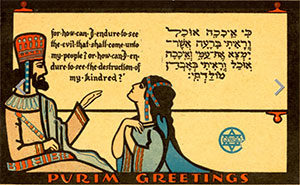
The king loved banquets to show off his riches and fortune. In one of those banquets, he wanted to show off his beautiful Queen Vashti and called for her, but she refused to come. As punishment, the king’s advisors said Queen Vashti must be replaced, and for the king to gather the beautiful virgins in his kingdom from which to choose the queen who would replace Vashti.

Beautiful Hadassah, (Her name was changed to Esther in Persia), was also taken, and her cousin, Mordechai instructed her not to reveal her Jewish heritage. From all the beautiful virgins, she was the king’s favorite and he chose her to be his new queen.

It happened that King Ahasuerus honored a descendant of Amalek called Haman the Agagite, elevating him and giving him a seat of honor higher than that of all the other nobles. By the king’s order, all who were in the king’s court had to bow down to him. However, one Jew wouldn’t bow. This was Mordechai, Esther’s cousin. That enraged Haman. When Haman found out that Mordechai was Jewish, and as he learned more about the Jewish people, his hatred for the Jews grew.

Haman looked for a way to destroy all of the Jews throughout the whole Persian kingdom. He came before the king and said: “There is a certain people dispersed among the peoples in all the provinces of your kingdom who keep themselves separate. Their customs are different from those of all other people, and they do not obey the king’s laws; it is not in the king’s best interest to tolerate them. If it pleases the king, let a decree be issued to destroy them, and I will give ten thousand talents of silver to the king’s administrators for the royal treasury.” The king took off his signet ring and gave it to Haman the Agagite, the enemy of the Jews. He told him to keep the money and that he could do with the people as he pleased.

The Pur (the lot) was cast and fell on the thirteenth of the month of Adar. In one day all the Jews were to be, according to the words of the decree, “killed, destroyed, and annihilated,” (Esther 3:13) a law that couldn’t be altered because: “in the name of King Ahasuerus it was written and sealed with the king’s signet ring.” (Esther 3:12c)

When Mordechai learned of this terrible decree, he put on sackcloth and ashes. When Esther heard of this, she was very concerned for her cousin and insisted on knowing why he was in such a state. Mordechai informed Esther of the coming disaster for the Jews and urged her to go to the king and plead to rescue them. Esther explained that approaching the king without being invited would risk her life. Mordechai insisted, saying that if she failed to intervene, relief and deliverance would come to the Jews from elsewhere, but that neither she nor her family would survive. Furthermore, he said, “and who knows but that you have come to a royal position for such a time as this?”

When Esther heard of the terrible decree to annihilate all the Jews in one day, she realized that the reason she was chosen to be the queen of Persia was for such a time as this; to be used by God for the salvation of His people. She called for the entire Jewish community in the capital city of Shushan to stand with her in prayer and fasting for three days as she risked her life for the chance of saving her people. She would go unlawfully before the king, uninvited. Esther then proclaimed, “and if I perish, I perish.”

God didn’t just use her beauty but also gave her a strategy. On the third day of the fasting, Esther put on her royal attire and stood in the inner court in front of the royal throne in the hall where the king was sitting. When the king saw her, he remembered how much he loved her and extended the royal, golden scepter to her.  Esther approached and touched the tip of the scepter. The king asked her lovingly what her request was, saying that he would grant it even up to half the kingdom. Her plan went into action; first, her request was simply to invite the king and his favorite Haman to a private banquet she had prepared for them that day. As they were enjoying the food and wine, the king asked her again what her request was. Again Esther replied that her request was for him and Haman to come to a private banquet the next day and that she would reveal her request at that time.

Haman was delighted to be invited once again to a banquet with the king and the queen. But when he passed by the court’s gate and Mordechai didn’t bow down to him, his anger and hatred against the Jews arose again. When he got home, Haman boasted with pride to his loved ones about all his riches and the honor he received for being in such a high position that the queen invited only him, besides the king, to her banquet. But, he complained that all this was worthless when this Jew Mordechai refused to bow down and honor him. His wife suggested he build a high pole, and next morning ask the king to hang Mordechai on it. Then he could attend the banquet and enjoy himself. This suggestion delighted Haman, and he set up the pole.

That night the king couldn’t sleep and asked his servant to read to him from a book of records. The servant read to him about the event when two of the king’s officers and guards conspired to assassinate him. It was recorded that Mordechai had exposed their plot and saved the king’s life. The king asked what was done to give Mordechai honor and recognition for this act, and the answer was – nothing. So the king asked who was in the court, and at that moment Haman entered the court. “Bring him to me,” ordered the king. Then the king asked Haman what should be done for a man whom the king is very pleased to honor. In his pride, Haman assumed the king must mean him, for who else was there that the king would rather honor than himself?

So Haman recommended that the person whom the king delights to honor be dressed in a royal robe the king had worn and put on a royal horse the king had ridden, and a royal crest be set on his head. Then, he should be taken on horseback through the city streets, with a high official proclaiming in a loud voice, “This is what is done for the man the king delights to honor.” The king commanded Haman to go at once and do exactly as he suggested for Mordechai the Jew who sat at the court’s gate, without neglecting to do anything that he, Haman had recommended.

Haman had to do for Mordechai the Jew, what he thought should be done for him. He was so humiliated that afterward, he rushed home to tell it to his wife and loved ones. His wife Zeresh and his advisers said that this would be the beginning of his ruin because if Mordechai was a Jew, Haman would not be able to stand against him, and in the end, he would be ruined. At that moment, the king’s servants came to take him to Esther’s banquet.

While they were drinking wine at the banquet, the king asked Esther, “Now tell me what is your petition? It will be given you. And what is your request? Even up to half the kingdom, it will be granted.”

Esther revealed that she was Jewish and her request was for the king to spare her life and the lives of her people, as it was ordered to annihilate all the Jews in his kingdom. Apparently, the king had forgotten all about it and asked who would dare to do such a thing. Queen Esther pointed to Haman and said, “It was that wicked man, the enemy of the Jews who ordered it.’’

When the king learned it was the wicked Haman who ordered the killing of his beloved queen and the queen’s people, he was furious and went out to the royal garden to cool off. Haman was horrified and fell on the sofa the queen was reclining on. As he was pleading for his life, the king entered the room and saw Haman on top of his queen. The king was furious thinking Haman tried to molest Esther in his own palace. One of his servants spoke about the high pole Haman had set up on which to hang Mordechai the Jew, the very man who had saved his life. The king ordered his servants to take Haman and hang him on the pole meant for Mordechai. So they did, and the king’s anger subsided.

God always does what He says He will do in His Word. Hundreds of years before the story of Esther, the Lord told Moses, “I will completely blot out the memory of Amalek from under heaven.” (Exodus 17:14) King Saul disobeyed God and didn’t kill all the Amalekites but spared the life of King Agag. Even though the prophet Samuel did kill him, apparently some of his family lived on. Haman was the descendant of Agag the Amalekite.
The king promoted Mordechai to a high position and gave him his signet ring to reverse the decree and save the lives of the Jews. God has turned the mourning of His people to ecstatic joy. Purim “should be remembered and kept throughout every generation, every family, every province, and every city, that these days of Purim should not fail to be observed among the Jews, and that the memory of them should not perish among their descendants.” (Esther 9:28)

Filed Under: Holidays

Understanding Israel’s Elections

March 8, 2019 By Bella Davidov 1 Comment

Israelis will conduct elections for the 21st Knesset
The election is scheduled for April 9, 2019.

There is a crisis in Israel concerning the upcoming elections.

Currently, (and for the past 10 years) Israel has had a government that is basically right wing, with Binyamin (Bibi) Netanyahu as Prime Minister and his Likud party in the majority of the coalition. Under his leadership, Israel has become a major world power; as a matter of fact, was just listed internationally in the 8th place of world power nations. (Read about all of his domestic and international achievements here.)

One of the most important laws the Israeli government has passed recently was the State Law declaring that Israel is the nation of the Jewish people, and that while non-Jewish citizens have the same civil rights, they don’t have the Right of Return (only Jews have the right to instant citizenship). The Law of Return is the only aspect of the State Law where Jews and Arabs are not equal.

Bibi’s greatest concern for Israel is security.  He insists that any peace negotiation with the Palestinians must include their accepting Israel as a Jewish state and that dismantling settlements will not be a part of a future peace deal. Many Israeli voters like his security-first approach to politics. Also, his fluency in English and decades of experience give him an international stature that no other Israeli politician can rival. He has won three consecutive elections. Elections are held every four years. Under certain circumstances, a Knesset (Israeli Parliament or Congress) may be dispersed before the end of a term and that determines the date of the next elections.

Over the last three years, however, there have been continual reports about police investigations against PM Netanyahu. The accusations are of bribery, fraud, and breach of trust in three separate cases. Read more details in our website blog “Cases against Netanyahu”.

As of recent polls, Bibi exceeded everyone else in popularity, as he has for the last three elections. But with the looming legal battles, and other issues of dispute in the coalition, Bibi decided it was the right move to call for early elections. However, probably for political reasons, these accusations led to the threat of a recommendation for indictment, (pending a hearing) by the Attorney General. Bibi and the Likud party requested that indictment not become public until after the election, because he didn’t have time to refute the accusations. But the AG made it public a little over a week ago. Therefore, rather than having a fair trial in the court of law with a full defense, Bibi is being judged by the media and the public, and his popularity is declining. This is what brings us to the current crisis because if Bibi fails in the elections the opposition will succeed.

Who is the opposition and why is it so crucial in this election?

Yair Lapid
Yair Lapid

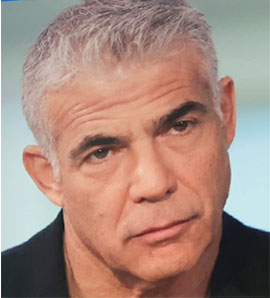
Two very popular men joined together in order to defeat Netanyahu. One of them is Yair Lapid who was a favorite in the previous election but was demoted because of constantly undermining Bibi while serving in his coalition as Minister of Finance. His party, Yesh Atid declined in the last elections and ended up in the opposition in the current government.

Benny Gantz
Benny Gantz

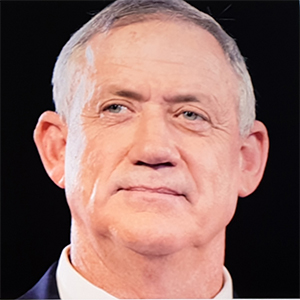
The other is Benny Gantz, 59-year-old former Israel Defense Forces’ Chief of Staff, who is a newcomer to politics. He entered the race forming his own Hosen Israel (Strength of Israel) party and immediately jumped in the polls, ahead of Lapid but still behind Netanyahu. Lapid and Ganz joined forces and formed a new party. Their joint new party is called Kahol Lavan (Blue and White), which are the symbolic colors of the state of Israel.

Their platform is unclear, but although claiming to be a centrist party they lean more to the left. One thing Gantz and Lapid declare clearly is that they plan to change the State Law. Their main goal is to replace Netanyahu and become PM of Israel on rotation basis. Gantz, who is in first place, serving as PM for the first 2 and a half years and Lapid serving for the rest of the term.

The electoral process in Israel is complicated and confusing for most of the public, but suffice it to say that the situation is crucial.

The reason the Blue and White party opposition is so crucial is that whichever party is elected has to form a coalition consisting of at least 61 MK (Knesset Members). Blue and White would have to include most of the left and far left wing small parties (the right wing parties support Netanyahu, all claiming that he remains innocent until and if proven otherwise). Blue and White would have to include the Arab parties, who have always been in the opposition, some of them have even been temporarily suspended from the government for siding with Israel’s enemies and calling Israeli soldiers terrorists. The one MK that is the most crucial to possibly being in the coalition is Tibi.

Who is Tibi and why is he crucial?

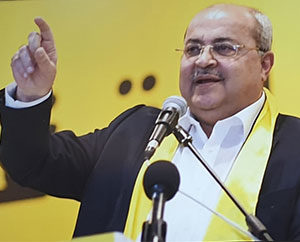
Arab MK Ahmed Tibi, a former adviser to Yasser Arafat

Arab MK Ahmed Tibi, a former adviser to Yasser Arafat, recently split from the Joint List Arab party in order to run separately as head of his Ta’al party.

Tibi is an anti-Zionist who supports Israel withdrawing to the pre-1967 borders and a two-state solution with an independent Palestinian state, including a Law of Return for Palestinian refugees and their descendants. He opposes the idea of Israel being a Jewish state and considers it racist. He opposes Israel having a Jewish national anthem and an Israeli flag. He takes the Palestinian side and has even praised the Palestinian Authority’s terrorists, referring to them as “martyrs” at a ceremony held on the “Palestinian Martyrs’ Day”.

Both Blue and White chairman Benny Gantz and co-chairman Yair Lapid have stated that they would amend the “National State Law,” something Tibi would love to see. “We want to topple the Right, we say it openly,” Tibi said. He stated his desire to one day become Israel’s prime minister, “and if not I then another Ahmed, Mohammed or Mahmoud,” Tibi said recently.

Herein lies the danger to Israel. The possibility that a man like Tibi and other anti-Israeli MKs would be in the coalition is what makes this election so crucial for those who love the Land and the People of Israel and believe in God’s promises..

The new Likud slogan is: “it’s Bibi or Tibi.”

I (Bella) am a member of Netanyahu’s Likud party and attended last Monday’s evening rally in support of Netanyahu. I witnessed thousands of loyal cheering Likud members shouting “Bibi, Bibi, we love you.” He explained the slogan: “it’s mathematical, simple addition that you learn in first grade: Lapid and Gantz can not reach the minimum 61 KM required for a coalition in the government without bringing in the Arab parties…so it’s Bibi or Tibi.”

The scriptures encourage us to pray for our leaders: “Therefore I exhort first of all that supplications, prayers, intercessions and giving of thanks be made for all men, for kings and all who are in authority” 1 Tim. 2:1-2.

Dear Lord, teach us how to pray in this complex situation for the upcoming election. Raise Israeli leaders who are able to care for Your people, as You have promised to do when You regathered Your own people back to the land of Your promise (Jeremiah 23:3-4).

Then I will gather the remnant of my flock out of all the countries where I have driven them, and I will bring them back to their fold, and they shall be fruitful and multiply. 4 I will set shepherds over them who will care for them, and they shall fear no more, nor be dismayed, neither shall any be missing, declares the Lord.”

You know the hearts of men; reveal the truth of all the cases against Netanyahu, if He is Your chosen one to lead Israel for such a time as this. We know you have promised the mountains of Israel, including Judea and Samaria to Your people Israel in Ezekiel 36. Israel needs a leader who can stand against the world and the left wing in Israel who want to divide Your Land. Help Israelis to choose the right leader. We pray for PM Netanyahu to open his heart to Your leading. We pray for Your justice and righteousness to prevail. We pray You will not allow the enemy from without and from within to win. You give Israel the victory. We acknowledge Your sovereignty in this election, in Israel, and in the world. In the Name of our Yeshua, and for Your Glory, Amen.

Filed Under: Israel, Newsletter Archive, Politics Tagged With: PM Netanyahu, politics, Tibi

Understanding President Trump’s Decision

December 31, 2018 By Bella Davidov Leave a Comment

“Let everyone be subject to the governing authorities, for there is no authority except that which God has established…“
Romans 13:1

Posted: Dec 31, 2018
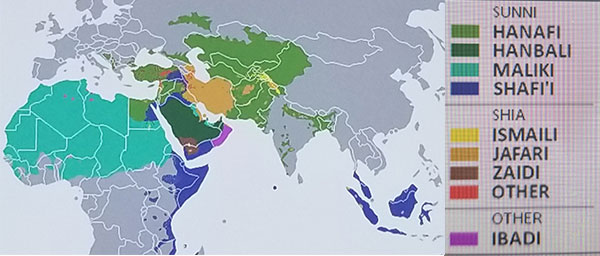
To understand the complexity of the situation in Syria, we have to understand that it is a war between the Sunni and Shi’a Muslims. [Click here to read more about who these Muslims are.] The Syrian war started at the time of the so-called Arab Spring in 2011 when protesters demanded the resignation of President Bashar al-Assad. His family, of the Shi’a Alawite-sect of Islam, has held the presidency in Syria since 1971. No one could have anticipated at that time the level of violence, trauma, and devastation that would result from that uprising for over seven years.

The conflict has been fought by different rebel groups and militias against the Assad regime, and against each other. With the rise of ISIS, It has expanded to include international powers such as Russia, Iran, some European nations and the United States.

Since then, Syria has been nearly destroyed, and the region was thrown into turmoil. Cities have been reduced to rubble by regime bombing, which had the far-reaching ramifications to nations around the world. Threats posed by terrorism, the migration crisis, and refugees. The number of casualties is too big to count, which is estimated at about half a million, and millions of refugees and internally displaced people, also too many to count.

The US started fighting ISIS in 2014. Much of the US operation in Syria has been waged by warplanes flying out of Qatar and other locations in the Middle East. After the airstrikes and increased fighting capacity of the allied ground forces, ISIS was degraded.

Fighting everyone all the time, ISIS lost their border areas, supply lines and communication, resources, and influence, they were finally driven from most of its territory in Syria’s north area.

In the beginning, then US president Barack Obama, assuming that Assad was going to fall anyway, took the side of the demonstrators and called on Assad to step down. However, Assad did not fall and didn’t step down. With the help of Russia, Iran, and Hezbollah, He is still on the winning side. Not wanting to risk direct conflict with the Russians, the US accepted the fact that they (the Russians) are there to stay.

Assad who has lost territory, men, resources, and independence has gotten weaker through the years of fighting, but is still stronger than any of his opponents and rivals.

President Trump said that the United States was doing the work of other countries, including Russia and Iran, with little in return. He thinks it’s time others fight their own battles, and that US troops have no business in Syria since accomplishing their mission of helping fight ISIS.
Trump is true to his campaign promises to bring the 2,000 US troops back home. He wanted to do it earlier this year but gave in to his advisors not to pull the troops out of Syria before a peace agreement could be reached to end that country’s brutal civil war, and to keep them there to back up the Kurdish fighters and the Arab SDF militias (Syrian Democratic Forces) in their battle against ISIS.

However, this outraged NATO ally Turkey, which views Kurdish YPG forces as being an extension of a militant group fighting inside Turkey. [Click here to read more about the Kurds.] Turkey is still a key strategic ally of the US. In a phone conversation between Presidents Trump and Erdogan on Dec. 14, the Turkish leader promised that his army would not cross the Euphrates. Also during the course of their discussion, Erdogan reportedly agreed to cancel his order of the Russian S-400 surface-to-air missile system and to purchase a package of US Patriot missile systems valued at $3.5 billion instead.

Turkey’s planned purchase of the S-400 caused a rift between NATO member Turkey and NATO. The S-400 is not inter-operational with NATO systems. Turkish use of the system could endanger the American F-35’s stealth systems.

The White House announced that pulling US troops out of Syria does not mean that the Americans are leaving the coalition against ISIS, but rather, now that ISIS lost most of its strongholds, the White House is “transitioning to the next phase of the campaign.”

The US and Iraq are in advanced negotiations for the deployment to the Iraqi-Syria border of the Iraqi Special Operations Forces (ISOF) – which drove ISIS out of Mosul. It would position US troops 30km north of the Euphrates River and near the Syrian border. “We will be watching,” promised Trump.

The US is planning to build a permanent base, including an air force base on the Iraqi side of the strategic Tanif pass. This will allow them to control the area and prevent Shi’a militia to cross over into Syria. This way, the US will still control the situation without physically having boots on the ground in Syria.

As the Sunni rebels regroup, what Trump’s move would accomplish is bringing back the balance of the Sunnis against the Shi’as. With the defeat of 95% of Isis, the US can concentrate on the fight against Shi’a Iran, with the proxy of the Sunni rebels and the Sunni Turkish army. That means that Sunnis will enlarge their independent state in Syria around Haleb. Sunni rebels and the Turkish army are deploying forces all the time from all sides.

When Israeli PM Netanyahu’s decision to agree to a ceasefire with Hamas last month and not go to war, after Hamas fired about 500 missiles at Israeli cities in one day, he was criticized by most of Israelis, who saw this as an act of weakness. Netanyahu said at that time that there was more hidden than meets the eye, and not everything can be exposed to the public. Now we realize that what the army was planning was an operation to expose the tunnels of Hezbollah in the north and avoid a massive invasion from the terror group into Israel.

Likewise, with Trump’s decision to pull out the 2000 US troops. We don’t see or know all the considerations in that decision. It will be unfolding as time and events go on.

Israeli Prime Minister Benjamin Netanyahu said that U.S. President Donald Trump’s decision to withdraw American forces from Syria will not affect Israeli policy and that cooperation with the U.S. “will continue in full”. Israel will “continue to act against Iran’s attempts to entrench itself militarily in Syria, and to the extent necessary, we will even expand our actions there,” said Netanyahu.

We know that the Lord has this situation well in hand. Of course, there is always more going on than meets the eye. “He who keepeth Israel neither slumbers or sleeps.” Please continue to pray for those decision-making leaders and the ones who influence them both in Israel and in your country. And pray for the soldiers who face enemies every day and need to know the Keeper of Israel in a personal way.

For the salvation of Israel and the nations,
In His love,
Simcha and Bella Davidov, Ashdod, Israel

Filed Under: Newsletter Archive, Politics, US Tagged With: President Trump, Syria, US Troops

The Syrian War: What is it Really About?

December 31, 2018 By Bella Davidov Leave a Comment

The real issue in Syria is the fight between Sunni and Shi’a Muslims.

To understand the complications in the Middle East, we must understand the biggest conflict within the Muslim world: the big divide between Sunni and Shi’a Muslims.

The Sunni-Shi’a conflict started 1,400 years ago, after the death of Mohammed in 632 AD. The prophet died without appointing a successor, which led to an argument among his followers. The argument was about who would be the next leader, whether he should be directly related to Mohammed’s bloodline or not. The Sunni’s believe that the Prophets’ trusted friend and advisor, Abu Bakr was the first rightful leader of Muslims or “caliph”, while Shi’as believe that Mohammed’s cousin and son-in-law, Ali was chosen by Allah to continue the rule. Eventually, both held the title – Abu Bakr first until his death, and after him two other caliphs who were assassinated. Ali became the fourth ruler. After Ali, a massive split occurred over who should rule next and dominate Islam. While Sunni Muslims argued that it should be their interpretation of Islam which follows the Sunnah (ways of Mohammed), Shi’as argued that Ali was the rightful first caliph and only his descendants could claim to be the true leaders of Muslims.

Sunnah is the body of traditional, social, and legal custom and practice of the Islamic community, based on the verbally transmitted record of the teachings, deeds and sayings, silent permissions (or disapprovals) of the Islamic prophet Muhammad (kind of Islamic oral law and Halacha, a path, a way, a manner of life). The Quran, the holy book of Islam, and the Sunnah make up the two primary sources of Islamic theology and law of the Islamic prophet that Muslims follow.

The tension is intensified by the Hadith, a narrative in which the prophet Muhammad said, “My Muslim community will be divided into seventy-three sects and all of them will be in the Hellfire except one.” Inevitably both Sunnis and Shias claim to be the one “pure” Islamic sect; hence a Sunni-Shi’a split creating two denominations up until today, wherein each has developed its own unique culture, doctrines, and schools of thought, with a range of moderate to extremist followers in both.

Sunnis are largely focused on the power of their God in the physical world, while Shi’as look more toward the rewards of the afterlife.

The majority of Muslim people in the world are Sunni.

The vast majority of the Muslims in the world are Sunni, amounting to as much as 85% of the religion’s adherents. They are spread all over the globe – from Morocco to Indonesia – and make up the dominant religion in North Africa and the Middle East. Only Iran, Iraq, Azerbaijan and Bahrain have a Shi’a majority, although there are also significant Shi’a populations in Yemen, Lebanon, Kuwait, Syria, and Qatar.

The divide between the Sunni and Shi’a branches of Islam is both ancient and still highly consequential today.

The Kingdom of Bahrain, which is backed by Saudi has long been ruled by the Sunni House of Khalifa, even though there is a Shi’a majority in the population. Many of the insurgent groups in Iraq today– including the Islamic State terror group – are Sunnis.

The current civil war in Yemen has become a sectarian proxy war, with Iran backing the Shi’a Houthi rebels who overthrew the country’s Sunni-dominated government, while a Saudi-led coalition has since intervened to reinstall the Sunni leadership.

Syria, which has a Sunni-majority population, is ruled by President Bashar al-Assad and his family members of the Shi’a Alawite-sect. The fighting that began as an anti-government rebellion has taken on sectarian overtones. That has spilled over to Iraq, which is Shi’a-majority and has a predominantly Shi’a government but is increasingly troubled by Sunni rebels. And the region’s major powers have long pushed sectarian interests, with Shi’a-majority Iran on one side and Sunni-majority Saudi Arabia on the other.

Filed Under: Politics Tagged With: History, Muslims, President Trump, Shi'a, Sunni, Syria

  • « Go to Previous Page
  • Page 1
  • Interim pages omitted …
  • Page 13
  • Page 14
  • Page 15
  • Page 16
  • Page 17
  • Interim pages omitted …
  • Page 26
  • Go to Next Page »

Primary Sidebar

  • Return to Home Page
  • Email

War

They Shall Come Back

And they shall come back from the land of the enemy. There is hope in your future, says the Lord, your sons shall come back to their own border.  Jeremiah 21:16b-17 This happened today, Monday October 13. Exactly two years ago, on the Holiday of Succot (booths), Hamas brutally attacked southern Israel from Gaza, murdering 1,200 Israelis and abducting 251 into […]

U.S. President Trump’s Epic Fury -Where Is It Going?

March 26, 2026

"אַרְיֵה שָׁאָג מִי לֹא יִירָא " "The lion has roared, who will not fear?..." Amos 3:8a The world is trying to understand President … [Read More...] about U.S. President Trump’s Epic Fury -Where Is It Going?

Recent Posts

  • Best Allies
  • U.S. President Trump’s Epic Fury -Where Is It Going?
  • Israel at War with Iran – Operation Roaring Lion
  • The Jewishness of Christmas
  • Hamas in America

Categories

© MMXXVI Yeshuatami, Ashdod ISRAEL