• Skip to primary navigation
  • Skip to main content
  • Skip to primary sidebar
  • Return to Home Page

Yeshuatami News Blog

All Things Israel

  • Conflict
    • Terrorism
  • History
    • Aliyah
    • End-time Prophecy
  • Politics
    • US
  • Israel
    • Holidays
    • Our People
  • From the Newsletter
    • Newsletter Archive
  • Give

History

Hezbollah

December 21, 2018 By Bella Davidov Leave a Comment

A Brief Background

After the British mandate left Palestina in 1947, (a name given to the land of Israel by the conquering Romans), the Arabs refused to divide the land and attacked the Jews in the land from all sides. Against all odds, Israel won the war of Independence and became a nation in 1948. The name of the land was changed back to the land of Israel and Jewish citizens to Israelis instead of Palestinians (all people living in the land before 48 were called Palestinians, Jews and Arabs.) Many Arabs fled in the war to neighboring countries, mainly Jordan and Egypt.

Lebanon was at that time multi-sectarian, with Sunni Muslims and Christians being the majorities in the coastal cities, Shia Muslims in the south and east, and Druze and Christian in the mountains. The Lebanese government operated under the influence of the elites Maronite Christians and the western world. However, the Muslims opposed the western influence of the government.

The Palestinian Arabs formed the PLO (Palestine Liberation Organization) and Fatah brigade to fight Israel.

After the six-day war with Israel, Jordan lost the West Bank and allowed Fatah under the PLO and their leader, Yasser Arafat, into the country from where they stepped up their guerrilla attacks against Israel. However, after many fights with the PLO who turned against the Jordanian leadership, they were expelled to southern Lebanon along with Yasser Arafat, where they regrouped.

The enlarged PLO presence in Lebanon and the intensification of fighting on the Israeli–Lebanese border stirred up internal unrest in Lebanon. The PLO recruited militants from among the families of Arab Palestinians who had fled to Lebanon during the Israeli independence war.

Demographic tensions over the Lebanese National Pact led to the Lebanese Civil War (1975–1990) where militia clashed with Palestinian factions over their terror attacks against Israel from Lebanese territory.

A PLO terror attack on March 11, 1978, was the last straw for Israel. An Israeli bus was seized by terrorists, and 38 Israeli civilians including 13 children were killed, with 76 wounded. The Israeli air force, navy, and land units entered south Lebanon with the aim of capturing the strongholds of the terrorist groups. Heavy face-to-face fighting resulted in Israel taking over the south Lebanon region, 300 terrorists were dead and many civilians fled to northern Lebanon, among them many terrorists. Israel suffered 18 dead soldiers.

Eventually, Israel withdrew back to the original border. UNIFIL units were stationed in the demilitarized zone. Another force, the Christian militia who were favorable to Israel and were supported by the Israeli army, formed the army of south Lebanon there.

However, terror attacks continued now from northern Lebanon which fired Katyusha rockets and missiles into northern Israel. Simultaneously, Israeli and Jewish targets were hit around the world. The situation became unbearable, forcing Israel to launch another large-scale military operation in 1982.

This new operation, called “Peace in Galilee” targeted the terror organizations who had returned to southern Lebanon. Heavy fighting broke out between the Israeli army and PLO terrorists who also had headquarters in Beirut. Many Katyusha rockets were fired into northern Israeli northern population. Israeli paratroopers fought terror pockets in villages along the road from the border to Beirut.

The Israeli army got tangled up in the Lebanese war against thousands of terrorists who were hiding in densely populated areas with the help of the Syrian army. The result was the defeat of the Syrian army, the death, and capture of many terrorists and much ammunition being taken by Israel. The PLO was expelled from Lebanon, including Arafat who fled to Tunisia.

Israel withdrew from most of Lebanon in 1985 but kept control of a 12-mile security buffer zone, held with the aid of proxy militants of the South Lebanon Army (SLA). Israel suffered many losses, about 1200 soldiers died in the first Lebanon war between the years 1982-2000. The war also resulted in the surfacing in south Lebanon of another terror organization, Hezbollah.

Eventually, the Israeli army had to withdraw also from the militarized zone in southern Lebanon in 2000.

The Rise of Hezbollah

Hezbollah, which means in Arabic “Party of Allah”, is a Shi’a Islamist militant organization and political party based in Lebanon headed by Hassan Nasrallah. Hezbollah, along with its military wing is considered a terrorist organization by the United States, Israel, Canada, the United Kingdom, Australia, and the European Union.

Following the Islamic revolution in Shīʿite Iran in 1979 and the Israeli operation in Lebanon in 1982, a group of Lebanese Shīʿite clerics formed the Hezbollah organization, which holds to an extreme Shīʿite ideology with three main aims: Jihad (holy war) against all foreigners in Lebanon, the destruction and annihilation of Israel; and spreading the Islamic revolution and turning Lebanon into another Islamic republic like Iran. Since its beginning, Hezbollah organization considers Israel an enemy and never refers to it by its name but rather calls it “occupied Palestine,” or the “Zionist enemy.”

Hezbollah organization uses guerrilla and terror warfare in order to achieve its goals. It promotes suicide bombing, kidnappings, car bombings and grand terror attacks around the world and against foreigners in Lebanon, which gives other terror organizations inspiration to do the same. Hezbollah was based in the predominately Shīʿite areas in southern Lebanon, and southern Beirut. Throughout the 1980s, Hezbollah engaged in attacks against Israel and fought in Lebanon’s civil war (1975–90). It also worked at establishing a comprehensive social services network for its supporters.

Being a proxy of Iran and Syria, Hezbollah remained a militia organization after the end of the Lebanese civil war In May 1991, when the other militias were dissolved and continued to fight a sustained guerrilla campaign against Israel in southern Lebanon.

After the Israeli army withdrew from the militarized zone in southern Lebanon in 2000, Hezbollah took control over the area, with the help of Syria and Iran. It built many headquarters and strongholds, built military infrastructures, and a massive missile and rocket arsenal. Hezbollah members were trained in progressive fighting techniques by Iranian military and intelligence personnel, who helped build bunkers across the Israeli border in South Lebanon, and assisted in forming command headquarters and control and surveillance systems within the organization’s headquarters in southern Beirut.

On July 12th, 2006, Hezbollah executed a preplanned artillery attack across the Israeli northern border. They ambushed two Israeli patrol vehicles, killing three Israeli soldiers, wounding two and kidnapping two.

IDF (Israeli Defense Force) began a war against Hezbollah with an aerial attack on thousands of targets within Lebanon: Hezbollah’s rocket system, Hezbollah posts, arms storages, training camps, command headquarters, Beirut Airport, and bridges. The Israeli Air Force dropped pamphlets calling Lebanese citizens of settlements in southern Lebanon to evacuate their homes.

Hezbollah began firing hundreds of rockets towards populated areas in Israel. The citizens of Haifa and northern Israel had to reside in shelters and protected areas. On July 14th, Hezbollah fired at an Israeli missile boat, in which four naval soldiers were killed. The war escalated into massive attacks and crackdowns on all terrorists who were hiding in civilian facilities.

In the 33 days of the war, there were 164 Israeli citizen casualties (119 soldiers and 45 civilians) and hundreds injured. Approximately 4,000 rockets hit the north of Israel and significant economic damages were incurred. Hezbollah had also lost hundreds of its members and the organization’s strategic fighting ability was hurt. Its headquarters in South Beirut were destroyed.

On August 11th, the United Nations’ Security Council issued a resolution calling for “a complete halt of acts of aggression, and especially those committed by Hezbollah and the military actions of Israel.”

The UN resolution called for the withdrawal of the Israeli Defense Force from Lebanon and for the South Lebanon Army and UNIFIL to take control over the south Lebanon area, prohibition of carrying arms without the consent of the Lebanese government; and the prohibition of the trade or transfer of arms to Hezbollah. Lebanon had to see to the disarmament of armed militias and the unconditional release of the Israeli soldiers imprisoned.

Somehow Hezbollah and its leader, Hassan Nasrallah, emerged from the war with Israel as heroes throughout much of the Arab world. Hezbollah used its new position to attempt to topple Lebanon’s government after its demands for more cabinet seats were denied.

In May 2008, clashes between Hezbollah forces and government supporters in Beirut were sparked by government decisions that included plans to dismantle Hezbollah’s private telecommunications network. Nasrallah saw it as a declaration of war and mobilized Hezbollah forces, which quickly took control of parts of Beirut. In the following days the government reversed its decisions and granted the Hezbollah-led opposition the desired veto power.

A wave of popular uprisings in early 2011, known as the Arab Spring left Hezbollah in a difficult position. After applauding revolutionary movements in Tunisia, Egypt, Libya, and Bahrain, the group found its interests threatened by a similar movement against its key ally, Syrian Pres. Bashar al-Assad. As protests spread throughout Syria and the civilian death toll mounted, Nasrallah spoke out in support of Assad, echoing Assad’s denunciations of the Syrian opposition as being agents of a foreign conspiracy. The conflict soon escalated into a full-blown civil war.

Since 2012, Hezbollah has helped the Syrian government during the Syrian civil war in its fight against the Syrian opposition, which Hezbollah has described as a Zionist plot and a “Wahhabi-Zionist conspiracy” to destroy its alliance with Assad. It had deployed its militia in both Syria and Iraq. Nasrallah publicly confirmed Hezbollah’s involvement and vowed to fight until the rebels had been defeated.

On May 6, 2018, Lebanon held its first legislative election since 2009. Hezbollah got a politically dominant position in the government for the first time. Top-level positions in the parliament nonetheless remained the same, including Hariri as prime minister.

Hezbollah has been described as a “state within a state”, and its military strength has grown significantly with its military wing that is now considered more powerful than the Lebanese Army. The organization has seats in the Lebanese government, a radio and a satellite TV station, social services and large-scale military deployment of fighters beyond Lebanon’s borders, Hezbollah receives military training, weapons, and financial support from Iran, and political support from Syria.

Filed Under: Conflict, From the Newsletter, History, Terrorism Tagged With: Hezbollah

Israel: A Jewish State

August 29, 2018 By Bella Davidov Leave a Comment

God says that the Land of Israel is His land, and the city of Jerusalem is His dwelling place.

“…I will enter into judgment against them (the nations)… for they scattered My people among the nations and divided up My land.”   Joel 3:1-2

“For the Lord has chosen Zion; He has desired it for His dwelling place”
Psa. 132:13
“Blessed be the Lord out of Zion, Who dwells in Jerusalem!”  Psa. 135: 21

God made an everlasting covenant with Abraham – to give him and his descendants the land of Canaan for an EVERLASTING possession and make them into a great nation

Abraham had a son from his wife’s Egyptian maid Hagar – Ishmael. In Gen. 17:18,19 Abraham pleaded with God:

“Please let Ishmael be the son you promised,” God said: “NO, Sarah your wife shall bear you a son, and you shall call his name ISAAC; I will establish My covenant with him for an everlasting covenant, and with his descendants after him.”

Then God chose to continue the lineage with the younger of Isaac’s twins, JACOB. God changed Jacob’s man-given name to ISRAEL, which contains His name – El means God in Hebrew. God said to Jacob:

“And the land which I gave Abraham and Isaac, I also give to you, and I give this land to your descendants after you.“  Gen. 35:12

The nation of ISRAEL – the 12 children of Jacob/Israel became the 12 tribes of Israel who formed the Nation of Israel. God calls Israel His first-born (among nations). As a good father, God had to discipline His children in different ways but never stopped loving them. One of the punishments included being under foreign rule in their own land and expulsion from the land. The Jews went into exile twice, but God promised to gather them from all the nations where they were scattered and bring them back to the Land of Promise, the Land of Israel (formerly Canaan.)

Second Diaspora

In 70 AD, the Romans who occupied Judah destroyed the city of Jerusalem and the Jewish Holy Temple. Most of the Jews were taken into captivity and exiled. The Romans renamed the land Palestine, a name that remained through the different conquerors who came and went throughout the centuries, including the Christian crusaders and Muslim Arabs. All who lived in the land of Palestine were called Palestinians, both Jews, and Arabs.

God’s Promises and Prophecies Fulfilled

…” I will bring them back into their land which I gave to their fathers.”
Jer. 16:14-15
…“I will bring my people Israel back from exile.”   Amos 9:13

Israel: a Jewish State

Slowly the Jews began to come to Palestine as pioneers in the 19th century while it was under the Turkish Ottoman Empire for 400 years.

On November 17th, 1917, after winning WWI, United Kingdom of Britain Foreign Secretary and former Prime Minister, Arthur Balfour, made a formal declaration that a Jewish state should be established in Palestine.

On July 24th, 1922, Fifty-one member countries – the entire League of Nations (later to become the U.N.) – unanimously declared: “Whereas recognition has been given to the historical connection of the Jewish people with Palestine and to the grounds for reconstituting their national home in that country.”

They appointed Britain as the Mandatory for Palestine, with the explicit goal of “placing the country under such political, administrative and economic conditions as will secure the establishment of the Jewish national home.”

Political rights to self-determination for Arabs were guaranteed by the same League of Nations in four other mandates – in Lebanon and Syria (The French Mandate), Iraq, and later Trans-Jordan [The British Mandate]. Palestine was actually the ancient land of Israel.

More Jews returned to Palestine, bought land and built Jewish settlements, Kibbutzim, farms, and cities. A transformation started to happen as land that had lain desolate for 19 centuries started to bloom. Prophecies were fulfilled.

Ezekiel 36:8-11, ‘But you, O mountains of Israel, will produce branches and fruit for my people Israel, for they will soon come home. I am concerned for you and will look on you with favor; you will be plowed and sown, and I will multiply the number of people upon you, even the whole house of Israel. The towns will be inhabited and the ruins rebuilt. I will increase the number of men and animals upon you, and they will be fruitful and become numerous. I will settle people on you as in the past and will make you prosper more than before.’

World War II – 1930’s and 40’s – From the very beginning, the Arabs used violence to oppose the establishment of a Jewish nation in Palestine, and the British caved in to this violence and abandoned their international obligation to facilitate the establishment of a Jewish national home. The British didn’t abide by the League of Nation’s mandate, forgetting their promises of a Jewish homeland, but refused entry to Palestine to many Jewish refugees after 6 million Jews were murdered by the Nazis in WWII. In response to the 1936-1939 Arab revolt, Britain issued the White Paper which limited Jewish immigration to 75,000 for 5 years and ruled that further immigration was to be determined by the Arab majority. Restrictions were put on the rights of Jews to buy land from Arabs.

November 1947: The United Nations resolved that the Jews were to have their homeland in part of Palestine, while the Arabs will have the other part. Jerusalem would be an international city. While the Jews accepted this proposal, the Arabs rejected it. The 5 neighboring Arab nations declared war and attacked the newly established Jewish state from all sides. With little weaponry and a small army, Israel miraculously won the war and gained territory that included much of the land allotted to the Arabs. The borders were set, excluding the Old City of Jerusalem and Judea and Samaria remained in Jordanian hands. They renamed Judea and Samaria the ‘West Bank’. Jews fled the Old City. All Jews were denied access to the Old City and the Western Wall. Many holy places were desecrated.

In 1948, the British left and on the 14th of May 1948 Israel gained its independence and became the State of Israel. Israel made the western half of the city Jerusalem its capital.

1967: 19 years later, Israel won the 6 Day War against 3 of its enemy neighbors, and recaptured and Old city of Jerusalem and Judea and Samaria. New west Jerusalem and Old east Jerusalem were united under Israeli sovereignty as prophesied in Ps. 122:3.

“The LORD builds up Jerusalem; he gathers the exiles of Israel.” Psa. 147:2
“Jerusalem stands built up, a city that was joined together as one.” Psa. 122:3

United Jerusalem: Old and New

Ez. 37:21-22; Ez. 37:21-22:

“Surely I will gather the children of Israel from every side and bring them into their own land; and I will make them one nation in the land… of Israel…they shall no longer be two nations, nor shall they ever be divided into two kingdoms again.“

God is faithful to His word and His promises. Israeli soldiers stood with amazement in front of the Western Wall for the first time in their lives. The Israeli commander exclaimed: “The Temple Mount in our hands.” And there was much excitement in the land. But the Arabs and many Gentile nations rejected the outcome of a war they started, and they have continued to come against the nation of Israel.
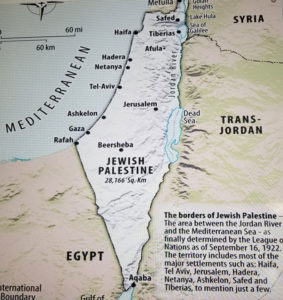
Israel and its neighbors.

Until 1948, all who lived in Palestine, were called Palestinians, Jews and Arabs. After winning the war of Independence in 1948, Israel changed the name of Palestine back to the original God-given name of Israel. All Jews in Israel are now called Israelis, but the Arabs kept the name

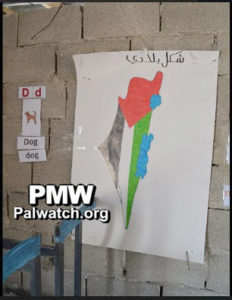
Palestinians cover all of Israel with their flag.

Palestinians. Now they are teaching in their schools that all of the Land of Israel is occupied Palestine, and that one day it will belong to them.

Iran, Hamas, Hezbollah, and Muslims worldwide want to destroy Israel.
Israel is surrounded by Muslim enemy nations who still seek to destroy the Jewish nation.


But . . .according to the word of God…

“The Lord has sworn: ‘For I will defend this city (Jerusalem) to save it for mine own sake, and for my servant David’s sake.’”   Isa. 37:35

Filed Under: Conflict, From the Newsletter, History

The Muslim Claim to Jerusalem

May 29, 2018 By Bella Davidov Leave a Comment

To understand the current events in Gaza, Jerusalem, Judea & Samaria, and the world’s reaction, it is important to understand the evolvement of the lies and distortions of history and truth that have been taking root in the hearts and minds of the Muslims and the world.

The Land of Ribat

Palestinians are being taught: Jerusalem is “land of Ribat” – holy Islamic land.

The Palestinian Authority has adopted the Hamas ideology of framing the conflict with Israel as a religious war for Allah. Jerusalem and all of the land of Israel are defined as “Ribat” – holy Islamic land – whose “liberation” and defense are said to be mandatory under Islamic law. The significance of the PA defining the conflict as “Ribat” is clear when reading how a PA schoolbook defines “Ribat”: “The Ribat for Allah is one of the actions related to Jihad …The persistence of Palestine’s people on their land in these days [i.e., Israel], and their persistence against the damage and the aggression they endure – is one of the greatest of the Ribat [fighting for Islamic land], and they [Palestinians] are worthy of a great reward from Allah…. they are found in Ribat until Resurrection.” [Islamic Education, grade 12, p. 86-87]

Since 2008, Palestinian leaders have frequently defined all of Israel, and particularly Jerusalem, as a land of “Ribat” – i.e., areas which Muslims have a religious obligation to defend and liberate for Islam. In the past, it was specifically Hamas that defined the conflict with Israel as a religious war. Now, the PA- Fatah leadership regularly presents its war against Israel as a religious battle for Islam. On Dec. 6, 2017, the day US President Trump recognized Jerusalem as Israel’s capital, official PA radio and TV started rebroadcasting Abbas’ 2014 call for violence and they continued to rebroadcast it 41 times in the next 4 weeks.

Official PA radio station The Voice of Palestine – 28 times broadcasted between Dec. 6, 2017 – Jan. 1, 2018 and Official PA TV – 13 times broadcasted between Dec. 6, 2017 – Jan. 2, 2018 Abbas’ 2014 call for violence:
PA Chairman Mahmoud Abbas: “We must all carry out Ribat in the Al Aksa [Mosque]… This is our Sanctuary, our Al Aksa and our Church [of the Holy Sepulchre]. They have no right to enter it. They have no right to defile it. We must prevent them. Let us stand before them with chests bared to protect our holy places.”

While this call for violence from 2014 by Abbas was repeatedly broadcast, the following 12 people were murdered:

  • Oct 22, 2014 – Two Israelis were murdered in car ramming in Jerusalem: Chaya Zissel Braun (3 months); Karen Jemima Mosquera (22).
  • Nov. 5, 2014 – Two Israelis were murdered in car ramming in Jerusalem: Jada’an Assad (38); Shalom Aharon Badani (17).
  • Nov. 10, 2014 – Two Israelis were murdered in two separate stabbing attacks in Tel Aviv and in Gush Etzion south of Bethlehem: Almog Shilony (20); Dalia Lemkus (26).
  • Nov 18, 2014 – Six Israelis were murdered in a Jerusalem synagogue during prayers: Avraham Shmuel Goldberg (68); Aryeh Kupinsky (43); Kalman Ze’ev Levine (55); Moshe Twersky (59); Zidan Seif (30). Haim (Howie) Rothman (55) died of his injuries on Oct. 24, 2015.

And the world was silent.

Palestinian Lies About Jerusalem and the Temple Mount

The Temple Mount has been Holy for three thousand years because it was chosen by God as the site of His Holy Temple. The Christians who conquered Jerusalem built churches there. Later, the Muslims who conquered Jerusalem called it the Noble Sanctuary and built their two Mosques on top of the site of the Jewish Temple.

Most of the problems surrounding Jerusalem can be traced to two areas of dispute. One is the political area that both Israel and the so-called Palestinians want Jerusalem to be their capital. The other and the most contentious problem is the holiness of Temple Mount to both Judaism and Islam.

Are Jerusalem and the Temple Mount as holy to the Muslims as it is to the Jews?

Jerusalem is not mentioned in the Koran and did not occupy any special role in Islam. In the Bible, it is mentioned many times and still is holy in Judaism.

Jerusalem’s role as “The Third Holiest Site in Islam” in mainstream Islamic writings does not precede the 20th century.

The Arab, Haj Amin al Husseini, who was appointed Grand Mufti of Jerusalem by the British, introduced it to the Arab Muslims in the 1920s. The Mufti wanted to unite the Arab masses against the growing numbers of Jews arriving in the land. He, therefore, called the Arabs to a religious Muslim holy war with the clear Islamic slogan: “Down with the Infidels!” From the time he was appointed to the position of Mufti, Haj Amin put all his effort into raising Jerusalem’s status as an Islamic holy center by renovating the mosques on the Temple Mount, and conducting a great propaganda campaign against the Jewish “threat” to Moslem holy sites.

In his hatred of the Jews, the Grand Mufti falsely accused the Jews of attacking the Al Aksa mosque and killing Muslims as a pretext to attack them. He actually initiated the riots of Hebron and Jerusalem. Then the Muslims began massacring the Jews in Jerusalem, Hebron (67 killed) and other Jewish areas. Husseini later became a confidante of Adolph Hitler, urging him to bring his Jew-killing machine to Jerusalem during WWII. The only condition Husseini set for assisting the Nazis was that, after they win the war, they would murder all the Jews in Palestine. Yassir Arafat was a nephew of Uncle Haj Amin al-Husseini. Arafat was born in Cairo and took over the leadership of the PLO (Palestine Liberation Organization), which was established in 1964 by Gamal Abdul Nasser.

He spent a great deal of effort to bring the larger Arab nations into the conflict, using the false claim that the Temple Mount and all of Jerusalem belongs to Islam alone.

The Muslim “claim” to Jerusalem is based on a short account of an event mentioned in the Koran (Sura 17:1,) that doesn’t even mention Jerusalem once. It talks about the “furthest mosque”: “Glory be unto Allah who did take his servant for a journey at night from the Sacred Mosque to the Furthest Mosque,” Al-Masujidi al-Aqtza in Arabic. There isn’t any foundation to the Muslim argument that this “furthest mosque” (Al-Masujidi al-Aqtza) refers to what is today called the Aksa Mosque in Jerusalem since it did not exist for another three generations after his death. Muhammad planned to lure Jews to convert to Islam and gave orders that they face Jerusalem in Muslims’ prayers. However, when his efforts failed, he issued a strict prohibition on February 12, 624 CE against facing Jerusalem in prayer. He never regarded Jerusalem as sacred to Islam, only to Jews in their land.

The Temple: Beit Hamikdash

Under the Arab rule, in the 10th century, and until the last century the Arabic name used for Jerusalem was always “bet el maKDeS” – the Arabic name for Beit Hamikdash, the Hebrew name of the Holy Temple. But Islam has no Temple, only Judaism has.

The Arabic name for Jerusalem makes no reference to Muhammad’s trip to Heaven or a faraway mosque (Al Aksa) but rather refers to the Jewish Temple.

Early Islamic scholars, who had no political interest, interpreted Muhammad’s dream of flight to Al Aksa as a vision of an Islamic heavenly holy mosque in the courtyard of Allah in heaven. That, indeed, would be the “El Aktza” – the “furthest place” from earth.

The connection of the earthly Al Aksa Mosque, built by Khaliph El Malik on the site of the Jewish Temple to Muhammad’s night dream is purely a modern Islamic myth created to claim the Jewish Holy Temple Mount for Islam.

Serious Islamic scholars viewed the tale of Muhammad’s dream as a folk story (before there was ever an Al Aksa Mosque on the Temple Mount.)

The Muslims continued to develop the myth through the years: In his dream, Muhammad flew on el-Buraq to the Seventh Heaven where he meets all the Jewish prophets, Abraham, Isaac, Joseph, Moses and even Yeshua/Jesus. They gave Muhammad the stamp of approval that he was to be the last and only prophet of God, and the charge from the prophets as the foundation for the new religion of Islam.
At that moment in his dream, he flies back to earth in an instant —The Muslim people have accepted many myths and interpretations of the Koran as they suit their needs.

Revision of the Myth

During the military campaign of Saladin, (a Muslim and a Kurd who conquered Jerusalem) in 1187 CE against the Christian Crusaders, the myth of Muhammad’s flight to a heavenly mystical Al Aksa was revised to state that his dream flight was to an earthly Al Aksa on the Temple Mount in Jerusalem. Saladin used the myth as a political excuse to attack the Christian infidel Crusaders who had previously conquered and occupied Jerusalem and the Temple Mount.

A Brief History of the Muslim Claim to Jerusalem

After the destruction of Herod’s Temple by the Romans in 70 CE, and the institution of Christianity as the official religion of the Roman Empire by Emperor Constantine in 312 CE, there were several attempts by different emperors to build structures on the Temple Mount. In 613 CE, King Khosru II of Persia invaded Jerusalem and permitted the re-establishment of a Temple by building a holy altar on the Temple Mount.

In the early years of Muslim rule, when Jerusalem was conquered by Arab forces in May 638 CE, Caliph Umar declared the right of Jews (and others) to continue praying on the Temple Mount, without interference, in return for assistance in the taking over the city. Jews actually even received permission to build a small wooden structure on the Mount.

In the beginning stages, while the gradual change of the Mount into Islam’s third holiest site was in progress, it didn’t require a total exclusion of Jews from the location. The place remained active during most of the early Muslim period, and also from approximately 1100 CE up until the conquest of the Crusaders. There are even Hebrew writings found on the internal walls of the eastern Golden Gate written by Jewish pilgrims about 1,000 years ago that can still be seen today.

Before the days of Muhammad, the Christian Byzantine Empire conquered and occupied Jerusalem. They usually built their holy places on top of holy places they had conquered to show that both their armies and their religion were superior to those of their victims, and also to use it as a reason to convert them to their religion. That’s what the Christians did on the Temple Mount. Even under the threat of the death, the Jews refused to convert.

Muhammad, the creator of Islam died in Saudi Arabia in 632 CE, there were no mosques in Jerusalem in 632 CE.
Jerusalem was still a Christian city within the Byzantine Empire. In their quest to conquer the world for Islam, the Muslims, under Khalif Omar’s leadership captured Jerusalem in 638 CE, six years after Muhammad’s death. There were only churches in Jerusalem at that time, including a church in Byzantine architectural style built on the Temple Mount, called the Church of Saint Mary of Justinian.

In 691-692 CE the Dome of the Rock was built by Khalif Abd El Malik. About 20 years later, in or around 711 CE, about 80 years after Muhammad died, Malik’s son, Abd El-Wahd – who ruled from 705-715 CE converted the Christian-Byzantine Church of St. Mary on the Temple Mount into a mosque. He left the typical Byzantine “basilica” structure as it was, with a row of pillars on either side of the rectangular area in the center. All he added was a dome on top of the building to make it look like a mosque. He then named it Al Aksa, so it would sound like the one mentioned in the Koran. It is clear therefore that three generations after Muhammad’s death in Saudi, without any connection to the land of Israel or Jerusalem, the Muslims created a myth of the connection between the dream Muhammad had in the middle of the night about this “farthest mosque” and Jerusalem.

Later on, under the occupation of the Turkish Ottoman Empire, subsequent Ottoman rulers invested little to no effort in the upkeep of the Dome of the Rock and the Al Aksa Mosque, there was never any record or precedent of Muslim clerics ever visiting the Temple Mount or of evicting Jews from those places.

Jihad

In 1929, while under the British Mandate rule, the Arabs responded to Husseini’s “rumor” and rioted in Jerusalem, and many cities of what was then British Mandate Palestine. The Arabs murdered a total of 133 Jews, wounding more than 300 wherever they could find them. In Hebron 67-69 Jews were murdered, with 58 wounded and women were raped; in Safed 18-20 were murdered with 80 wounded.

In 1947, after the UN suggested the partition of the land between the Jews and the Arabs, the Saudis called the Muslims to “Jihad” holy war against the Jews of Israel in a “Fatwa” (religious ruling) supposedly to save the Al Aksa mosque on the Temple Mount from the Jews. The day after Israel was declared a new nation, all the Arab nations around Israel attacked the newborn State of Israel. Miraculously, Israel won the war of Independence but lost East Jerusalem, including the Temple Mount and the Western Wall, and Judea and Samaria, which remained in Jordanian hands… Jews were forbidden to visit the holy sites under the Jordanian rule.

However, only since 1967, after Israel won the six-day war and liberated the old city of Jerusalem and the Temple Mount, Yassir Arafat started to claim that Jerusalem is the Muslim’s third holiest city and invented another myth, of a non-people (the Palestinians) as a nation with a history. Although the fact is that Jerusalem was never the capital city of any Muslim nation, now this newly created people, the Palestinians claim Jerusalem as their capital.

While under the control of the Muslims, before 1967, the Temple Mount was a neglected site. The crowds of Muslims didn’t fill the place until the leaders started the propaganda that Jerusalem is their third holiest city.

The 13th Century Arab biographer Yakut wrote: “Mecca is holy to Muslims; Jerusalem is holy to the Jews.”

There is a religious war raging against the Jewish people, the Jewish State of Israel and Israel’s 3000 year old Eternal Capital, Jerusalem.

The Arabs’ claim to the Holy Jewish Temple Mount and Jerusalem is based upon one extraordinarily huge lie told over and over again. The Nazi Goebbels said, “If the lie is big enough and told often enough, it will be believed.”

At the time of Muhammad, In order to convert Jews to Islam, he used the trick of a temporary truce (permitted in Islam) to make a treaty with the Jewish Koraish tribe. But, in 628 CE at the Khaidar Oasis, Muhammad killed them. Arafat often claimed that the Oslo Treaty was similar to that treaty which Muhammad violated with impunity when he became militarily stronger.

Muhammad never mentioned the word Jerusalem in his completion of Islam’s holy book, the Koran, and directed the Muslim “quibla” (prayers) to Mecca. A visit of a Muslim to Jerusalem was called a “ziyara”, unlike the holy pilgrimage to Mecca, which was called by the honorific “Haj”. A Muslim who made the mandatory pilgrimage to Mecca was allowed to add the honorable “Haj” to his name.

For Muhammad, Jerusalem was a despised place of the Jews and had no place in his vision for his Islamic religion.

Muhammad spent his early years among the Jewish tribes particularly in and around Yathrib (Medina). It was, therefore, not unusual for Muhammad to include a pilgrimage to Mecca since the Jews were commanded to make three pilgrimages to Jerusalem each year on Sukkot, Pesach, and Shavuot. There is much in the Koran that finds its source in the Jewish Bible.

Yassir Arafat’s Claim

The Jewish pilgrimages were the basis of Yassir Arafat’s claim to the Jewish Temple Mount (and to all of Jerusalem) as the third holiest place for Islam after Mecca and Medina. He called his terrorism against Israeli Jews, the Aksa “intifada” (uprising) and renamed the Western Wall: the “El-Buraq Wall”. The Muslim “Waqf” (caretakers of the holy sites) have been excavating and destroying all evidence of Jewish artifacts under the Temple Mount, and Arafat claimed there is nothing in, on or under the Temple Mount to prove its Jewish history. The Arabs’ massive excavation under the Temple Mount is about more than removing all traces of Jewish presence but was a virtual displacement by Arafat of the Jewish religion to Islam.

Unfortunately, the Israeli Prime Minister at that time, Ehud Barak, did not object to this de-Judaizing of the Jewish Temple and didn’t stop these illegal excavations.

Arafat proclaimed almost daily from the time of the signing of the Oslo Accords, that “With the children of the stones, I will fight until all of Israel is the new State of Palestine and its flag flies over the churches and mosques of Jerusalem, the capital of that State and only that State.” Arafat and the Arab nations took the liberty of incorporating a distorted mythical folktale into the substance of their religion’s claim on the Jewish Temple Mount and of all Jerusalem. The World Media and the Nations hostile to Israel as a Jewish State accepted this El-Buraq myth* and its attendant lies which supported Arafat’s claims, justifying the displacement of the Jews. Arafat undertook the task of literally erasing the past of the Jews. In essence, denying the use of the Jewish name for Temple Mount he delegitimized the reason for having a Jewish State. His successors continue this legacy up to the present.

On April 15, 2016, the executive council of UNESCO adopted a new resolution that specifically called the Western Wall only by a Muslim name (ignoring any Jewish ties to the holy site). When the text mentions the Western Wall Plaza, they used the Arabic “Al-Buraq Plaza” as its official name. Further in the resolution, only the Arabic term for the Temple Mount, Al Aksa Mosque/Al-Haram al-Sharif, is used.

The PA (and the UN) doesn’t want any connection to the Jewish name “Temple Mount” that will admit the existence of the actual temple. They fear that the Jew might desire to build a third temple sometime in the future. Therefore any Jewish ties must be somehow delegitimized. If they succeed in erasing the Jewish holy sites from existence, it will be much easier to eliminate Israel from existence.

The Truth according to the Word of God and History

In the Word

Jerusalem is mentioned in the Bible 811 times – not once in the Koran;

  • The word “Zion” refers to Jerusalem 152 times;
  • Jerusalem is called the “holy city” 10 times and the “city of God” twice;
  • It is called the “city of truth” and
  • “the city of the great King” and
  • “the city of Judah” and also
  • the “city of David.”

It has PRIORITY above all cities.

  • Psalm 48:2 – “the joy of the whole earth, the city of the great King.”
  • Psalm 137:5 refers to it as “my chief joy.” Psalm 87:2 says, “The
  • LORD loves the gates of Zion more than all the dwellings of Jacob.”
  • Its PRAISE in the earth
  • Isaiah 62:7 – “give Him no rest, till He establish,
  • And till He make Jerusalem a praise in the earth.”

Its PLACE in Jewish history

  1. The place where Abraham was blessed by a king and priest named Melchizedek over 4000 years ago – Genesis 14:18-19
  2. The place where Adonizedek was king when Joshua entered the land – Joshua 10:1
  3. The place which was given to the tribe of Judah by Joshua – Joshua 15:1, 8
  4. The place which Judah and Benjamin could not conquer from the Jebusites – Joshua 15:63; Judges 1:21
  5. The place which King David took from the Jebusites 3000 years ago – II Samuel 5:4-9
  6. The place where King David purchased the site of the Temple Mount from Aravnah the Jebusite and built an altar there – II Samuel 24:18-25
  7. The place where King David ruled for 33 years
  8. The place where King Solomon built the temple – II Chronicles. 3:1
  9. The place where King Solomon ruled for 40 years – I Kings 11:42
  10. The place where the kings of Judah ruled for over 400 years and the place where they were buried.
  11. The place where Babylon under King Nebuchadnezzar destroyed the city and its temple in 586 BCE – II Kings 24:10, 14; 25:9-10.
  12. The place to which Jewish captives returned through the kindness of Cyrus, King of Persia.
  13. The place where Jewish refugees came under the leadership of Ezra, Nehemiah, Zerubbabel, and Joshua the high priest and rebuilt the city and its walls.
  14. The place where Antiochus Epiphanes of the Seleucid dynasty defiled the rebuilt temple, and a great Jewish revolt took place under Judas Maccabeus and cleansed the temple, giving us the celebration of Hanukkah – in the middle of the 2nd century BC…

In order to understand the situation in the Middle East in the present, we have examined the past. History plainly shows how and why the enemies of Israel have contrived to reinvent Islam to suit their political aspirations.

  • There was no focus on Jerusalem in Islam until the 19th – 20th century.
  • There was no people group called Palestinians until the 20th century.
  • There is no early “history” of a people called Palestinians.
  • There is no “history” whatsoever of Jerusalem in Islam.

Ultimately, this is a spiritual war. The Muslim people involved are just pawns enslaved for the purpose of destruction. It bears all of the earmarks of an invention of satan, once again, to destroy the mark of God’s presence on the earth: the Chosen Land and the Chosen People.

Filed Under: From the Newsletter, History Tagged With: Muslim Claims, Temple Mount

False and Distorted History, Invented by the Arab Palestinians.

March 19, 2018 By Bella Davidov Leave a Comment

Long before the Palestinian Arabs started their terror campaigns against Israel (2000-2005), they were fighting a history war, with the goals of erasing the Jewish nation’s 3,000-year history in the Land of Israel, and that there is no connection between the ancient generation of Jews and the new generation. The Holocaust and other aspects of Jewish history are alternately denied, downplayed or distorted. Another distortion is replacing the Jewishness of Jesus, who lived in the Land of Israel with a Palestinian Jesus who preached Islam, thus denying not only Jewish history, but also the history and legitimacy of Christianity. The other goal is to replace the real history with a fabricated Palestinian history that invents ancient Palestinian, Muslim and Arab histories in the land.

Palestinian leaders are inventing their history for political purposes and as a strategy in their fight against the legitimacy of Israel in the Land of Israel. They have manufactured a false claim, that they are descended from Canaanites and are therefore the indigenous people of the area, present before the Hebrews occupied the land around the year 1500 BCE. “The Palestinians are the original owners of Palestine, who lived on its land when they moved from the western Mediterranean basin to its east in 7000 BC” It started first in 1998 at a conference of Palestinian historians when Chairman of History Department in Khan Yunis Educational College in Gaza, Dr. Yussuf Alzamili called on all universities and colleges to write the history of Palestine and to guard it, and “not to enable the [foreign] implants and enemies to distort it or to legitimize the existence of Jews on this land… “

These PA academics’ fictional claim that Palestinians Arabs populated the land of Canaan in Biblical times and even earlier are all historically impossible. First of all, the name “Palestine” instead of the Land of Judea/Israel was given by Rome in 136 C.E., centuries before Islam was established in 610 C.E. Second, Arabs first arrived in Israel with the Muslim invasion in 637 C.E. Nevertheless, this so-called claim that Biblical Canaanites were Arabs, is being broadcast many times on PA TV. For example: “The Arab Canaanites established ports on the coast of Canaan, known today as Palestine. Palestine was attacked by invaders, but its Arab Canaanite features withstood attempts to change them. Jaffa was one of the cities whose Canaanite origins the invaders failed to erase.” [PA TV, repeatedly, 2005-2007.]

Another distortion of history is that the Arabs are the victims of exile from the land caused by the Roman invasion, not the Jewish kingdom of Judea. “Seventy years have passed since Palestine’s Nakba (tragedy,) from which 6 million Palestinian refugees continue to suffer from the cruelty of exile and loss of human security. They continue to wander the world after the loss of their peaceful and stable lives in their homeland. They are part of the 13 million Palestinians, whose country has not yet been recognized as full Member State of the United Nations, despite the numerous resolutions reaffirming their right to self-determination and statehood on their national land.
We are the descendants of the Canaanites that lived in the land of Palestine 5,000 years ago and continuously remained there to this day. Our great people remain rooted in their land. The Palestinian people built their own cities and homeland and made contributions to humanity and civilization witnessed by the world. They established institutions, schools, hospitals, cultural organizations, theaters, libraries, newspapers, publishing houses, economic organizations, businesses, and banks, with wide regional and international influence.
All of this existed before and after the Balfour Declaration issued by the British Government in 1917, a declaration by which those who did not own, giving to those who had no right. The British Government bears responsibility for the catastrophic consequences inflicted on the Palestinian people as a result…”

True and Documented History

Fake map of Palestine - found in the school.
Map at PA school covers Israel in the Palestinian flag The picture shows the wall of a classroom on which is posted the PA map of “Palestine” that presents all of Israel as “Palestine” together with the PA areas, overlaid in the colors of the Palestinian flag. Text above map: “The shape of my land” Facebook page of the PA Ministry of Education

The Land of Israel changed to Palestina by the Romans after the expulsion of the Jews from the land in 136 C.E, was never an Arabic country or considered as such by geographers and historians. Historian Josephus, as well as other Roman geographers, placed Arabia beyond the boundaries of Palestina, (Judea as it was then called.) The land was conquered in 636 A.D by Muslims and occupied by Muslim-Arabs until 1071. A large percentage of the Arabs who now call themselves Palestinians are descendants of Arabs and Muslims who immigrated to the Land of Israel a few centuries ago illegally from Arab and Muslim countries.

The Palestinian Arabs or the Arabs of Trans-Jordan never ruled Palestina. The Arabs who conquered it came from the outside, they were not natives of Palestina. Conquerors like the Mamelukes and later the Turks, were not even Arabs or Semitic, but an entirely different race.

The “Holy Land” was conquered since 636 CE by various Arab, Muslim, and Christian rulers, dynasties and tribes, including, among others, the Abbasid dynasty (750 CE), the Egyptian Fatimid dynasty in 969 CE, the Turks and Seleucids in the eleventh century, the Crusaders (1099) and then back to the Egyptian Fatimid dynasty, and then to the Muslims of Sallah-a-Din, Turks, Tatars (1260), Egyptian kingdom, Mongols, and Ottomans (1517). In 1187 Saladin, who was not an Arab, but a Muslim Kurd from Iraq, defeated the Crusaders and conquered Jerusalem. He took over other parts of the country while the Crusaders maintained their hold over the rest.

After Saladin’s death in 1192, an agreement was signed by his successors with the Crusaders, allowing them to return to the Galilee. The Crusaders then moved their capital to Acre. The Muslim Mamelukes conquered the Land of Israel from the Crusaders in 1260 and ruled it until 1516, when it was taken over by the Ottoman Turks who ruled Palestina for 400 years. Their rule ended in 1918, and a Mandate over the country was given to the British, thus ending the Muslim rule in Palestina.

During the Muslim occupation of the land, waves of immigration of Arabs came from the Arabian Peninsula and the subsequent arrivals of Arabs from Transjordan, Sudan, Libya, and Syria. During the nineteenth century, many Arab families came also from Egypt, Albania, and other North African countries, which led to the continued settlement of Arabs in the country.

Research studies show that Arab clans living today in villages in Israel and Judea and Samaria trace their roots back to families who immigrated to Palestine in the seventeenth century onward from Saudi Arabia and Yemen and afterward from Transjordan. Other studies show that the many waves of immigrants came to the land from Arab countries also during the period of the British Mandate.

Most of the country was not cultivated, and it was only toward the latter part of the nineteenth century that the country began to blossom after the Aliya (going up to Israel) of Zionist Jews who settled in barren areas and started cultivating the land (bought by wealthy Jews) and drying out the swamps.

The Arab immigrants were drawn to the land because Jewish settlement there created the development of economic opportunities as well as improvement in sanitation and medicine. They were seeking to benefit and increase their income from the relatively advanced development and modernization in the area brought about by the Jewish population.

The huge Arab Muslim immigration into the area was noticed by world leaders like U.S. President Franklin D. Roosevelt and Churchill who remarked that the Arabs, who were not even persecuted, poured into Palestina since 1921, outpacing the immigration of Jews during that same period, until the Arab population grew more than the Jewish population.

To the above were added raids and movement by Bedouin tribes from the western desert since the late nineteenth and up to the mid-twentieth centuries.

When Jews began to immigrate to Palestina in large numbers in 1882, fewer than 250,000 Arabs lived there, and the majority of them were not longtime residents but relatively recent arrivals. Palestine was never an exclusively Arab country, although Arabic gradually became the language of the majority of the population after the Muslim invasions of the 7th century.

No independent Arab or Palestinian state ever existed in Palestina. In fact, Palestina is not even mentioned in the Koran, rather it is called “the holy land.” Palestinian Arabs never viewed themselves as having a separate identity. When the First Congress of Muslim Christian Associations met in Jerusalem in February 1919 to choose Palestinian representatives for the Paris Peace Conference, the following resolution was adopted: “We consider Palestina as part of Arab Syria, as it has never been separated from it at any time. We are connected with it by national, religious, linguistic, natural, economic and geographical bonds.”

The representative of the Arab Higher Committee to the United Nations submitted a statement to the General Assembly in May 1947 that said, “Palestine was part of the Province of Syria” and that, “politically, the Arabs of Palestine were not independent in the sense of forming a separate political entity.” A few years later, Ahmed Shuqeiri, later the chairman of the PLO, told the United Nations Security Council, “It is common knowledge that Palestine is nothing but southern Syria.”

The Arab and Zionist national movements shared the desire for independence in their homelands. But there was an important difference: The Zionists were united in their attachment to Palestina, in the Jewish minds it was always the Land of Israel, while the Arabs were divided by the competing interests of individual leaders from different lands throughout the region. Until 1948, all who lived in the Palestina were called Palestinians. There were Jewish Palestinians, Christian Palestinians, and Arab Palestinians.

Palestinian Arab nationalism did not become a significant political movement until after the 1967 Six Day War and Israel’s capture of the West Bank. Prior to that time, when they were primarily under Jordanian rule, Palestinians did not demand self-determination or statehood.

Filed Under: From the Newsletter, History, Politics Tagged With: Anti-Semitism, fake news, Palestinians, politics

The Story of Purim

February 28, 2018 By Bella Davidov Leave a Comment

The year in which the story of Purim occurs is 357 BC. There were many Jews who decided to stay in exile in Persia after the return of the rest of the Jews to the Land. The king of the Persian Empire, Ahasuerus (Xerxes) was showing off all his splendor and great riches in a big banquet and wanted also to show off the beauty of his queen Vashti, who made a banquet of her own for the women. Vashti refused to come and aroused the king’s anger, who decided to get rid of her and choose another queen.

Of all the beautiful virgins of the empire, the one whom the king fell in love with and chose to be his queen was a stunning beautiful Jewish young orphan, named Hadassah, known by her Persian name, Esther. Her uncle who raised her, Mordechai the Jew urged her not to reveal her nationality, and Esther joined the king’s royal harem.

The king raised to power Haman the Agagite (descendant of Amalek) to a position above all the other princes and ordered that all who were at the king’s court had to bow down to him. Mordechai the Jew, who sat at the king’s gate was the only one who refused to bow down to Haman and aroused his anger. When Haman learned that Mordechai was Jewish, he manipulated King Ahasuerus into ordering the genocide of all the Jewish people throughout the empire.

Haman said to the King Ahasuerus: “There is a certain people scattered and dispersed among the people in all the provinces of your kingdom, their laws are different from all other people’s, and they do not keep the king’s laws. Therefore it is not worthy for the king to let them remain…let a decree be written that they be destroyed…” (Esther 3:8-9)

The Pur (dice or lot) was cast and fell on the thirteenth day of the month of Adar, in one day all the Jews were to be, according to the words of Haman’s decree, “killed, destroyed, and annihilated.” (Esther 3:13) It was done, a decree that cannot be changed because “in the name of King Ahasuerus it was written and sealed with the king’s signet ring.” (Esther 3:12c)

A big cry and mourning were heard throughout the Jewish communities, and when Mordechai heard the terrible news he tore up his clothes, put on sackcloth and ashes on his head, went out to the center of the city and cried out a loud and bitter cry. He sent a message to Esther telling her that she must go to the king and plead for him to change the decree. Even though the king loved Esther, he didn’t send for her in thirty days. She said that everyone knows that if anyone goes to see the king without being invited, he or she must be put to death by law unless the king extends to him or her his royal scepter.

Mordechai sent a message to Esther in reply, “don’t think that you alone will be saved out of all the Jews just because you are in the king’s palace. If you keep silent at this time…relief and deliverance will come to the Jews from another source…”

Mordechai had faith in the God of Israel that He would not let his people be exterminated. He knew that God had a purpose and plan for Israel. He told Esther “Who knows whether you have come to the kingdom for such a time as this?” (Esther 4:14)

Esther decided right away to take a courageous step of faith and go to the Higher Authority in prayer and fasting. She called for the entire Jewish community in the capital city to stand with her in prayer and fasting for three days as she risks her life for the chance of saving her people. She is going to go unlawfully before the king uninvited. and “if I perish, I perish.”

On the third day of the fast, Esther put on her royal robe and stood across the King’s royal throne. When the king saw her, she found favor in his eyes and he extended to her his royal scepter as an invitation to come to him. As she came and touched the scepter, he asked what her request was, and he would give her up to half the kingdom. All she asked was to invite the king and Haman to a royal banquet she prepared for them. After the banquet, the king repeated his question to know what she really wanted of him, as he was willing to give her half the kingdom. Again Esther replied that she was inviting him and Haman to another banquet. Haman was so elated and proud that the queen chose to honor him, but when he passed by Mordechai who wouldn’t bow down to him, his joy turned to rage. He listened to his wife’s suggestion and built a tall gallows to hang Mordechai on, after getting the king’s approval.

Here is where the story takes a twist and turn, and we see the hand of God.

That night the king couldn’t sleep. He asked that his servant read to him from the book of remembrance. The account he heard was how Mordechai saved his life by exposing the plot to assassinate the king by two servants, who were caught and executed. He found out that Mordechai was not rewarded for this act. In the morning he ordered to bring to him the first person who came into the court to use in order to honor and repay Mordechai for saving his life. The first person who walked into the court was Haman, who wanted to get the approval of the king to hang Mordechai. When the king asked him what should be done to the person the king wants to honor, Haman in his pride was sure the king meant him. He told the king that that person should be dressed in royal attire, someone should parade him on a royal horse through the streets in the center of the city and announce that this is what is done to the person whom the king favors. King Ahasuerus ordered Haman to do it to Mordechai. When Haman came home shamefully and told his wife what happened, she said to him, “If Mordechai is of Jewish descent, you will not prevail against him but surely fall before him.” (Esther 6:13)

At the end, in the second banquet, Esther revealed to the king her being Jewish and the plot of Haman to annihilate all of the Jews. The King ordered to hang Haman on the very gallows he built for Mordechai and promoted Mordechai to a high position in the kingdom. The king gave him his signet ring to write a new decree for the Jews to destroy all those who would seek to kill them. That is how the Jewish people were saved from annihilation. In the end, God gave His people the victory over all their enemies. Once again God proved that His promise and covenant with Israel is everlasting.

Filed Under: From the Newsletter, History, Politics

  • « Go to Previous Page
  • Page 1
  • Page 2
  • Page 3
  • Page 4
  • Page 5
  • Page 6
  • Interim pages omitted …
  • Page 9
  • Go to Next Page »

Primary Sidebar

  • Return to Home Page
  • Email

War

They Shall Come Back

And they shall come back from the land of the enemy. There is hope in your future, says the Lord, your sons shall come back to their own border.  Jeremiah 21:16b-17 This happened today, Monday October 13. Exactly two years ago, on the Holiday of Succot (booths), Hamas brutally attacked southern Israel from Gaza, murdering 1,200 Israelis and abducting 251 into […]

U.S. President Trump’s Epic Fury -Where Is It Going?

March 26, 2026

"אַרְיֵה שָׁאָג מִי לֹא יִירָא " "The lion has roared, who will not fear?..." Amos 3:8a The world is trying to understand President … [Read More...] about U.S. President Trump’s Epic Fury -Where Is It Going?

Recent Posts

  • Best Allies
  • U.S. President Trump’s Epic Fury -Where Is It Going?
  • Israel at War with Iran – Operation Roaring Lion
  • The Jewishness of Christmas
  • Hamas in America

Categories

© MMXXVI Yeshuatami, Ashdod ISRAEL